Plant Overview
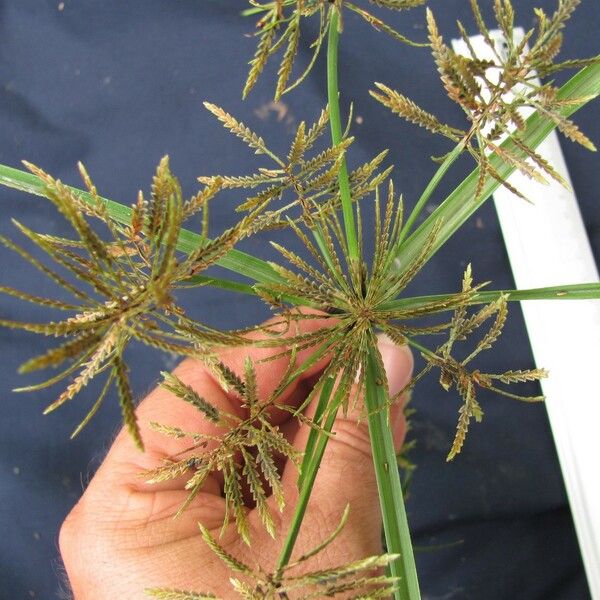
Often found swaying near the water’s edge, Cyperus macrostachyos, commonly known as the Large-spike Flat Sedge, is a striking architectural plant that brings a touch of wild elegance to wetlands. Known for its explosive, umbrella-like flower heads, it acts as a natural skyscraper for marshy landscapes, providing both beauty and essential structure to soggy soils.
🔍 How to Identify
- 📐 Triangular Stems: True to the botanical rule that "sedges have edges," the stems of this plant are distinctly three-sided and solid, rather than round and hollow like common grass.
- 🎆 Radiating Bracts: At the very top of the tall stems, several long, leaf-like bracts fan out horizontally, creating a green "platform" for the flowers to sit upon.
- 🌾 Flattened Spikelets: The "large spikes" are actually clusters of flattened, scale-like flowers. They emerge a pale lime green and transition into a warm, golden-tan color as the season progresses.
🏡 In Your Garden
- 💧 Thirsty Roots: This plant is a "hydrophile," meaning it loves water. It is the perfect candidate for those tricky, low-lying spots in your yard where water pools after rain, or for the shallow "shelf" area of a backyard pond.
- 🚧 Erosion Control: Because it develops a dense network of fibrous roots and rhizomes, it is often used by land managers to stabilize muddy banks and prevent soil from washing away during heavy storms.
- ☀️ Sun Seeker: While it can tolerate a bit of afternoon shade, it produces its most impressive "explosive" seed heads when grown in full sun with constant moisture.
⚠️ Safety & Toxicity
- ✅ Generally Safe: Cyperus macrostachyos is not known to be toxic to humans, dogs, or cats. It is a frequent resident of public parks and nature trails.
- 🧤 Abrasive Foliage: While not poisonous, the edges of the long leaves can be quite sharp. If you are thinning out a large patch, wearing gardening gloves is recommended to avoid minor "paper cut" style irritations on your hands.
✨ Fun Fact
Botanists use a famous rhyme to help people distinguish this plant from its lookalikes: "Sedges have edges, rushes are round, and grasses are hollow right up from the ground!" If you roll the stem of this Cyperus between your fingers, you’ll feel those three distinct "edges" immediately.

Detailed Care Instructions








