Plant Overview
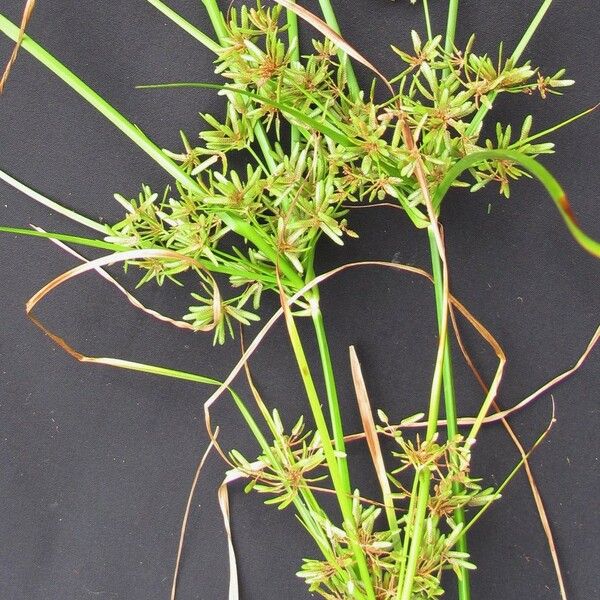
Known as the Pond Sedge or Yellow Nut-Sedge, Cyperus ochraceus is a golden-hued beauty that thrives where other plants drown. Often found lining the edges of marshes and wet ditches across the Americas, it looks like a burst of sun-bleached grass caught in a permanent state of autumn. It is a favorite for gardeners looking to add structure and a "wild" aesthetic to water features or low-lying, damp areas of the yard.
🔍 How to Identify
- 📐 Triangular Stems: Like most sedges, it follows the classic botanical rule: "Sedges have edges." If you roll the stem between your fingers, you will feel three distinct, sharp sides rather than a round straw.
- 🌾 Golden Spikelets: The flower clusters (inflorescences) are a pale yellow to ochre-brown. They appear as dense, flattened "fingers" that bunch together at the very top of the stalk.
- 🌿 Umbrella Bracts: Long, leaf-like structures called "bracts" sit directly underneath the flowers, radiating outward like the ribs of an umbrella, giving the plant a geometric, architectural look.
🏡 In Your Garden
- 💧 The Wet-Spot Specialist: This plant is an "obligate wetland" species. It doesn't just like water—it craves it. It is the perfect solution for "problem" areas in your garden where water pools or where the soil stays muddy year-round.
- 🦋 Wildlife Magnet: Because it grows in dense clumps near water, it provides vital habitat for dragonflies to perch and for small frogs to hide from predators. It acts as a natural filtration system, helping to clean runoff water before it enters the water table.
⚠️ Safety & Toxicity
- ✅ Safe Status: Cyperus ochraceus is generally considered non-toxic to humans, cats, and dogs. It lacks the toxic alkaloids found in some other marsh-dwelling plants.
- ✂️ Physical Irritant: While not poisonous, the leaves have high silica content and can be quite sharp. Handling the plant roughly or running your hand quickly along the leaf blades can result in minor "grass cuts" or skin irritation.
✨ Fun Fact
📜 Ancient Cousins: The Cyperus genus is incredibly prestigious; it includes the famous Cyperus papyrus, the plant used by ancient Egyptians to create the world's first paper! While your Pond Sedge isn't used for writing, it shares the same resilient, water-filtering DNA as its famous royal relative.

Detailed Care Instructions
To grow a Cyperus Ochraceus plant, also known as the yellow umbrella sedge, follow these steps:
- Choose a suitable location: Cyperus Ochraceus plants prefer bright, indirect sunlight. Select a location with good air circulation, such as near a window or in a greenhouse.
- Select a container: Use a well-draining container with sufficient drainage holes. The size of the pot should accommodate the growth of the plant, with a depth of at least 6-8 inches.
- Prepare the soil: Cyperus Ochraceus plants prefer moist, well-draining soil. A mix of equal parts potting soil, peat moss, and perlite can provide these conditions.
- Planting: Fill the container with the prepared soil mix, leaving some space for the roots. Place the Cyperus Ochraceus plant in the pot and cover the roots with soil, making sure not to bury the stem.
- Watering: Keep the soil evenly moist but not waterlogged. It is important to maintain a humid environment, so mist the plant regularly or place it on a tray with water and pebbles to increase humidity.
- Temperature and humidity: Cyperus Ochraceus plants thrive in temperatures between 60-75°F (15-24°C). They also require high humidity, so consider using a humidifier or placing a dish of water near the plant.
- Fertilizing: Use a balanced liquid fertilizer diluted to half strength once a month during the growing season (spring and summer). Reduce or stop fertilizing during the dormant period (fall and winter).
- Pruning: Trim off any dried or yellowing leaves and plant tips to promote healthy growth. Regular pruning can also help maintain the desired shape and prevent overcrowding.
- Propagation: Cyperus Ochraceus plants can be propagated through division. Carefully separate the root ball into smaller sections, making sure each division retains some roots and shoots. Plant these divisions in separate containers and follow the same care instructions.
With proper care and following these guidelines, your Cyperus Ochraceus plant should grow well and bring beauty to your home or garden.

Place in a bright room that is sun drenched almost all day. Or directly in a south-facing window.

Cyperus Ochraceus is a plant that requires consistent and appropriate watering to thrive. Here are some tips on how to water this particular plant:
1. Evaluate the soil moisture: Before watering, it is essential to check the moisture level of the soil. Insert your finger about an inch into the soil, and if it feels dry, it's an indication that watering is needed.
2. Watering frequency: Cyperus Ochraceus plants typically prefer evenly moist soil. Aim to water the plant when the top inch of the soil feels dry to the touch. Ensure that the plant never completely dries out between watering sessions.
3. Watering method: Water the plant thoroughly, allowing water to penetrate the soil. You can use a watering can, a hose with a gentle spray nozzle, or allow the plant to soak up water from a shallow tray or saucer placed under the pot. However, make sure not to let the plant sit in standing water as it can lead to root rot.
4. Water quantity: The amount of water required may vary depending on factors such as pot size, temperature, humidity, and sunlight exposure. It is important to avoid both overwatering and underwatering. Ensure that the water penetrates the entire root zone without drowning the plant.
5. Water quality: Use room temperature water or slightly tepid water to avoid shocking the plant. Chlorinated tap water is generally safe for most Cyperus Ochraceus plants, but if you notice sensitivity, you may opt for filtered or distilled water.
6. Environmental factors: Consider the environmental conditions that could affect water requirements. Higher temperatures, increased exposure to sunlight, and low humidity levels may cause the soil to dry out more quickly, requiring more frequent watering.
7. Drainage: Proper drainage is crucial to prevent waterlogging, which can lead to root rot. Ensure that the pot or container has drainage holes at the bottom to allow excess water to escape. This helps maintain a healthy balance between moisture retention and preventing water buildup.
Remember that these watering guidelines provide general recommendations. It is important to monitor your specific Cyperus Ochraceus plant's response to watering, observing any signs of overwatering or underwatering, and making adjustments accordingly.
To fertilize Cyperus Ochraceus effectively, follow these instructions:
- Choose a balanced, water-soluble fertilizer suitable for indoor plants or houseplants.
- Dilute the fertilizer according to the manufacturer's instructions. Generally, a concentration of 1/4 to 1/2 strength is suitable.
- Water the plant thoroughly a day before fertilizing to ensure the soil is moist.
- Pour the diluted fertilizer solution carefully around the base of the plant, avoiding foliage and the crown.
- Use a sufficient amount of fertilizer to moisten the soil but avoid overapplication, which can lead to fertilizer burn or excessive nutrient buildup.
- After applying the fertilizer, water the plant lightly to ensure the nutrients penetrate the soil.
- Repeat the fertilization process every 4-6 weeks during the growing season, typically spring through fall.
- Monitor the plant's response to the fertilizer. If there is excessive foliage growth but no new shoots or flowers, reduce the fertilizer concentration or frequency of application.
- Always follow label instructions on the fertilizer packaging, as different products may have specific guidelines for application.
Remember to observe the plant regularly, and if any signs of nutrient deficiency or excess appear, adjust your fertilization accordingly.
Cyperus Ochraceus is a type of plant that thrives in certain soil conditions to ensure optimal growth and development. The ideal soil for this plant is well-draining, allowing excess water to flow away from the roots. It has a preference for slightly acidic to neutral pH levels, ranging between 6.0 and 7.0. The soil should be rich in organic matter, as it aids in retaining moisture while also providing essential nutrients to the plant.
Adding compost or well-rotted manure to the soil before planting Cyperus Ochraceus is beneficial since it improves both the fertility and structure of the soil. This plant typically prefers loamy or sandy soil types, which are light and airy, allowing the roots to breathe properly.
Another essential factor to consider is the moisture retention capacity of the soil. Cyperus Ochraceus requires consistently moist soil conditions. Therefore, selecting soil that retains moisture without becoming waterlogged is key. However, excessive water retention can cause root rot and hinder the plant's growth.
To summarize, the ideal soil for Cyperus Ochraceus is:
- Well-draining
- Slightly acidic to neutral pH (6.0-7.0)
- Rich in organic matter
- Loamy or sandy texture
- Moist, but not waterlogged
By providing suitable soil conditions, you can ensure the healthy growth and vibrant appearance of Cyperus Ochraceus.
Cyperus Ochraceus can be propagated through several methods including division, offsets, rhizome cuttings, and seed propagation. Here are the step-by-step details for each propagation method:
- Division:
- Choose a healthy and mature Cyperus Ochraceus plant with multiple shoots or clumps.
- Carefully remove the plant from its container or dig around the plant in the garden, ensuring that the roots are intact.
- Gently separate the clumps or shoots by pulling them apart or using a sharp, sterile knife to cut them into individual sections.
- Trim or remove any dead or damaged sections.
- Plant each division in a separate container or suitable location in the garden.
- Water thoroughly and ensure the new plants are kept in a suitable environment with adequate sunlight.
- Choose a healthy and mature Cyperus Ochraceus plant with multiple shoots or clumps.
- Offsets:
- Identify and locate any offsets or baby plants that have developed around the base of the parent plant.
- Gently detach the offsets by carefully pulling them away or cutting them off using a clean tool.
- Prepare small containers or pots with well-draining soil or a planting mix.
- Plant each offset in an individual container, ensuring that the roots are covered with soil and the plant is secure.
- Water lightly and place the pots in a well-lit area.
- Keep the soil moist but not waterlogged, and ensure the new offsets are protected from extreme temperatures until they establish roots.
- Identify and locate any offsets or baby plants that have developed around the base of the parent plant.
- Rhizome Cuttings:
- Identify a healthy and mature Cyperus Ochraceus plant with well-developed rhizomes.
- Carefully remove the plant from its container or dig around the plant in the garden, being cautious not to damage the rhizomes.
- Select a healthy, plump rhizome segment that is at least a few inches long.
- Using a sterile knife or pruning shears, cut the selected rhizome segment from the parent plant, ensuring that there are roots attached to it.
- Prepare a pot or container with well-draining soil or a suitable planting mix.
- Plant the rhizome segment horizontally in the pot, burying it slightly with the roots facing downwards.
- Water thoroughly and place the pot in a warm and well-lit location.
- Ensure the soil remains consistently moist and provide regular care until new shoots emerge.
- Identify a healthy and mature Cyperus Ochraceus plant with well-developed rhizomes.
- Seed Propagation:
- Collect mature and viable seeds from the Cyperus Ochraceus plant.
- Prepare a seed-starting tray or small pots with a well-draining soil mixture.
- Gently press the seeds into the soil surface, ensuring they are in contact with the soil but not buried too deep.
- Lightly cover the seeds with a thin layer of fine soil or vermiculite.
- Water the soil gently, ensuring it is evenly moist but not saturated.
- Place the tray or pots in a warm and well-lit location, preferably with indirect sunlight.
- Maintain a consistently warm temperature and provide regular watering to keep the soil moist.
- Germination typically occurs within a few weeks to a couple of months, after which the seedlings can be transplanted to individual pots or the garden.
- Collect mature and viable seeds from the Cyperus Ochraceus plant.








