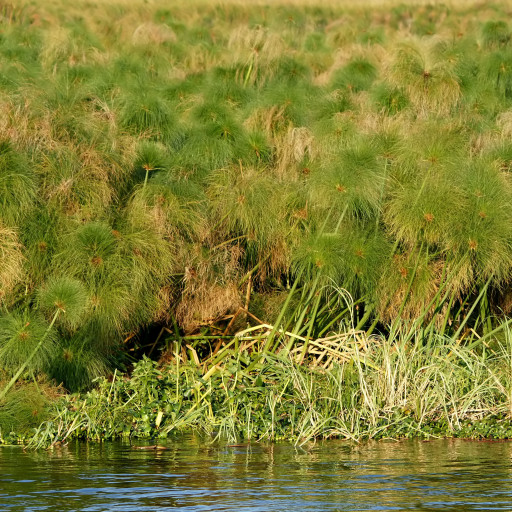
Plant Overview
Once the secret behind the world’s first writing surface, the Egyptian Papyrus is a living piece of history. This towering aquatic sedge, often called the "Paper Reed," brings an architectural, prehistoric vibe to any water feature or garden pond. Its graceful, explosive "pom-pom" heads sway in the breeze, echoing the ancient landscapes of the Nile River delta.
🔍 How to Identify
- 🎋 Triangular Stems: Unlike most grasses, the thick, pithy stalks are distinctly triangular (three-sided), smooth, and can reach heights of 10 feet in the wild.
- 🎆 The "Umbrella" Rays: The top of each stem features a "bract," a cluster of hundreds of thin, green, thread-like rays that fan out like a green firework.
- 🌾 Subtle Blooms: Tiny, brownish flower clusters appear at the ends of these green rays during the peak of summer, though they are often mistaken for part of the foliage.
🏡 In Your Garden
- 💧 Wet Feet Only: This plant is a true aquatic; it hates drying out and thrives when its roots are constantly submerged in a few inches of still or slow-moving water.
- ☀️ Sun Worshipper: To keep those massive stems upright and strong, it requires full, direct sunlight; in the shade, the plant becomes "leggy" and the stems may collapse under their own weight.
- 🛡️ Wind Protection: Because the stems are top-heavy, planting them in a spot shielded from high winds will prevent the beautiful feathery heads from snapping or bending.
⚠️ Safety & Toxicity
- ✅ Non-Toxic: Cyperus papyrus is generally considered non-toxic to cats, dogs, and humans.
- 🗡️ Physical Hazards: While not poisonous, the edges of the triangular stems and the thin rays can be quite tough and sharp. Handle with care to avoid minor skin "paper cuts," and keep it away from curious pets who might try to chew on the fibrous stalks.
✨ Fun Fact
📜 The English word "paper" is actually derived from the Greek word papyros. Ancient Egyptians didn't just write on it; they also used the buoyant, woody stalks to construct sturdy river boats, woven mats, and even sandals!

Detailed Care Instructions
| Color | Greenish-Brown |
| Soil Ph | 6.0 To 8.5 (Slightly Acidic To Alkaline) |
| Humidity | High |
| Lighting | Full Sun |
| Soil Type | Wet, Boggy Soil |
| Bloom Time | Mid To Late Summer |
| Difficulty | Hard |
| Plant Type | Sedge Or Rush |
| Mature Size | 5 To 8 Feet Tall; 2- To 4-Foot Spread |
| Native Area | Africa |
| Temperature | 18°C - 24°C |
| Sun Exposure | Full Sun To Part Shade |
| Hardiness Zones | 8 To 10 (Usda) |
To grow Cyperus Papyrus plant, also known as papyrus reed or paper reed, follow these steps:
- Choose a suitable location: The papyrus plant requires a sunny location and a lot of water, so choose a spot near a pond, water feature, or a well-drained area that can hold water. It does well in USDA hardiness zones 9-11.
- Prepare the planting container: Papyrus can be grown in containers or directly in the ground. If using containers, choose a large one with drainage holes to prevent waterlogging. Fill it with a mixture of loamy soil and organic matter.
- Start with seeds or established plants: Papyrus can be grown from seeds or from established plants. If using seeds, soak them in warm water overnight before planting.
- Plant the seeds/plant: Plant seeds 1/8 to 1/4 inch deep in the soil and keep them consistently moist. If using established plants, dig a hole deep enough to accommodate the roots, place the plant in the hole, backfill with soil, and firm it gently around the base.
- Provide water: Papyrus plants thrive in water-rich environments. Keep the soil or container consistently moist, but not waterlogged. If growing in a container, make sure it always has access to water.
- Fertilize: During the growing season, apply a balanced liquid or slow-release fertilizer every four to six weeks to promote healthy growth. Follow the package instructions for dosage and application.
- Ensuring proper growth conditions: Papyrus plants enjoy humid environments, so if you live in a dry climate, misting the foliage regularly will help maintain humidity levels. Also, be sure to provide adequate sunlight, as they prefer full sun for optimal growth.
- Prune as needed: Trim off any dead or damaged leaves or stems to promote healthy growth and maintain a tidy appearance.
- Winter care: In colder climates, papyrus plants can be brought indoors during winter. Place them near a sunny window or under grow lights and continue to provide water. Alternatively, treat them as annuals and replant new ones in the following spring. In milder climates, they can be left outside if protected from freezing temperatures.
By following these steps, you should be able to successfully grow Cyperus Papyrus plants and enjoy their unique beauty in your garden or water feature.

Place in a bright room that is sun drenched almost all day. Or directly in a south-facing window.

To water this plant, carefully pour water onto the soil in the container or directly onto the soil surface if the plant is planted in the ground. Make sure not to overwater the plant, as it can lead to root rot. Keep the soil moist, but not waterlogged, and allow the top 1-2 inches of soil to dry out before watering again. It is important to use room temperature water and avoid using water that has been treated with chemicals, such as softened water, as this can harm the plant. The plant likes to grow in a location with high humidity, so misting the leaves regularly or placing the pot on a tray of water-filled pebbles can be beneficial.
To fertilize the plant, use a balanced fertilizer with equal parts nitrogen, phosphorus, and potassium. Apply the fertilizer once every two weeks during the growing season, which is typically spring and summer. Be sure to dilute the fertilizer in water before applying, following the manufacturer's instructions. During the winter months, reduce fertilization to once a month or stop altogether. Avoid over-fertilizing the plant as it can cause damage to the roots and leaves.
The ideal soil for growing Cyperus Papyrus should be a mixture of organic matter and sandy loam soil. A pH level of 6.0 to 8.0 is most suitable for this plant. The soil should be well-draining and moist, but not waterlogged. Adding peat moss to the soil mixture can help retain moisture without causing drainage issues. It is important to avoid using heavy clay soils or soils that are too compact, as they can restrict root growth and cause damage to the plant. Additionally, it is recommended to fertilize regularly with a balanced, water-soluble fertilizer to promote healthy growth and development.
To propagate this plant, first select a healthy parent plant with several robust stems. Prepare a container with a well-draining soil mix. Cut the stems of the parent plant into pieces of approximately 6 inches in length, making sure each segment includes a node. Remove any leaves on the lower part of the stem. Dip the cut end of each segment in rooting hormone, then plant it about 2 inches deep in the soil mix. Water the soil well and keep it consistently moist, but not waterlogged. Place the container in a warm and bright location, out of direct sunlight. Over time, new shoots should appear from the nodes and roots should form. Once the new shoots have grown to 6-8 inches in height, they can be carefully separated from the parent plant and potted up individually. With proper care, the propagated plants will grow to become healthy and mature specimens.








