Plant Overview
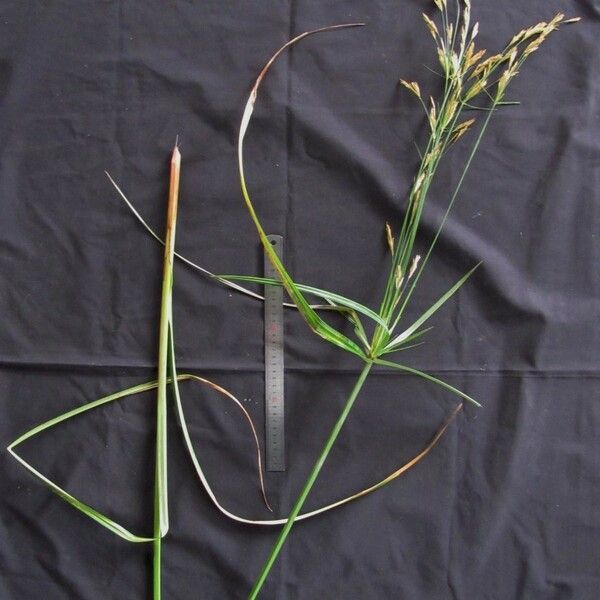
Often called the Giant Sedge or Slender Sedge, Cyperus prolixus is a towering, architectural marvel of the wetland world. A close relative of the famous Egyptian Papyrus, this plant acts as a natural skyscraper for riverbanks and marshes across Central and South America. Its explosive, umbrella-like canopy has made it a favorite for pond owners looking to add a touch of prehistoric elegance to their water features.
🔍 How to Identify
- 📐 Triangular Stems: True to the "sedges have edges" rule, the main stems are distinctly three-sided, stiff, and a vibrant, waxy green.
- ⛱️ Umbrella Canopy: The top of each stem features a "bract"—a circle of long, leaf-like structures that radiate outward like the spokes of an umbrella.
- 🌾 Feathery Flower Clusters: Rising from the center of the umbrella are delicate, branched stalks (rays) carrying hundreds of tiny, golden-brown spikelets that sway in the breeze.
🏡 In Your Garden
- 💧 The "Wet Feet" Rule: This plant is an obligate wetland species, meaning it doesn't just like water—it needs it. It thrives best when planted directly in the shallow margins of a pond or in soil that remains consistently soggy.
- ☀️ Sun and Space: To reach its full "giant" potential, it requires full sun. Be mindful of its size; in ideal conditions, it can grow quite large and may dominate smaller garden beds if not contained in a submerged pot.
⚠️ Safety & Toxicity
- ✅ Non-Toxic Status: Cyperus prolixus is generally considered non-toxic to humans, cats, and dogs, making it a safe choice for family-friendly landscapes.
- ✂️ Physical Irritation: While not chemically toxic, the edges of the long leaves can be surprisingly sharp. Use caution and wear gloves when pruning to avoid "grass cuts" on your hands and arms.
✨ Fun Fact
The species name prolixus is Latin for "stretched out" or "widely extended." This refers to its unusually long and airy flower branches, which give the plant a much more delicate and "wordy" appearance than its sturdier cousins.

Detailed Care Instructions
To grow a Cyperus prolixus plant, also known as the Dwarf Umbrella Plant or Sedge, you can follow these steps:
- Choose a suitable location: Cyperus prolixus plants thrive in bright indirect light. Select a spot in your home or garden that receives enough light but avoid direct sunlight as it can scorch the leaves.
- Select the right pot: Use a pot with good drainage to prevent waterlogging. Cyperus prolixus plants prefer consistently moist soil but should not be sitting in standing water.
- Prepare the soil: This plant prefers a rich, well-draining soil. Prepare a potting mix by mixing equal parts of peat moss, perlite, and sand or use a pre-mixed potting soil designed for houseplants.
- Planting: Place the Cyperus prolixus plant into the pot, making sure the roots are covered with soil and the plant is stable. Pat down the soil gently but avoid compacting it.
- Watering: Water the plant thoroughly, allowing excess water to drain away. Keep the soil consistently moist but avoid overwatering. Check the moisture level by inserting your finger about an inch into the soil – if it feels dry, it's time to water.
- Humidity: Cyperus prolixus plants prefer humid environments. You can increase humidity levels by placing a tray of water near the plant or using a room humidifier.
- Fertilizing: Feed the plant monthly during the growing season (spring and summer) with a balanced, water-soluble fertilizer diluted to half the recommended strength.
- Propagation: Cyperus prolixus can be propagated by dividing the plant. Carefully remove the plant from its pot and separate the clumps. Each clump should have roots and shoots intact. Replant the divided clumps in separate pots.
- Pruning: Trim any damaged or yellowing leaves to maintain the plant's appearance and health. Pruning can also help control the plant's size.
- Pests: Keep an eye out for common houseplant pests like spider mites or aphids. If you notice any infestation, use an appropriate insecticidal soap or consult a local nursery for guidance.
Remember to monitor your plant's growth and adjust the care accordingly. With consistent attention and proper care, your Cyperus prolixus plant should grow well and thrive.
To properly water this plant, ensure that the soil is consistently moist but not waterlogged. Check the soil frequently and water when the top inch of soil feels dry to the touch. Use room temperature water and water the soil directly, avoiding wetting the leaves as this can lead to disease. During the growing season, fertilize the plant with a balanced houseplant fertilizer every two to four weeks. Keep the plant in a bright, indirect light and maintain a warm, humid environment with temperatures between 60 and 75°F.
To fertilize this plant, you can use a balanced, water-soluble fertilizer with equal amounts of nitrogen, phosphorus, and potassium. It's recommended to dilute the fertilizer to half its normal strength. Water the plant with the diluted fertilizer every two weeks, during the growing season. Be cautious not to over-fertilize, as this may cause damage to the plant.
The plant Cyperus Prolixus requires a moist soil that is rich in organic matter. It prefers a soil that is slightly acidic to neutral, with a pH range of 5.5 to 7.5. When planting Cyperus Prolixus, it is important to use a well-draining soil mix that is made up of a combination of peat moss, perlite, and sand. The soil should be kept consistently moist, but not waterlogged, as this can lead to root rot. It is important to regularly fertilize Cyperus Prolixus with a balanced fertilizer to promote healthy growth. Additionally, the plant prefers bright, indirect light, and should be kept in a warm, humid environment.
The process of propagating this plant involves carefully separating its root system and replanting individual sections into fresh soil. It is important to choose healthy, mature plants for propagation, and to ensure that the soil is moist but not waterlogged before replanting. Once the plant has been divided, it should be watered regularly and kept in a warm, brightly lit area to encourage new growth. Over time, these individual sections will develop into full-grown plants that can be propagated further if desired.








