Plant Overview
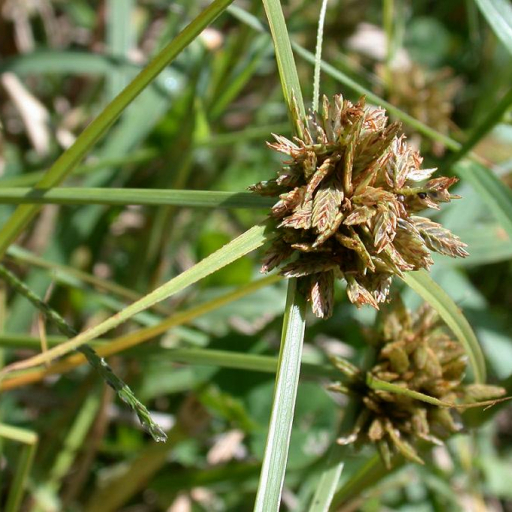
Often referred to as the Dark-purple Flatsedge, this petite inhabitant of the world's wetlands is a master of the damp. Its scientific name sounds a bit dramatic—sanguinolentus means "bloody"—referring to the striking deep wine-red or purple markings on its flower heads. While it often pops up uninvited in soggy garden patches or rice fields, it adds a unique, fine-textured aesthetic to any bog garden or naturalized water feature.
🔍 How to Identify
- 📐 The Stem: True to the "Sedges have edges" rule, this plant features a distinctly triangular stem that is smooth, hairless, and light green.
- 🍷 The Spikelets: The most defining trait is the cluster of flat, oval seed heads (spikelets) that boast dark, reddish-brown to purple margins, giving the plant its "stained" appearance.
- 🌿 The Foliage: The leaves are narrow, grass-like, and typically emerge from the base of the plant, often being shorter than the central flowering stalk.
🏡 In Your Garden
- 💧 Soggy Feet Preferred: This plant thrives where most others fail—in heavy, waterlogged soil. If it appears in your garden, it is a living indicator that your drainage is poor or that you have a hidden wet spot that stays consistently moist.
- 🌾 Natural Colonizer: It spreads through both seeds and short underground rhizomes. While it isn't as aggressive as some "Nut-sedge" relatives, it is highly efficient at filling in damp gaps between stones or around the muddy perimeter of a pond.
⚠️ Safety & Toxicity
- ✅ Safe Status: Cyperus sanguinolentus is generally considered non-toxic to humans, cats, dogs, and horses.
- 🌱 Physical Caution: While not poisonous, the leaves of many sedges have slightly sharp, silica-rich edges; handling them roughly can occasionally result in minor skin irritation or tiny "grass cuts."
✨ Fun Fact
The name sanguinolentus comes from the Latin word for "blood-stained," a reference to the plant's intense purple-red floral bracts that look like tiny, dark droplets scattered across the seed head.

Detailed Care Instructions

Place in a bright room that is sun drenched almost all day. Or directly in a south-facing window.

Some plants require more regular watering than others, which should be done every few days. It's critical to maintain the soil moist all of the time. The water requirements of the same plant placed in pots with varying sizes will differ. Because the water in the smaller pot evaporates faster than the water in the larger pot, it will require more watering. Regardless of pot size, the surface should constantly be maintained moist.








