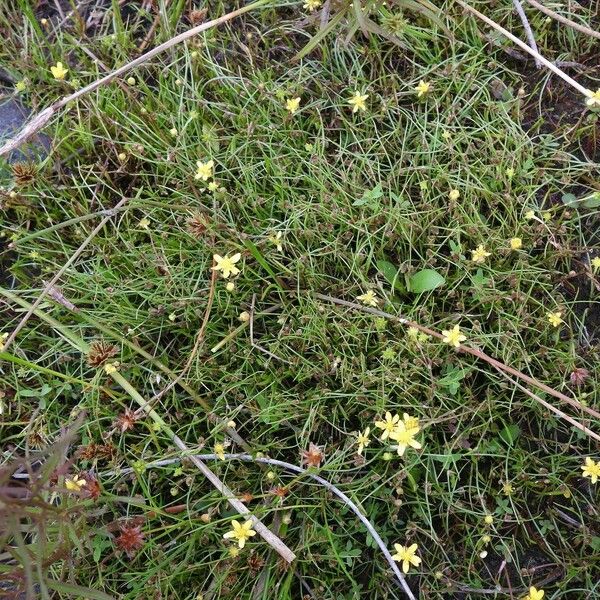
Plant Overview
Often called the Small-flowered Flatsedge or Dwarf Bulrush, this pint-sized plant is a master of the shoreline. It is a subtle beauty that often goes unnoticed until you are crouching down to inspect the edge of a pond or a receding lake. Despite its grass-like appearance, it is a true sedge, known for its ability to pop up suddenly when water levels drop in late summer.
🔍 How to Identify
- 📏 Diminutive Size: One of the smallest sedges you'll ever find, it usually grows in tiny, dense tufts that rarely exceed 4 to 6 inches in height.
- 🌾 Unique Flower Heads: Look for 1 to 3 small, greenish, egg-shaped "spikelets" clustered at the top of the stem. As they age, they turn a warm, golden-brown.
- 🍃 Leafy Bracts: Directly beneath the flower clusters, you will see two or three long, leaf-like structures (bracts) that stick out horizontally, often looking much longer than the plant is tall.
🏡 In Your Garden
- 💧 The Shoreline Specialist: This plant thrives in the "drawdown zone"—the muddy or sandy area exposed when water levels drop. It loves constant moisture but prefers its "feet" to be in damp sand rather than deep water.
- 🌱 Pioneer Spirit: It is a pioneer species, meaning it is one of the first plants to colonize bare, wet soil. It doesn't compete well with large, aggressive garden plants, so it is best suited for specialized native bog gardens or sandy pond edges where it has room to breathe.
⚠️ Safety & Toxicity
- ✅ Non-Toxic: There are no known toxins associated with the Small-flowered Flatsedge. It is generally safe for humans, dogs, and cats.
- 🐾 Wildlife Shelter: While it isn't a major food source, its dense, tufted growth habit provides excellent micro-habitats for tiny invertebrates and recently morphed froglets hiding from predators.
✨ Fun Fact
- ⏳ A Botanical Time Traveler: The seeds of this plant are incredibly resilient. They can stay dormant in the mud at the bottom of a pond for several years, only germinating when a drought or a dry summer exposes the soil to the sun!

Detailed Care Instructions







