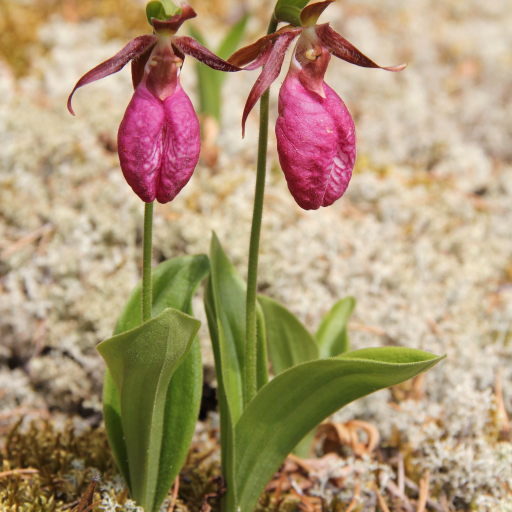
Plant Overview
Often called the Pink Lady's Slipper or Moccasin Flower, this striking wildflower is one of North America’s most iconic native orchids. Its unique, bulbous bloom looks like a delicate silken shoe dropped by a forest spirit, earning it a place in various indigenous legends and folklore. Finding one in the wild is a rare treat, as these plants are slow-growing and can live for twenty years or more.
🔍 How to Identify
- 🌸 The "Slipper": The most distinct feature is a single, large, drooping pink flower (labellum) that is shaped like a closed pouch with a vertical slit down the front.
- 🍃 Basal Leaves: Unlike many plants, it has no leaves on its stem. Instead, two large, thick, pleated green leaves emerge directly from the ground at the base.
- 🌱 Hairy Scape: The flower sits atop a single, leafless stalk that is covered in tiny, fine hairs, giving it a slightly fuzzy appearance.
🏡 In Your Garden
- 🍄 The Fungal Connection: This orchid is a "specialist." It relies on a symbiotic relationship with Rhizoctonia fungi in the soil to break down nutrients. Without this specific fungus, the plant cannot survive, which is why they almost always die when moved to a backyard garden.
- 🌲 Acidic Habitats: In the wild, you’ll find them tucked away in pine barrens or deciduous forests. They crave highly acidic, well-draining soil and filtered "dappled" sunlight. If you are lucky enough to have them on your property, the best care is to simply leave the surrounding leaf litter untouched.
⚠️ Safety & Toxicity
- 🚫 Skin Irritant: The glandular hairs on the leaves and stems contain a fatty acid that can cause contact dermatitis (a red, itchy rash) similar to poison ivy in sensitive individuals.
- 🛑 Legal Protection: In many states and provinces, it is illegal to pick or dig up these orchids. Because they are so difficult to propagate, removing them from the wild significantly threatens their survival.
- 🐾 Pets and Kids: While not considered deadly if ingested, the skin-irritating hairs can cause discomfort or mouth irritation for curious pets or toddlers.
✨ Fun Fact
The Pink Lady's Slipper is a master of "food deception." It lures bees into the slit of its pouch with a sweet scent, but offers absolutely no nectar inside. To get out, the bee must squeeze through a narrow passage, getting covered in pollen in the process—doing all the work of pollination for the plant with no sugary reward!

Detailed Care Instructions
| Humidity | High |
| Lighting | Full Sun |
| Toxicity | Poisonous |
| Difficulty | Medium |
| Temperature | 16°C - 26°C |
| Hardiness Zones | 7 - 11 |
To successfully grow Cypripedium acaule (also known as pink lady's slipper or moccasin flower), follow these steps:
- Choose the right location: Cypripedium acaule prefers shade or partial shade. Look for a spot in your garden that receives dappled sunlight or shade for most of the day. It is important to avoid direct sunlight, as it can scorch the delicate flowers.
- Soil preparation: These plants prefer slightly acidic soil with good drainage. Prepare the soil by removing weeds and improving its structure by adding organic matter like compost or well-rotted manure. This helps promote drainage and provides nutrients necessary for growth.
- Planting: Cypripedium acaule grows from rhizomes, which are fleshy root-like structures. Purchase healthy rhizomes from a reputable nursery or source. Dig a shallow hole, about 1-2 inches deep, and place the rhizome horizontally in the hole. Cover it with soil and gently firm it down.
- Watering: Keep the soil consistently moist, but not waterlogged. Avoid allowing the soil to dry out completely. During dry periods, water the plant regularly to ensure adequate moisture.
- Mulching: Apply a layer of organic mulch around the plant to help retain moisture and control weed growth. This is particularly important during the hot summer months.
- Fertilization: Cypripedium acaule does not typically require much fertilization. However, if you notice weak growth or yellowing leaves, you can apply a slow-release, balanced fertilizer in early spring or early fall.
- Protecting from pests: Monitor your plants for any signs of pest or disease damage. Slugs and snails are common pests that can damage the leaves and flowers. Use organic pest control methods like handpicking or setting up beer traps to deter them.
- Wildlife considerations: Cypripedium acaule is an important native plant that supports pollinators like bees and butterflies. Try to avoid disturbing the plants or their habitat to allow these pollinators to visit and ensure successful reproduction.
Remember, Cypripedium acaule is a slow-growing plant and might take a few years to mature and produce flowers. Be patient and continue to provide optimal growing conditions to enjoy the unique beauty of pink lady's slipper in your garden.

Place in a window with dappled sun or a spot in the middle of a room. Or directly in a window facing west or east.

Cypripedium Acaule is a type of orchid plant that requires careful watering to thrive. When watering this plant, it is important to avoid getting water on the leaves or crown, as this can lead to rot and disease. Instead, focus on watering the soil around the base of the plant.
The soil should be kept consistently moist but not waterlogged, as too much water can also be detrimental to the health of the plant. Wait until the top layer of soil has dried out slightly before watering again. During the growing season, which typically lasts from spring through to early fall, the plant may require additional watering to support its growth.
It is also important to water the plant with room temperature or tepid water, as cold water can shock the roots of the plant and cause damage. Over time, you will learn to gauge the watering needs of your Cypripedium Acaule plant, adjusting your watering routine as needed to support its health and growth.
- Use a balanced fertilizer that includes nitrogen, phosphorus, and potassium.
- Apply the fertilizer at half strength during the growing season.
- Apply the fertilizer once per month.
- Water the plant thoroughly before and after fertilizing.
- Avoid getting fertilizer on the leaves or flowers of the plant.
- Do not fertilize during the dormant season.
- Monitor the plant for any signs of over-fertilization, such as burned or yellow leaves.
- Adjust the frequency and amount of fertilizer based on the plant's response.
The best soil for this particular plant is acidic and well-draining. A pH level between 4.5 and 5.5 is ideal. The soil should be rich in organic matter and have good moisture holding capacity. A mixture of peat moss, perlite, and bark or sphagnum moss is a good option as it provides ideal drainage while retaining moisture. Additionally, a layer of leaf litter or pine needles can be added on top to mimic the plant's natural habitat.
Cypripedium Acaule is a species of flowering plant that belongs to the orchid family. It is a terrestrial orchid that is native to North America, and it is known for its beautiful pink or purple flowers. Propagating this plant can be done by dividing the rhizome or rootball of an established plant.
To start, choose a healthy plant that is at least two to three years old and has a well-established root system. Carefully dig up the plant and wash off any excess soil. Then, using a sharp, clean knife or scissors, cut the rhizome or rootball into several sections, ensuring that each section has a few healthy roots and at least one growing point or shoot.
Pot each section into a small pot filled with a well-draining soil mix. Water the newly potted plants gently and place them in a shaded area with indirect sunlight. Keep the soil consistently moist but not waterlogged, and continue to care for the plants as you would for an established Cypripedium Acaule plant.
It's important to note that propagating orchids can be a challenging task, and success rates may vary depending on environmental factors and the specific species being propagated. It is also recommended to consult with a horticulturist or experienced grower before attempting to propagate any orchid, including Cypripedium Acaule, to ensure the best results possible.
Common pests of the pink lady's-slipper include Scale insect, mealybugs, spider mites, thrips. Make a habit of checking your pink lady's-slipper frequently for pests so that any infestations can be caught and managed early.








