Plant Overview
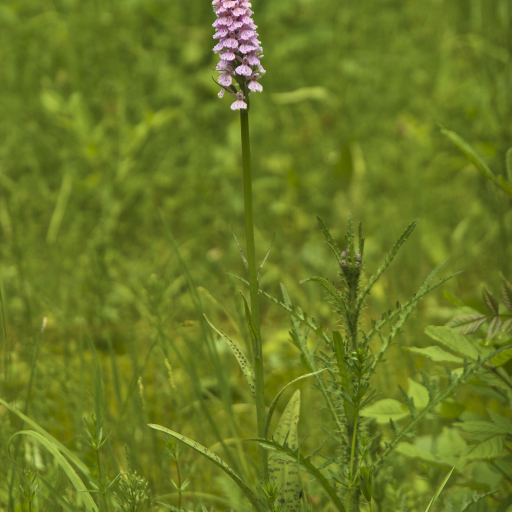
Known as the Heath Spotted-orchid, this elegant wildflower turns damp European moorlands and acidic meadows into a sea of lilac every summer. Its name, Dactylorhiza, translates to "finger-root," referring to its unusual underground tubers that look like a tiny, reaching hand. It is a symbol of wild, untamed landscapes and is beloved by pollinators for its intricate, nectar-rich blooms.
🔍 How to Identify
- 🍃 Spotted Foliage: The most striking feature is the lance-shaped leaves, which are heavily marked with dark purple or brownish-black spots that look like ink splatters.
- 🌸 Ornate Blooms: It produces a dense, conical spike of flowers ranging from pale pink to deep lilac. Each individual flower has a "three-lobed" lower lip decorated with delicate lines and dots.
- 👐 Finger-like Tubers: If you were to see the roots (though you should never dig them up!), they are distinctively "palmate," resembling a hand with spread-out fingers.
🏡 In Your Garden
- 🌫️ A Specific Palate: Unlike hardy garden perennials, this orchid is a specialist of damp, acidic, and nutrient-poor environments. It rarely succeeds in standard potting mix or rich garden soil because it requires a specific "fungal partner" in the earth to survive.
- 🚫 The "Leave It Be" Rule: This plant is notoriously difficult to transplant because moving it breaks its connection with symbiotic soil fungi (mycorrhizae). If you are lucky enough to have them appear naturally, the best care is simply to avoid using fertilizers or pesticides in that area.
⚠️ Safety & Toxicity
- 🐾 Pet & Child Friendly: The Heath Spotted-orchid is generally considered non-toxic to humans, cats, and dogs.
- 🛡️ Conservation Status: While not toxic, the plant is legally protected in many regions. Digging up wild orchids is often a punishable offense, and because they are so sensitive, they almost always die when moved from their natural habitat.
✨ Fun Fact
Because orchid seeds are as tiny as dust and contain no food reserves, they cannot grow alone. To germinate, a seed must be "infected" by a specific soil fungus that provides it with sugar and nutrients until the orchid is large enough to grow its own leaves!

Detailed Care Instructions
| Humidity | Normal |
| Lighting | Shade |
| Difficulty | Medium |
| Hibernation | Cold Period |
| Hardiness Zones | 6 - 8 |
Growing Dactylorhiza maculata, commonly known as the spotted orchid or heath spotted orchid, can be a rewarding experience, but it requires specific conditions and care. Here are the steps to help you grow this beautiful orchid:
1. Site Selection
- Habitat: Dactylorhiza maculata thrives in moist, well-drained soil. It can often be found in damp meadows, heathlands, and boggy areas.
- Light: These orchids prefer partial shade to full sun. A location with dappled sunlight beneath deciduous trees or shrubs is ideal.
- Soil: The soil should be slightly acidic to neutral. You can amend the planting area with peat or leaf mold to achieve the desired pH and moisture level.
2. Soil Preparation
- Drainage: Ensure good drainage. While these plants like moist conditions, they don’t tolerate waterlogged soil.
- Nutrients: Orchids typically grow in nutrient-poor conditions, so avoid using high-nitrogen fertilizers. A balanced, slow-release fertilizer applied sparingly can be beneficial.
3. Planting
- Season: The best time to plant Dactylorhiza maculata is in the fall or early spring.
- Plant Depth and Spacing: Plant the tubers about 1-2 inches deep. Space them about 6-12 inches apart to allow for growth and air circulation.
4. Watering
- Moisture: Keep the soil consistently moist but not waterlogged. Regular watering during dry periods is important, particularly during the growing season (spring and summer).
5. Maintenance
- Mulching: Apply a light mulch of leaf mold or compost in the fall to protect the roots and maintain soil moisture.
- Fertilizing: Use a balanced fertilizer sparingly. Over-fertilizing can harm the plant.
- Weeding: Keep the area around the plants free of weeds to reduce competition for nutrients and light.
6. Propagation
- Division: Dactylorhiza maculata can be propagated by division. This is best done in the fall or early spring. Carefully dig up the plant and separate the tubers, ensuring each section has healthy roots and shoots.
- Seeds: Growing from seed is more complex and requires specific conditions like symbiotic fungi to assist with germination. This method is typically used more by experienced orchid growers or in controlled environments like greenhouses.
7. Pests and Diseases
- Pests: Slugs and snails can be a problem. Use barriers or organic slug deterrents to protect your plants.
- Diseases: Watch for signs of fungal diseases, which can occur in overly wet conditions. Ensure good air circulation and avoid waterlogging to prevent these issues.
8. Winter Care
- Protection: In colder climates, provide some protection during the winter months. A layer of mulch can help insulate the roots.
By following these guidelines and providing the right conditions, you can successfully grow and enjoy the beauty of Dactylorhiza maculata in your garden. Remember, patience and careful observation are key to orchid cultivation.

Place in a window with dappled sun or a spot in the middle of a room. Or directly in a window facing west or east.

Dactylorhiza Maculata is a species of orchid that requires a specific watering regimen to ensure optimal growth and health. When watering this plant, it is important to avoid getting water on the leaves or flowers, as this can lead to rot or fungal infections. Instead, water should be directed at the base of the plant, aiming for the soil or substrate. It is best to use room temperature water or slightly tepid water, poured slowly and evenly around the base of the plant, taking care not to create standing water or saturate the soil. This orchid requires regular watering, but it is important not to overwater, as this can result in root rot or other issues. It is recommended to water Dactylorhiza Maculata on a regular schedule, depending on the season and the specific environmental conditions, taking care to monitor the soil moisture levels and adjust the watering frequency as needed.
When fertilizing Dactylorhiza maculata, follow these guidelines to ensure optimal growth and health:
- Timing: Fertilize in early spring when new growth begins and continue through the end of summer.
- Type of Fertilizer:
- Use a balanced, water-soluble fertilizer with a ratio like 10-10-10 or a specialized orchid fertilizer diluted to half strength.
- An organic alternative, such as well-rotted compost or liquid seaweed extract, can also be effective if you prefer a more natural approach.
- Use a balanced, water-soluble fertilizer with a ratio like 10-10-10 or a specialized orchid fertilizer diluted to half strength.
- Application Frequency:
- Apply the chosen fertilizer once a month during the growing season.
- Reduce feeding in late summer to allow the plant to prepare for dormancy.
- Apply the chosen fertilizer once a month during the growing season.
- Application Method:
- If using a water-soluble fertilizer, mix it according to the package instructions but at half the recommended strength.
- Water the soil lightly before applying the fertilizer to avoid root burn.
- Apply the fertilizer solution directly onto the soil around the base of the plant, avoiding contact with the leaves and flowers.
- If using a water-soluble fertilizer, mix it according to the package instructions but at half the recommended strength.
- Monitoring: Keep an eye on the plant's response to the fertilization. If the foliage starts turning yellow or shows signs of burning, reduce the frequency or concentration of the fertilizer.
By following these steps, you should be able to provide the necessary nutrients to support the healthy growth and blooming of your Dactylorhiza maculata.
For the Dactylorhiza Maculata plant, it is recommended to use a well-draining soil that is rich in organic matter. The soil should have a slightly acidic pH level of around 6.0 to 6.5. It is also important to ensure that the soil is not excessively wet, as this can lead to root rot and other issues. Adding perlite or sand to the soil mixture can improve drainage. Additionally, regular fertilization with a balanced, water-soluble fertilizer can help the plant thrive.
Propagating Dactylorhiza maculata, an orchid species, can be challenging but rewarding. Here are the steps involved:
1. Seed Propagation
Propagating this plant from seeds is complex and typically requires a laboratory setting due to the plant's mycorrhizal fungal relationships. Here's a simplified overview:
a. Seed Collection
- Collect seeds from mature pods. The seeds are minute, dust-like, and require careful handling.
b. Sterile Conditions
- Seeds need to be sown in a sterile medium. Contamination with fungi or bacteria can hinder their growth.
c. Symbiotic Germination
- This orchid relies on symbiotic fungi to germinate. One method involves introducing a compatible fungal strain to the sterile culture medium.
d. Plant Tissue Culture
- Another approach is micropropagation, where the seeds are grown in vitro on a nutrient-rich gel medium, often supplemented with hormones to encourage growth.
2. Division
Division is a more straightforward method but requires mature plants. Here's how you can do it:
a. Ideal Season
- The best time to divide is during the dormant season, usually in early spring or late autumn.
b. Uprooting
- Carefully dig up the plant to expose the tuberous roots. Handle the roots gently as they are fragile.
c. Separating Tubers
- Use a sterilized knife to divide the tuberous roots into sections, ensuring each section has at least one bud or growth point.
d. Planting
- Replant each section in a suitable growing medium, ideally a moist, well-drained, and relatively neutral to slightly acidic soil. Orchids thrive in a mix of loam and leaf mold, often with added grit for drainage.
e. Post-division Care
- Water the newly planted divisions well and keep the soil slightly moist. It's crucial to place them in a sheltered location, away from direct sun initially to avoid stress on the newly divided plants.
3. In Vitro Propagation
For those with access to specialized equipment, in vitro techniques offer a controlled environment to raise new plants.
a. Explant Preparation
- Small plant tissue samples (explant) are taken and sterilized.
b. Nutrient Medium
- The explant is placed on a nutrient medium, containing necessary vitamins, minerals, and plant growth regulators (like cytokinins and auxins).
c. Culturing Conditions
- The culture should be maintained under controlled temperatures, light, and humidity.
d. Acclimatization
- Once plantlets are large enough, they need to be acclimatized by gradually exposing them to natural growing conditions. This typically involves transferring them to pots with a suitable mix and gradually reducing humidity.
4. Environmental Conditions
Regardless of the propagation method, maintaining the right environmental conditions is crucial for success:
- Light: Provide partial shade with protection from harsh, direct sunlight.
- Soil: Keep the soil consistently moist but well-drained.
- Humidity: High humidity levels are beneficial, often achievable with misting.
By using these methods, it's possible to propagate Dactylorhiza maculata successfully. However, patience and careful attention to detail are required, as orchids can be sensitive to changes in their growing conditions.








