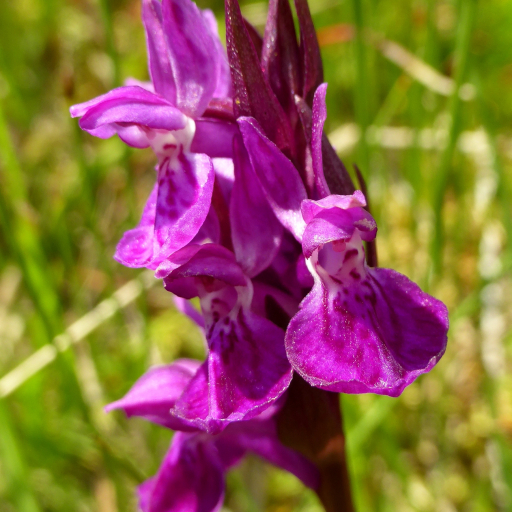
Plant Overview
Known as Traunsteiner's Orchid or the Narrow-leaved Marsh-orchid, this elegant plant is a rare inhabitant of the dampest corners of Europe. Named after the Austrian pharmacist Joseph Traunsteiner, it is often found standing like a slender purple sentinel in fens and marshes. It is a plant of quiet mystery, appearing only where the soil is perfectly balanced and the water is pure.
🔍 How to Identify
- 🌸 The Bloom: Look for a loose spike of 5 to 15 deep purple or pinkish-magenta flowers. Each flower has a three-lobed "lip" decorated with intricate darker lines and spots.
- 🍃 The Leaves: Unlike its chunkier cousins, this orchid has very narrow, lance-shaped leaves that point upwards. They are often marked with tiny, dark purple spots.
- 📏 The Stem: The stem is remarkably slender and often turns a reddish-purple hue near the top, helping it blend into the surrounding grasses.
🏡 In Your Garden & Nature
- 💧 Marsh Specialist: This isn't your typical garden orchid; it thrives in "base-rich" fens—wetlands that are alkaline rather than acidic. It requires constant moisture but hates stagnant, "sour" water.
- 🤝 Fungal Friendships: Like most wild orchids, it survives through a complex partnership with underground fungi (mycorrhizae). Because of this sensitive relationship, it almost never survives being transplanted into a backyard pot.
- 🛡️ Conservation Status: In many regions, this plant is protected by law. If you find one in the wild, admire it with your camera only—disturbing the soil around it can destroy the delicate fungal network it needs to survive.
⚠️ Safety & Toxicity
- 🟢 Non-Toxic: This plant is generally considered non-toxic to humans and pets.
- 🚫 Handle with Care: While it won’t hurt you, you might hurt it. The oils from human skin can sometimes interfere with the delicate surfaces of orchid leaves, and its root system is incredibly fragile.
- ⚖️ Legal Warning: In many European countries, picking or digging up this orchid is a legal offense due to its rarity and declining habitat.
✨ Fun Fact
Orchids like Dactylorhiza traunsteineri are master deceivers! They often produce little to no nectar, tricking bees and flies into pollinating them by mimicking the scent and vibrant colors of other, more "generous" nectar-producing flowers nearby.

Detailed Care Instructions

Place in a window with dappled sun or a spot in the middle of a room. Or directly in a window facing west or east.

Some plants require more regular watering than others, which should be done every few days. It's critical to maintain the soil moist all of the time. The water requirements of the same plant placed in pots with varying sizes will differ. Because the water in the smaller pot evaporates faster than the water in the larger pot, it will require more watering. Regardless of pot size, the surface should constantly be maintained moist.








