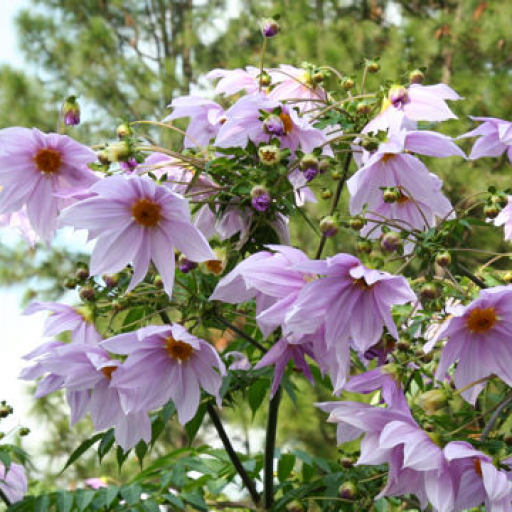
Plant Overview
Often called the "Bell Tree Dahlia," this botanical giant is the skyscraper of the garden world, capable of reaching heights of 20 to 30 feet in a single season. Native to the mountains of Mexico and Central America, it was a prized plant in Aztec culture for both its beauty and its utility. Unlike its smaller cousins, this Dahlia resembles a stand of bamboo topped with a crown of delicate, nodding lavender blooms.
🔍 How to Identify
- 🎋 Towering Stems: Look for thick, multi-angled, hollow stems that strongly resemble bamboo, often reaching several inches in diameter.
- 🌿 Ornate Foliage: The leaves are massive and "bipinnate," meaning they are divided into many smaller leaflets, creating a lush, fern-like canopy at the top of the stalks.
- 🔔 Pendulous Flowers: In late autumn or early winter, the plant produces clusters of large, bell-shaped flowers with eight mauve or pink petals and a bright yellow "eye" at the center.
🏡 In Your Garden
- 🌬️ Wind Protection: Because the towering stems are hollow and brittle, they can snap easily during autumn storms; always plant them against a fence or provide sturdy stakes.
- ⏳ Late Season Performance: This is a "short-day" bloomer, meaning it won't flower until the nights get longer in late fall. If you live in a climate with early frost, the cold might zap the buds before they have a chance to open.
- 🍽️ Heavy Feeders: These giants require significant energy to grow 15 feet in a few months; they thrive in rich, compost-heavy soil and appreciate consistent moisture during the peak summer heat.
⚠️ Safety & Toxicity
- 🟢 Generally Safe: The Tree Dahlia is not considered highly toxic to humans or most livestock.
- 🐾 Pet Caution: While not deadly, the tubers and foliage can cause mild digestive upset or skin irritation in dogs and cats if consumed in large quantities or if the sap comes into contact with sensitive skin.
✨ Fun Fact
The Aztec name for this plant was Acocoxochitl, which translates to "water pipe flower." This refers to the hollow, water-filled stems, which were historically used by travelers as a source of fresh drinking water and by engineers as makeshift pipes.

Detailed Care Instructions
To grow Dahlia Imperialis (commonly known as the tree dahlia), you can follow these steps:
- Climate and location: Tree dahlias thrive in mild to warm climates, ideally in USDA hardiness zones 9-11. Choose a location that receives full sun or partial shade.
- Soil preparation: The soil should be well-draining and rich in organic matter. Before planting, amend the soil with compost or well-rotted manure.
- Planting: Tree dahlias can be propagated from tubers, cuttings, or seeds. Tubers are the most common and easiest method. Plant them in early spring, after the last frost has passed. Dig a hole large enough to accommodate the tuber, and place it horizontally with the eyes facing upwards. Cover the tuber with soil, leaving a couple of inches above the ground.
- Watering: Water the newly planted tuber thoroughly and keep the soil consistently moist throughout the growing season. Avoid overwatering, as excessive moisture can cause the tuber to rot.
- Supporting the plant: As the dahlia grows, it will develop tall, bamboo-like canes that may require support. Insert stakes or stakes and string near the plant to prevent it from tipping over in windy conditions.
- Fertilization: Apply a balanced, slow-release fertilizer in early spring. Alternatively, you can feed the plant with liquid fertilizer every few weeks during the growing season.
- Pruning: Prune the tree dahlia to maintain its shape and encourage bushier growth. Remove any dead or damaged stems, and pinch or cut back the tips of the main stems to promote branching.
- Pest and disease control: Monitor the plant regularly for common pests like aphids, slugs, and spider mites. Use organic or chemical pest control methods as needed. Tree dahlias are generally hardy and not very susceptible to diseases.
- Winter care: In areas with cold winters, protect the tubers from frost damage by digging them up before the first frost. Cut back the foliage and store the tubers in a cool, dry place until the following spring.
By following these guidelines, you should be able to successfully grow Dahlia Imperialis and enjoy its stunning blooms.

Place in a bright room that is sun drenched almost all day. Or directly in a south-facing window.

To water this particular plant, it is important to make sure that the soil is consistently moist but never waterlogged. This can be achieved by watering deeply once or twice a week, depending on the climate and humidity of the area. It is also important to water at the base of the plant, avoiding the leaves and flowers, to prevent fungal diseases from developing. Watering in the morning is ideal as it allows the plant to absorb moisture before the heat of the day. Additionally, it is important to monitor the plant for signs of over or under-watering, including wilted or yellowing leaves, and adjust watering accordingly.
To fertilize the plant, you can use a balanced fertilizer with equal amounts of nitrogen, phosphorus, and potassium. Fertilize every two weeks during the growing season. Add the fertilizer to the soil around the base of the plant, being careful not to get any on the leaves or stems. Water the plant after fertilizing to ensure that the nutrients are absorbed properly.
To cultivate the Dahlia Imperialis plant, it is recommended to use a premium quality soil that is rich in organic matter and well-draining. The ideal pH range for this plant is slightly acidic to neutral, between 6.0 to 7.0. It is advised to avoid using heavy clay soil or those with a high content of sand as they can cause poor drainage and make it challenging for the plant to thrive. Instead, a loamy soil mixture that contains a balanced amount of sand, silt, and clay is preferable. Additionally, adding a slow-release fertilizer to the soil can provide the necessary nutrients for optimum growth. It is essential to avoid over-fertilizing as it can damage the roots and lead to nutrient burn. Lastly, to ensure that the soil is free of pests and diseases, it is recommended to sterilize it by baking in the oven or treating it with a fungicide.
There are several ways to propagate this plant. One way is to take stem cuttings from a mature plant. Choose a healthy stem that is several inches long and has at least two or three nodes. Cut the stem at a 45-degree angle with clean, sharp scissors or pruning shears. Remove any leaves from the bottom half of the stem and dip it into rooting hormone. Plant the stem in a pot or container filled with a well-draining soil mix and water it thoroughly. Place the pot in a bright, warm location but avoid direct sunlight. After a few weeks, roots should begin to develop and new growth should appear.
Another way to propagate this plant is by dividing its tubers. This is typically done in the fall or early spring when the plant is dormant. Dig up the tuber and use a clean, sharp knife to cut it in half or into smaller pieces, making sure each piece has a bud or two. Plant each piece in a pot or container filled with a well-draining soil mix and water it thoroughly. Place the pot in a bright, warm location but avoid direct sunlight. After a few weeks, new growth should appear from the tuber.
Lastly, this plant can also be propagated by seed. Collect the seeds from a mature plant and plant them in a pot or container filled with a well-draining soil mix. Cover the seeds with a thin layer of soil and water accordingly. Place the pot in a bright, warm location but avoid direct sunlight. After a few weeks, seedlings should emerge and begin to grow.
Common pests of the bell tree dahlia include Spider mites, aphids, thrips, snails. Make a habit of checking your bell tree dahlia frequently for pests so that any infestations can be caught and managed early.








