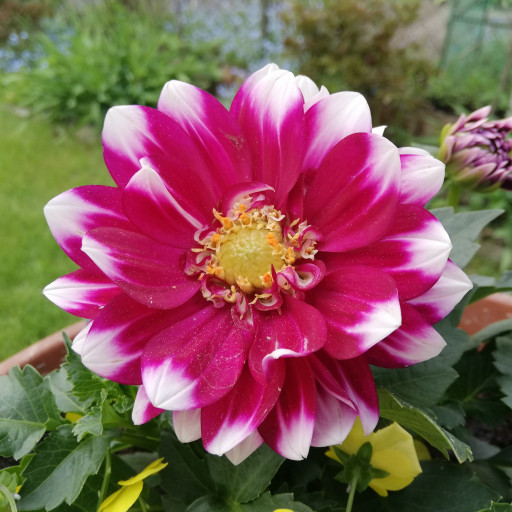
Plant Overview
Often called the "Garden Dahlia," Dahlia pinnata is the proud national flower of Mexico and a historic treasure of the Aztec Empire. These sun-loving showstoppers are famous for their symmetrical, geometry-defying petals that look almost too perfect to be real. From soft pastels to fiery bicolors, they serve as the dramatic centerpiece of any late-summer landscape.
🔍 How to Identify
- 🍃 Pinnate Foliage: True to its name, the leaves are "pinnate," meaning they grow in pairs along the stem, often featuring 3 to 5 serrated leaflets that look like small green feathers.
- 🎨 Layered Blooms: The flowers are composite heads, featuring a dense center of disk florets surrounded by multiple rings of colorful ray florets (petals) that can be flat, involute, or curled.
- 🥔 Tuberous Roots: Underground, the plant grows from a cluster of starchy, potato-like tubers that store the energy needed for its explosive summer growth.
🏡 In Your Garden
- 🌞 The Hunger for Light: To produce those massive, dinner-plate blooms, these plants require at least 6–8 hours of direct sunlight. In shadier spots, the stems become "leggy" and weak, often snapping under the weight of their own flowers.
- 💧 Thirsty but Drainage-Dependent: While they love consistent moisture during the blooming season, their tubers are prone to rot. They prefer rich, loamy soil that drinks deeply but sheds excess water quickly.
- ❄️ Winter Nap: In cooler climates, these are treated as tender perennials. Once the first frost hits and the foliage turns black, you must lift the tubers from the ground and store them in a cool, dry place until spring.
⚠️ Safety & Toxicity
- 🐾 Mildly Toxic: Dahlia pinnata is considered toxic to dogs, cats, and horses.
- 🤢 The Symptoms: If ingested, it can cause mild gastrointestinal upset (vomiting or diarrhea). Additionally, the sap from the stems can cause skin irritation or "phototoxic dermatitis" in both pets and humans if handled frequently in bright sunlight.
✨ Fun Fact
The Aztecs didn't just grow Dahlias for their beauty—they used the long, hollow stems of certain species as water pipes and harvested the starchy tubers as a source of food and medicine to treat epilepsy!

Detailed Care Instructions
| Lighting | Full Sun |
| Hardiness Zones | Min 8A |
To grow Dahlia Pinnata plants, follow these steps:
- Choose a sunny location: Dahlias thrive in bright sunlight, so select a spot in your garden that receives at least six to eight hours of direct sunlight each day.
- Prepare the soil: The soil should be well-draining, rich in organic matter, and slightly acidic (pH around 6.5-7.0). Loosen the soil using a garden fork or tiller, and incorporate compost or well-rotted manure to improve its fertility.
- Plant the tubers: Dahlia Pinnata is typically grown from tubers, not seeds. Plant the tubers directly in the ground after the danger of frost has passed in spring. Dig a hole that is wide and deep enough to accommodate the tuber, ensuring that the eye (the budlike structure where the new growth will emerge) is facing up.
- Space the plants: The distance between the tubers will depend on the variety you are growing. Generally, plant taller varieties 2-3 feet apart and smaller varieties 1-2 feet apart.
- Watering: Dahlias require regular watering, especially during dry spells. Water deeply, ensuring the soil is thoroughly soaked but not waterlogged. Avoid overhead watering to prevent fungal diseases. Mulching around the plants can help retain moisture.
- Provide support: As the plants grow, they may need support to prevent them from falling over. Stake or cage them to keep them upright and protect them from wind damage.
- Fertilize: Dahlias benefit from regular feeding. Apply a balanced fertilizer once a month during the growing season. Alternatively, use a slow-release fertilizer at planting time for extended feeding.
- Pinch or prune: To encourage bushier growth and more blooms, pinch off the top of the main stem when the plant is about a foot tall. This will promote the growth of sideshoots. Additionally, deadhead spent flowers regularly to promote continuous blooming.
- Protect from pests and diseases: Dahlias can be susceptible to pests like aphids, slugs, and snails. Monitor the plants regularly and take appropriate action if you notice any infestations. Protect the plants from fungal diseases, such as powdery mildew, by providing good air circulation and avoiding overhead watering.
- Harvest and store tubers: In autumn, after the first frost kills the foliage, dig up the tubers carefully with a garden fork. Let them dry for a few days, then cut off the stems and store the tubers in a cool, dry place for the winter. Replant them again in spring after the frost danger has passed.
By following these steps, you should be able to grow healthy and beautiful Dahlia Pinnata plants in your garden.

Place in a bright room that is sun drenched almost all day. Or directly in a south-facing window.

Dahlia pinnata plant requires regular and consistent watering. Ensure that the soil is moist but not waterlogged, as waterlogging can lead to root rot and other diseases. The frequency of watering depends on various factors such as soil type, climate, humidity, and temperature. Watering once or twice a week is generally sufficient, but during hot and dry weather conditions, the plant may require more frequent watering.
When watering, it is essential to water the plant deeply, ensuring that the water reaches the root system. Avoid splashing water on the foliage, as it can increase the risk of fungal diseases. Watering the plant in the morning or evening when the sun is not intense is the best time, as it reduces the chance of water evaporation.
It is recommended to mulch the base of the plant with organic matter such as bark, wood chips, or straw. This helps to retain moisture in the soil, reduce weed growth, and regulate soil temperature. Mulching also protects the root system from extreme temperatures and prevents soil erosion.
During the flowering season, the plant may require more water as it expends energy to produce blooms. It is essential to monitor the soil moisture regularly and adjust watering accordingly. Overwatering or underwatering can affect the plant's growth and flowering.
In summary, Dahlia pinnata plant requires regular and consistent watering, deep watering, and avoiding waterlogging. Mulching the soil with organic matter helps to retain moisture and regulate soil temperature. Monitoring soil moisture and adjusting watering during the flowering season is essential for the plant's growth and blooming.
To fertilize this plant, it is recommended to use a balanced fertilizer with equal amounts of nitrogen, phosphorus, and potassium. Apply the fertilizer to the soil around the base of the plant, avoiding direct contact with the leaves. Water the plant immediately after fertilizing to help the nutrients penetrate the soil. It is important to fertilize regularly throughout the growing season, typically every two to four weeks. Avoid overfertilizing, as this can lead to excessive growth and weakened stems.
For optimal growth and development of the plant commonly known as Dahlia Pinnata, it is recommended to use a soil that is well-draining and rich in organic matter. This will help to ensure that the plant receives the necessary nutrients and water while also avoiding any waterlogged conditions that can lead to root rot. A pH level between 6.0 and 7.5 is ideal for the plant's growth, and the soil should be deep enough to accommodate the plant's root system. Additionally, adding a layer of mulch on top of the soil can help to retain moisture and suppress weed growth around the plant.
To propagate this plant, begin by selecting a healthy and mature stem that is free from any visible disease or damage. Take a sharp, sterilized pruning shears or a pair of scissors and cut a 4 to 6 inches long section of the stem just below a node. Remove any leaves from the bottom half of the stem. Dip the cut end of the stem in a rooting hormone powder to enhance rooting.
Now prepare a pot with a high-quality well-draining potting mix. Poke a small hole in the middle of the soil using a pencil or your finger and insert the stem cutting, burying the leafless half of the cutting beneath the soil. Firmly press the soil around the stem cutting to eliminate any air pockets. Water the soil lightly but thoroughly and cover the pot with a clear plastic bag to create a greenhouse-like environment.
Place the pot in a warm, bright location that receives indirect sunlight, and ensure to keep the soil moist but not waterlogged throughout the propagation process. Check the cutting frequently for signs of rooting, which can take several weeks.
Once the cutting develops roots, remove the plastic bag and transplant the new plant into its permanent location in well-draining soil that is rich in organic matter. Fertilize the plant regularly during the growing season, and provide adequate water to encourage healthy growth.
Common pests of the dahlia include Spider mites, aphids, thrips, snails. Make a habit of checking your dahlia frequently for pests so that any infestations can be caught and managed early.








