Plant Overview
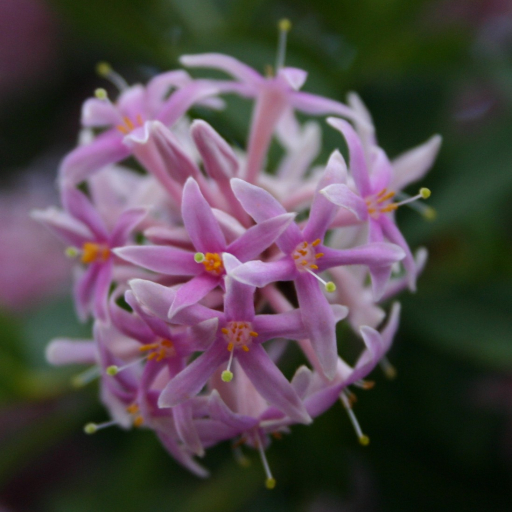
Known affectionately as the Pompon Tree, this South African gem is nature’s version of a garden party decoration. When in full bloom, the tree is almost entirely obscured by a cloud of soft, lilac-pink floral spheres that look like delicate cheerleader pompons. It is a favorite among landscapers for its fast growth and its ability to transform a simple backyard into a fairytale setting every summer.
🔍 How to Identify
- 🌸 The "Pompon" Bloom: The most distinct feature is the 4-5cm spherical flower head. Each "ball" is actually a cluster of dozens of tiny, tubular, star-shaped flowers with long, protruding stamens that give it a fuzzy appearance.
- 🍃 Bluish Foliage: The leaves are a smooth, sea-green to bluish-green color. They are simple, oval-shaped, and look very similar to the leaves of a Smoke Bush (Cotinus), which is how the plant earned its botanical name cotinifolia.
- 🪵 Neat Habit: It is a small to medium-sized tree with a tidy, rounded crown and smooth, grey-brown bark that becomes slightly textured as it matures.
🏡 In Your Garden
- ☀️ Sun and Drainage: To get that explosion of pink flowers, this tree needs a spot in full sun. It isn't picky about soil types, but it absolutely demands good drainage; it hates having "wet feet," which can lead to root rot.
- 🏗️ Pavement Friendly: Unlike many fast-growing trees, the Pompon Tree has a non-aggressive root system. This makes it an ideal choice for planting near swimming pools, patios, or driveways where you want shade and beauty without the risk of lifting bricks or tiles.
⚠️ Safety & Toxicity
- ✅ Safe Status: Dais cotinifolia is generally considered non-toxic to humans and animals.
- 🐾 Pet Context: It is a safe choice for pet owners. While it doesn't contain the harsh alkaloids found in some other flowering trees, it is always a good practice to prevent pets from chewing on the bark or foliage to avoid any potential mild digestive upset.
✨ Fun Fact
🧵 Nature’s Sewing Kit: The inner bark of this tree is incredibly tough and fibrous. In Southern Africa, it has been traditionally used to create a very strong, high-quality thread and rope. This earned it the common name "Kannabast" in Afrikaans, referring to its use as a source of fiber.

Detailed Care Instructions
| Humidity | Normal |
| Lighting | Full Sun |
| Difficulty | Medium |
| Hibernation | Cold Period |
| Hardiness Zones | 9A - 11 |
To successfully grow Dais cotinifolia, also known as Pompon tree or Pompom tree, follow these steps:
- Climate and location: Dais cotinifolia requires a warm or subtropical climate, thriving in USDA hardiness zones 9-11. Choose a location with full sun exposure and protection from strong winds.
- Soil preparation: The plant prefers well-drained soil with a slightly acidic to neutral pH level. Prepare the soil by loosening it and removing any weeds or rocks. Incorporate organic matter like compost to improve drainage and nutrient content.
- Planting: Dig a hole that is slightly wider and deeper than the plant's root ball. Place the plant in the hole and backfill with soil, gently firming it around the roots. Water thoroughly after planting.
- Watering: Dais cotinifolia requires regular watering to establish itself, especially during hot and dry periods. Ensure the soil remains moist but not waterlogged. Reduce frequency once the plant is established, allowing the top few inches of soil to dry out between waterings.
- Mulching: Apply a layer of organic mulch around the base of the plant to help retain moisture, suppress weeds, and regulate soil temperature. Maintain a distance of a few inches between the mulch and the stem to prevent rotting.
- Pruning: Prune Dais cotinifolia during late winter or early spring to shape the plant and remove any dead or diseased branches. This promotes a bushier growth habit and enhances the overall appearance of the tree. Remove spent flowers to encourage new growth.
- Fertilization: Apply a slow-release, balanced fertilizer during the growing season to provide essential nutrients to the plant. Follow the package instructions for proper dosage and application. Avoid over-fertilization, as it can lead to excessive vegetative growth and reduced flowering.
- Pest and disease management: Dais cotinifolia is generally resistant to most pests and diseases. However, keep an eye out for common issues like aphids, mealybugs, or powdery mildew. If necessary, use appropriate organic or chemical control methods to address infestations.
By following these steps, you should be able to grow and maintain a healthy Dais cotinifolia plant in your garden or landscape.

Place in a bright room that is sun drenched almost all day. Or directly in a south-facing window.

Dais Cotinifolia plants require regular watering to ensure they remain healthy and vibrant. When watering this plant, it is important to avoid getting water on the leaves as it can lead to the development of fungal diseases. Instead, water the plant at the base, allowing the water to soak into the soil and reach the roots.
To water a plant without getting water on the leaves, use a watering can or hose with a low-pressure nozzle. Place the nozzle at the base of the plant and direct the water towards the soil. Water slowly and deeply, allowing the water to soak into the soil and reach the plant's roots.
It is important not to overwater Dais Cotinifolia plants as they are prone to root rot. To avoid overwatering, wait for the top inch of soil to dry out before watering again. Test the soil moisture by inserting a finger into the soil. If the soil feels dry, it is time to water.
During hot and dry weather, Dais Cotinifolia plants may require more frequent watering. Monitor the soil moisture regularly and water as needed to keep the soil moist but not waterlogged. With proper watering, Dais Cotinifolia plants will thrive and produce beautiful blooms.
To fertilize this plant, use a balanced fertilizer with equal parts nitrogen, phosphorus, and potassium. Apply the fertilizer once every two to three months during the active growing season. Dilute the fertilizer to half strength and apply to the soil around the base of the plant, taking care not to get any on the leaves. Water the plant thoroughly after fertilizing. Avoid fertilizing during the dormant season.
Dais Cotinifolia plant prefers soil that is well-draining but also holds moisture well. It should be a mix of organic matter, such as compost or peat moss, and inorganic material like sand or gravel to create a porous soil. The pH level of the soil should be slightly acidic, between 6.0 and 7.5. Additionally, the soil should be rich in nutrients, which can be achieved by adding slow-release fertilizers or incorporating organic matter into the soil. Overall, the soil should be loose and well-aerated to promote healthy root growth.
To propagate this plant, you can take softwood cuttings in late spring or early summer. Locate a healthy stem that is approximately 6 inches long and cut it with sharp and clean pruning shears. Remove the lower leaves and cut the remaining ones in half to prevent water loss. Dip the base of the stem in rooting hormone powder and plant it in a small container filled with well-draining potting soil. Keep the soil moist and provide the cutting with bright, indirect light. After a few weeks, the roots should start to develop, and you can transplant the new plant into a bigger pot or in your garden.








