Plant Overview
Known as the Hupeh Rosewood, this elegant deciduous tree is a titan of the Chinese landscape. Often prized more for its "inside"—the precious, dark heartwood—than its "outside," it nonetheless offers a graceful canopy and clusters of delicate, fragrant blooms. It is a member of the legume family, meaning it plays a secret, helpful role in the chemistry of the soil beneath your feet.
🔍 How to Identify
- 🍃 Feathered Foliage: The leaves are "odd-pinnate," meaning they look like green feathers with 7 to 11 small, oval leaflets arranged along a central stem.
- 🌸 Butterfly Blooms: In early summer, the tree is draped in airy clusters of tiny, creamy-white flowers. If you look closely, each bloom is shaped like a miniature butterfly, a classic trait of the pea family.
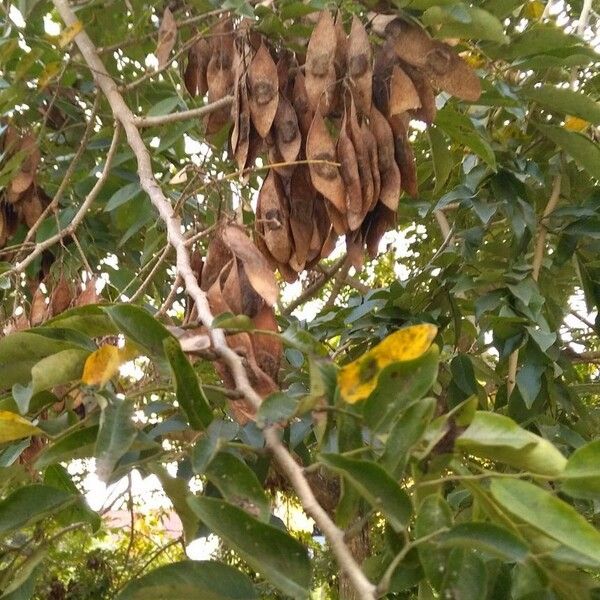
- 🫛 Flat Seed Pods: Following the flowers, the tree produces thin, brownish-grey pods. Unlike garden peas, these are flat, papery, and designed to be carried away by the wind.
🏡 In Your Garden
- 🌱 A Soil Builder: Because it is a nitrogen-fixing tree, it actually improves the earth it grows in. It hosts "good" bacteria in its roots that turn atmospheric nitrogen into natural fertilizer, benefiting nearby plants.
- 🌳 The Legacy Tree: This isn't a tree for the impatient gardener. It grows at a steady, moderate pace, focusing its energy on creating incredibly dense and durable wood. It prefers a sunny spot where it can stretch its wide, rounded crown.
- 🌬️ Hardy Nature: It is remarkably resilient to wind and can handle varied soil types, provided they don't stay waterlogged, as its deep root system prefers to breathe.
⚠️ Safety & Toxicity
- ✅ Generally Safe: The Dalbergia hupeana is not known to be toxic to humans, cats, or dogs in a typical garden environment.
- 🪵 Wood Sensitivities: While the living tree is harmless, the dust from its heartwood (if being sanded or cut) can cause mild skin or respiratory irritation for some people due to its high oil and resin content.
✨ Fun Fact
The wood of the Hupeh Rosewood is so incredibly dense and heavy that seasoned pieces will actually sink if dropped into a bucket of water, rather than floating like most other timbers!

Detailed Care Instructions

Place in a bright room that is sun drenched almost all day. Or directly in a south-facing window.

The plant should be watered regularly, ensuring that the soil is moist but not waterlogged. This can be achieved by watering deeply, allowing the water to fully penetrate the soil. It is important to monitor the soil moisture levels regularly, as overwatering can lead to root rot and other issues. The plant should also be watered at the base rather than from above, to avoid getting water on the leaves and causing damage or disease. During periods of hot or dry weather, the plant may require more frequent watering to prevent dehydration.
The optimal soil for this plant should be well-draining and slightly acidic with a pH level of around 5.5 to 6.5. It prefers a loamy soil that is rich with organic matter and has good water retention capabilities. Avoid using heavy clay or sandy soils as they can be detrimental to the plant's growth. Additionally, the soil should not be waterlogged as this can lead to root rot. It is recommended to use a high-quality potting mix with perlite or sand added to improve drainage for potted plants.








