Plant Overview
Known as the "Rose of the Forest" or more commonly Cocobolo, Dalbergia retusa is a legendary tropical hardwood tree from Central America. Renowned for its incredibly dense, oily, and multi-colored wood, it has been a favorite of master luthiers and artisans for centuries. While it begins as a delicate seedling with feathery leaves, it matures into a resilient titan of the dry forest, though it is now a protected species due to its high value and slow growth.
🔍 How to Identify
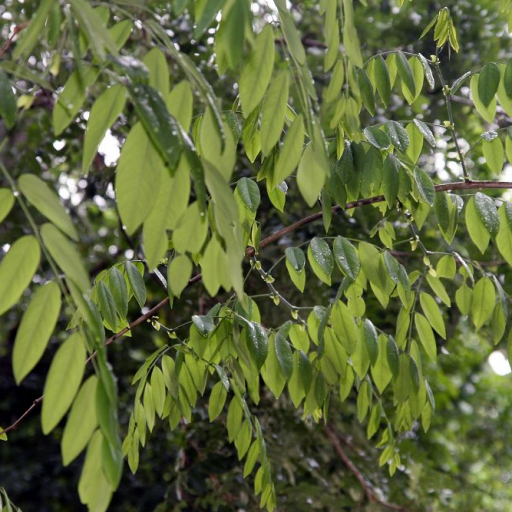
- 🌿 The Foliage: It features elegant, pinnate (feathery) compound leaves. Each leaf typically consists of 7 to 15 alternating, oval-shaped leaflets that have a soft, matte green finish.
- 🌼 The Blooms: During the flowering season, the tree produces small, fragrant, pea-like flowers. They are usually white or creamy-yellow and grow in dense clusters (panicles) that attract a variety of tropical pollinators.
- 🪵 The Inner Heart: While difficult to see from the outside, the heartwood is unmistakable. If a branch is broken or cut, you’ll find a vibrant palette of oranges, reds, and deep browns with dark, swirling grain lines.
🏡 In Your Garden
- 🌱 Root Development: If you are lucky enough to grow one from a seedling, be mindful of its deep taproot. Cocobolo hates having its feet disturbed, so choose a permanent "forever home" in your garden early to avoid transplant shock.
- 🌳 Soil Architect: Like many members of the legume family, this tree is a nitrogen-fixer. It actually improves the quality of the soil it lives in by pulling nitrogen from the air and "donating" it to the earth, making it a great neighbor for nearby plants.
- ☀️ Patience is Key: This is not a fast-growing "instant shade" tree. It grows with a slow, deliberate pace, focusing on building its dense, oily wood rather than reaching for the sky quickly.
⚠️ Safety & Toxicity
- 🛡️ Status: Generally non-toxic to touch as a living plant, but it carries a hidden defense.
- 🤧 Sensitivity: The wood and sawdust of Dalbergia retusa contain natural oils that are potent allergens. Woodworkers often develop "Cocobolo itch" (contact dermatitis). While the living leaves aren't known to be toxic to pets, the seeds should never be ingested.
✨ Fun Fact
Cocobolo is one of the few woods in the world so dense and rich in natural oils that it does not float. If you drop a piece of its heartwood into a bucket of water, it will sink straight to the bottom like a stone!

Detailed Care Instructions
To grow Dalbergia retusa, also known as Cocobolo or Brazilian rosewood, follow these steps:
- Obtain seeds or seedlings: You can find Dalbergia retusa seeds or young plants from reputable garden centers, nurseries, or online plant stores. Make sure the source is reliable and legal.
- Choose a suitable location: Select a site with well-drained soil and partial to full sunlight. Dalbergia retusa prefers warm climates and cannot tolerate frost.
- Prepare the soil: Ensure the soil is well-draining and rich in organic matter. If the soil is heavy or clay-like, consider adding compost or sand to improve drainage.
- Plant the seeds or seedlings: If using seeds, soak them in water for 24-48 hours before sowing. Sow the seeds in the prepared soil, ensuring they are covered with a thin layer of soil. If using seedlings, dig a hole slightly larger than the root ball and place the plant in the hole, backfilling with soil and gently firming it around the roots.
- Mulch and water: Apply a layer of organic mulch around the base of the plant to retain moisture and suppress weed growth. Water the plant thoroughly after planting and maintain regular watering, keeping the soil evenly moist but not waterlogged.
- Provide support: Dalbergia retusa may need support if it has weak or floppy branches. Use stakes or ties to provide support for the plant if necessary.
- Prune if needed: Once the plant is established, you can trim or prune it to shape or control its size. Pruning is best done in late winter or early spring before new growth appears.
- Protect from pests and diseases: Monitor the plant for any signs of pests or diseases and take appropriate measures to control them. Insects like aphids or mites can be treated with insecticidal soap, while fungal diseases may require the use of fungicides. Always follow the instructions on the product labels.
- Fertilize: Dalbergia retusa generally doesn't require much fertilizer, but you can apply a balanced slow-release fertilizer once or twice a year during the growing season to promote healthy growth.
- Be patient: Dalbergia retusa is a slow-growing plant, so be patient as it establishes and grows over time. It can take several years for the plant to reach its full size and maturity.
Remember to research local regulations and consider the environmental impact before growing any plant, especially one like Dalbergia retusa that is protected due to its endangered status.
The best way to water this plant is to provide it with a moderate amount of water regularly and evenly throughout the week. Make sure that the soil is moist but not waterlogged. It is important to avoid letting the soil dry out completely between watering. Avoid overhead watering, as wet leaves can promote the growth of fungal diseases and damage the plant. Instead, direct the water towards the base of the plant. Watering in the early morning or evening is recommended, as it allows for maximum absorption and minimizes the risk of evaporation. In general, the frequency of watering will depend on the environment and the season. During the growing period, water more frequently to promote healthy growth. In winter, water less often to prevent waterlogging and possible rotting.
To fertilize this plant, use a balanced, slow-release fertilizer with a ratio of 10-10-10. Apply the fertilizer in early spring and again in mid-summer, following the instructions on the package for dosage and application. Water the plant deeply after fertilizing to help distribute the nutrients throughout the soil. Avoid fertilizing during the dormant period or late in the growing season, as this can promote new growth that may be damaged by frost.
Dalbergia Retusa is a plant that prefers well-draining soil with plenty of organic matter. The soil should ideally be slightly acidic to neutral, with a pH range of 6.0 to 7.5. It is recommended to use a mix of loam, sand, and organic material such as compost or peat moss. The soil should not be soggy, as excess water can cause root rot and other problems. It is important to ensure that the soil is kept moist but not waterlogged, and that drainage is adequate. Adding perlite or vermiculite to the soil can help improve drainage. As with all plants, it is important to choose a soil that is appropriate for the specific growing conditions and needs of the plant.
To propagate the plant, first gather mature seeds that have fallen from the parent plant. Remove the husk from the seed and soak it in water for a few hours. After it has soaked, plant the seed in moist soil in a pot or container. Keep the soil moist and in a warm location with indirect sunlight. It may take several weeks before germination occurs. Once the seed has sprouted and grown to a few inches tall, it can be transplanted to a larger container or outside into the soil. Another method of propagation is to take stem cuttings from the parent plant. Cut a 4-6 inch length of stem and remove the leaves from the bottom inch of the cutting. Dip the cut end in rooting hormone, then plant it in moist soil in a container. Place the container in a warm location with indirect sunlight and keep the soil moist. After a few weeks, roots should begin to form, and the cutting can be transplanted into a larger container or outside into the soil.








