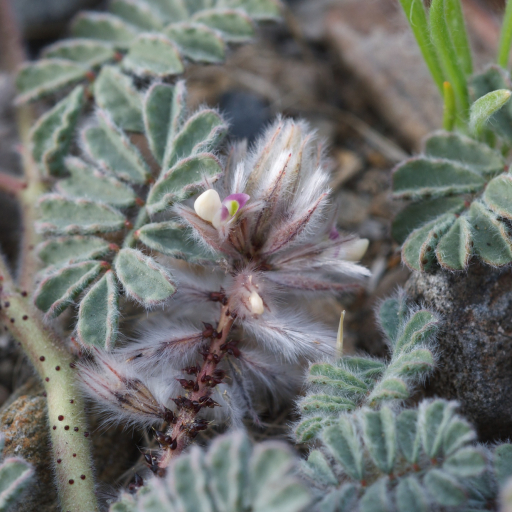
Plant Overview
Often called the Silky Dalea or Hairy Dalea, this diminutive desert dweller looks like it has been dusted with silver frost. Native to the arid washes and sandy flats of the Southwestern United States and Northern Mexico, it is a master of survival that turns the harsh desert floor into a soft, velvety carpet. It belongs to the pea family, bringing a touch of delicate elegance to some of the toughest landscapes on Earth.
🔍 How to Identify
- 🌿 Silky Foliage: The most striking feature is its grayish-green leaves, which are densely covered in fine, soft white hairs that give the plant a shimmering, velvet-like texture.
- 🌸 Pea-Like Blooms: It produces small, compact flower spikes featuring tiny blossoms that range from pale pink to soft lavender, appearing most vibrantly after desert rains.
- 📏 Prostrate Habit: This plant is a "ground-hugger," rarely growing taller than 10 inches and instead spreading horizontally to conserve moisture and protect the soil beneath it.
🏡 In Your Garden
- 🏜️ Extreme Drainage: If you are lucky enough to grow this in a xeric garden, remember it "breathes" through its roots; it requires sandy or gravelly soil and will quickly rot if kept in heavy, damp garden dirt.
- ☀️ Heat Lover: The Silky Dalea thrives on neglect and intense sun. Its "furry" leaves are actually an evolutionary trick to reflect UV rays and trap a thin layer of cool air against the leaf surface.
⚠️ Safety & Toxicity
- ✅ Non-Toxic: Dalea mollis is generally considered safe and is not known to be poisonous to humans, cats, or dogs.
- 🐜 Hidden Residents: Because of its dense, low-growing structure, it often provides shade for small desert insects or spiders, so always peek under the foliage before reaching in with bare hands.
✨ Fun Fact
🧬 Soil Healer: Like many members of the legume family, the Silky Dalea is a "nitrogen fixer." It hosts special bacteria in its roots that pull nitrogen from the air and turn it into natural fertilizer, enriching the poor desert soil for future generations of plants.

Detailed Care Instructions
To grow Dalea Mollis, also known as Desert False Indigo, you can follow these steps:
- Choose a suitable location: Dalea Mollis prefers full sun to partial shade. Ensure that the planting area has well-draining soil.
- Prepare the soil: Loosen the soil using a garden fork or tiller to a depth of around 12 inches. Remove any rocks, weeds, or grass from the area.
- Planting: Dig a hole slightly larger than the root ball of the plant. Place the plant in the hole, ensuring the top of the root ball is level with the soil surface. Fill the hole with soil, lightly firming it around the plant.
- Watering: Give the plant a thorough watering immediately after planting. Water regularly, keeping the soil moist but not waterlogged. Water deeply rather than shallowly, allowing the water to reach the roots.
- Mulching: Apply a layer of organic mulch around the plant, leaving a small space around the stem to prevent moisture-related issues. Mulching helps retain moisture, control weeds, and insulate the roots from extreme temperatures.
- Pruning: Dalea Mollis generally does not require extensive pruning. However, you can trim back any dead or damaged branches to maintain the plant's shape and appearance.
- Fertilizing: Fertilizing is generally not necessary for Dalea Mollis. If your soil is poor, you can apply a balanced, slow-release fertilizer once a year in early spring.
- Controlling pests and diseases: Dalea Mollis is relatively resistant to pests and diseases. However, you should regularly inspect the plant for any signs of insect infestations or leaf diseases. Treat any issues promptly using appropriate organic or chemical controls.
- Winter care: Dalea Mollis is generally hardy in USDA zones 4-9. In colder regions, you can apply a layer of mulch around the base of the plant in late fall to protect the roots from freezing temperatures.
- Propagation: Dalea Mollis can be propagated by taking softwood or semi-hardwood cuttings in early summer. Prepare the cuttings by removing the lower leaves, dip them in a rooting hormone, and plant them in a well-draining soil mix. Place the cuttings in a warm, moist environment until roots develop.
Remember to consult local gardening resources or specialists for specific growing recommendations tailored to your region's climate and soil conditions.

Place in a bright room that is sun drenched almost all day. Or directly in a south-facing window.

Dalea Mollis is a plant that requires watering on a regular basis, particularly during the growing season. However, care should be taken not to over-water the plant as this can lead to the root system becoming saturated and causing root rot, which can be detrimental to the plant's health.
When watering, it is important to ensure that the water is delivered directly to the base of the plant, avoiding the foliage, so that the roots receive the most benefit. This can be done using a watering can or a hose with a spray nozzle set to a gentle stream. The soil should be allowed to dry out slightly between watering to prevent the roots from becoming waterlogged.
During the cooler months, the plant may not require as much water, so watering should be scaled back accordingly. It is important to keep an eye on the soil moisture levels and adjust the frequency of watering accordingly to prevent underwatering or overwatering.
In general, watering Dalea Mollis plant should be done in the morning or evening when the sun is not at its strongest to prevent the foliage from becoming scorched and to allow the plant to absorb the water effectively.
To fertilize this plant, apply a balanced fertilizer with equal parts nitrogen, phosphorus, and potassium in the spring. Avoid over-fertilizing as it can lead to excessive growth and weaker stems. Water the plant thoroughly after applying fertilizer to ensure it reaches the roots. Additionally, you can supplement with organic matter such as compost or well-aged manure to improve soil fertility.
Dalea Mollis plant thrives in well-drained soils that are sandy, loamy, or clayey. The soil should be slightly acidic to alkaline, with a pH between 6.0 and 8.0. The plant prefers soils that are moderately fertile and have good organic matter content. It requires soil that can retain moisture, but is also well-drained to prevent waterlogging. The ideal soil should have good aeration, enabling the roots to breathe easily. Before planting, it is recommended to amend the soil with organic matter such as compost or aged manure to improve its texture and fertility.
To propagate this plant, you will need to take softwood cuttings in the early summer. To do this, select healthy stems that are about 4 to 6 inches long and remove any leaves from the bottom half. Dip the cut end in rooting hormone and plant it in a pot filled with moist soilless mix or a mixture of peat moss and sand. Keep the soil consistently moist and the cutting in a bright, indirect light until roots develop, which should take about 4 to 6 weeks. Once the cutting has rooted, it can be transplanted outside in a well-draining soil.








