Plant Overview
Often called the Silky Prairie Clover, Dalea villosa is a native North American gem that looks as though it has been dusted with moonlight. While its cousins might have smooth, green leaves, this plant has adapted to harsh, sandy environments with a coat of soft, silver hairs that shimmer in the sun. It is a favorite for prairie restoration because it doesn’t just look beautiful; it literally "heals" the soil as it grows.
🔍 How to Identify
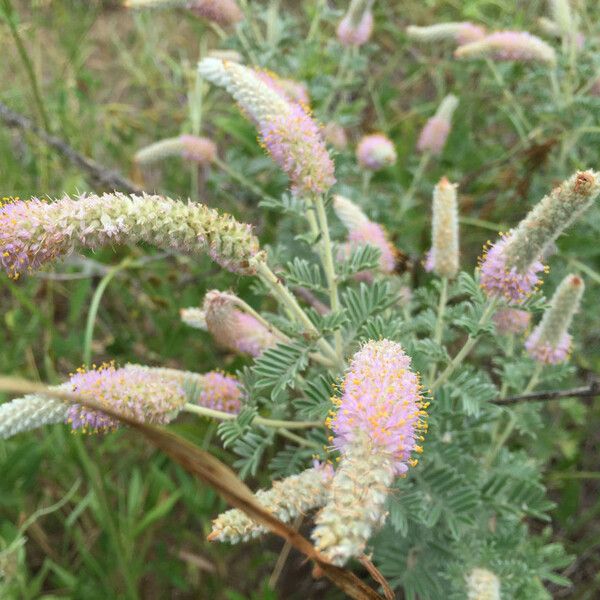
- ✨ Silky Texture: True to its name, the entire plant is covered in fine, dense, silver-gray hairs. This gives it a soft, velvety feel and a distinct "frosted" appearance that stands out against green grasses.
- 🌸 Jewel-Like Blooms: It produces dense, cylindrical flower spikes at the ends of its stems. The tiny blossoms are typically rose-purple or lavender, accented by bright yellow or orange anthers that poke out like tiny gold pins.
- 🌿 Finely Cut Leaves: The leaves are divided into many small, narrow leaflets. This delicate, "feathery" structure helps the plant conserve moisture in dry, windy environments.
🏡 In Your Garden
- 🏜️ The Sand Specialist: This plant is a "psammophyte," meaning it thrives in sandy soil where other plants would wither. It is the perfect choice for rock gardens or xeric landscapes where drainage is sharp and the sun is intense.
- 🏗️ The Soil Builder: Like most members of the legume family, it works with specialized bacteria in its roots to "fix" nitrogen from the air into the soil. It acts as a natural, slow-release fertilizer for its neighboring plants.
- 🚫 Deep Root Resilience: It develops a deep, sturdy taproot to find water far underground. Because of this, it hates being transplanted once established; choose its "forever home" in your garden carefully, as it won't want to move!
⚠️ Safety & Toxicity
- ✅ Friendly Status: Dalea villosa is generally considered non-toxic to humans, dogs, and cats. It lacks the thorns or caustic sap found in some other wild legumes.
- 🦌 Wildlife Interaction: While safe for humans, it is highly "palatable" to herbivores. Local deer and rabbits often find the protein-rich foliage delicious, so you may need a small fence if your local wildlife is hungry.
✨ Fun Fact
This plant is a "VIP lounge" for native bees! It is particularly important for the endangered Rusty Patched Bumble Bee and several species of specialist bees that rely almost exclusively on the Dalea genus for their survival. If you plant it, you aren't just gardening; you're supporting a tiny, essential ecosystem.

Detailed Care Instructions
To grow Dalea Villosa plant, also known as Desert Prairie clover, follow these steps:
- Choose a suitable location: Find a location that receives full sun for at least 6-8 hours a day. The soil should be well-draining and preferably sandy or loamy.
- Soil preparation: Prepare the soil by removing any weeds or grass. Amend the soil by adding organic matter like compost to improve its fertility and drainage.
- Planting: Prior to planting, soak the seeds in warm water for 24 hours to help with germination. Sow the seeds directly on the prepared soil, or you can start seeds indoors 6-8 weeks before the last frost date. Plant the seeds at a depth of about 1/4 inch and space them 6-12 inches apart.
- Watering: Water the newly planted seeds gently to keep the soil moist but not waterlogged. Once the seedlings establish, water them deeply but infrequently, allowing the soil to dry out between waterings.
- Mulching: Apply a layer of organic mulch around the seedlings to help retain moisture, suppress weeds, and regulate soil temperature.
- Pruning: Dalea Villosa plant has a low, spreading growth habit. To maintain a more compact shape, you can lightly prune the plant in early spring before the new growth appears.
- Fertilization: In most cases, Dalea Villosa plants do not require regular fertilization. However, if you notice poor growth or lack of flowering, you can apply a balanced, slow-release fertilizer in early spring.
- Pest and disease control: Dalea Villosa plants are relatively resistant to pests and diseases. However, keeping the plants well-spaced and providing good air circulation can help prevent any potential issues.
- Winter care: Dalea Villosa is a native plant and is adapted to survive in harsh desert conditions. In most cases, it does not require any special winter care. However, if you experience extremely cold temperatures, you can protect the plant by mulching around the base or covering it with a frost cloth.
- Propagation: Dalea Villosa can also be propagated through division or stem cuttings. Division is best done in early spring, while cuttings can be taken during the summer months.
Remember to check your local gardening zone and growing conditions to ensure that Dalea Villosa is suitable for your region.

Place in a bright room that is sun drenched almost all day. Or directly in a south-facing window.

To water Dalea Villosa plants, it is important to consider their specific watering needs. Keep the following guidelines in mind:
1. Observe the soil: Before watering, inspect the soil around the Dalea Villosa plant. It should be slightly dry to the touch, but not completely bone dry. Avoid watering if the soil feels moist or wet.
2. Watering frequency: On average, Dalea Villosa plants require watering once every 7-10 days. Adjust this schedule based on climate conditions and the moisture retention capacity of the soil. For example, if the plants are in well-draining soil, you may need to water more frequently than if they are in heavier, moisture-retentive soil.
3. Deep watering: When watering, ensure that the water reaches the deeper roots of the plant. This promotes a healthier root system and overall plant growth. Water slowly and deeply, allowing the water to penetrate the soil.
4. Watering method: To water Dalea Villosa plants, the recommended method is to use a watering can or a soaker hose to ensure a gentle and consistent flow of water to the plants. Avoid splashing water onto the foliage or flowers, as this can increase the risk of fungal diseases.
5. Morning watering: It is preferable to water Dalea Villosa plants in the morning. This allows the foliage and soil to dry during the day, reducing the chances of fungal diseases caused by prolonged moisture on the leaves.
6. Monitor rainfall: Keep an eye on natural rainfall patterns. If the plant receives adequate rainfall, you may need to adjust the watering frequency accordingly and decrease the amount of manual watering.
Remember, regular monitoring and adjustment of watering practices based on the plant's needs and environmental conditions play a vital role in maintaining the health and vigor of Dalea Villosa plants.
To properly fertilize the Dalea villosa plant, follow these instructions:
- Use a balanced slow-release fertilizer, such as a 10-10-10 or 14-14-14 formula.
- Apply the fertilizer in early spring, before new growth begins.
- Scatter the granules evenly around the base of the plant, avoiding direct contact with the stems or foliage.
- Water the plant thoroughly after fertilizing to help the nutrients penetrate the soil.
- Repeat the fertilization process once or twice during the growing season, about 6-8 weeks apart.
- Avoid over-fertilizing, as excessive nutrients can harm the plant. Always follow the instructions on the fertilizer packaging for recommended application rates.
- Monitor the plant's overall health and adjust the fertilization schedule if needed. Consider factors such as soil quality, sunlight, and moisture levels.
Remember, it's essential to know the specific requirements of your Dalea villosa plant to provide the best care and ensure its healthy growth.
To provide the optimal growing conditions for Dalea villosa plants, it is crucial to choose the suitable soil type. This species of plant typically thrives in well-draining soil that is rich in nutrients. An ideal soil composition for Dalea villosa includes a balanced blend of organic matter, such as compost, and mineral particles.
The soil should have good drainage to prevent waterlogging, as excessive moisture retention can lead to root rot and other diseases. It is recommended to enhance the soil's drainage properties by incorporating coarse materials like sand or perlite into the mixture.
Additionally, Dalea villosa plants prefer slightly acidic to neutral soil pH levels ranging from 6.0 to 7.0. This pH range allows proper nutrient uptake and supports overall plant growth.
A loamy or sandy loam soil texture is generally favorable for Dalea villosa plants as it provides a good balance of water retention and aeration. Loamy soil contains a mixture of sand, silt, and clay, allowing for proper water absorption and root development. Sandy loam soil, on the other hand, with higher sand content, further improves drainage.
While Dalea villosa plants can tolerate some drought conditions, it is essential to ensure that the soil remains consistently moist but not overly saturated. Regular watering, especially during the growing season, will help maintain the soil moisture at an optimal level.
To summarize, providing well-draining soil with a loamy or sandy loam texture, enriched with organic matter, and maintaining a slightly acidic to neutral pH level is preferred for the successful cultivation of Dalea villosa plants.
Dalea villosa, also known by its common names, can be propagated using several methods. Here's a detailed guide on how to propagate this plant:
- Seeds: Collect mature seeds from the Dalea villosa plant when they have turned brown and are fully dry. This usually occurs in late summer or early fall. Gently remove the seeds from the seed pod or fruit.
- Seed Pre-treatment: Some gardeners suggest scarification for better germination. This can be achieved by nicking the seed coat with a knife or gently rubbing it with sandpaper. Soaking the seeds in warm water overnight before sowing can also help with germination.
- Planting: Fill a seed tray or small pots with a well-draining potting mix. Press the seeds lightly onto the soil, ensuring they are in good contact with the medium. Cover the seeds with a thin layer of vermiculite or soil to protect them. Water the soil thoroughly, keeping it consistently moist but not waterlogged.
- Germination: Place the tray or pots in a warm location with bright, indirect light. Maintain a temperature around 70-75°F (21-24°C) for optimal germination. Germination typically takes 2-4 weeks, but it can vary. Keep the soil consistently moist throughout this period.
- Transplanting: Once the seedlings have developed a few sets of true leaves and are large enough to handle, they can be transplanted into individual pots. Use a well-draining potting mix and make a hole large enough to accommodate the root system without damaging it. Gently lift the seedling from the tray or pot and place it in the hole. Firm the soil around the base of the plant.
- Care: Provide the propagated plants with bright, indirect light and maintain a temperature range of 60-75°F (15-24°C). Keep the soil evenly moist, allowing the top inch (2.5 cm) to dry out slightly between waterings. Avoid overwatering as it can lead to root rot.
- Harden-off: Before moving the plants outdoors permanently, they need to be hardened-off. Gradually expose the young plants to outdoor conditions by placing them in a sheltered location for a few hours each day, gradually increasing the duration over a week or two. This will help them acclimate to the changing environment.
- Transplanting Outdoors: Choose a well-drained location in your garden that receives full sun. Dig a hole slightly larger than the root ball of the plant. Gently remove the plant from the pot, being careful not to damage the roots. Place it in the hole and backfill with soil, firming it gently around the base. Water thoroughly after transplanting.
By following these steps, you can successfully propagate Dalea villosa and grow new plants from seeds.








