Plant Overview
Known as Timber Oatgrass, Danthonia intermedia is a rugged mountain dweller that feels most at home in the high-altitude meadows and subalpine forests of North America. Often found clinging to rocky slopes where other grasses struggle, it acts as a silent guardian of the soil in fragile ecosystems. Its common name comes from its preference for the "timberline," the edge where forests give way to open alpine tundra.
🔍 How to Identify
- 🌾 Tufted Growth: This grass grows in dense, compact clumps (tussocks) rather than spreading out like a lawn, reaching heights of about 10 to 20 inches.
- 🍃 Glaucous Foliage: The leaf blades are a distinct bluish-green (glaucous) and are often slightly hairy, providing a soft, matte appearance.
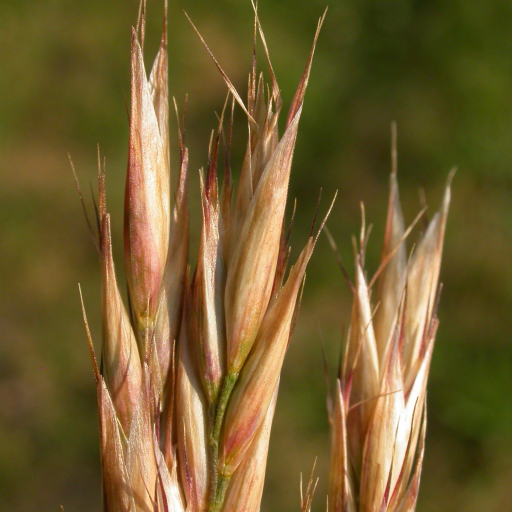
- 🌾 Twisted Awns: The most recognizable feature is the oat-like spikelets; as the seeds dry, the tiny bristles (awns) at the tips twist tightly, which helps drill the seed into the ground.
🏡 In Your Garden & Landscape
- 🪨 Lean Soil Lover: Unlike garden-variety grasses, Timber Oatgrass thrives in poor, rocky, or gravelly soils. It dislikes "rich" garden beds and actually performs better when the soil is well-drained and low in nutrients.
- 🏔️ Subalpine Resilience: This is an incredibly cold-hardy species. It is perfect for high-elevation restoration or "wildling" gardens where water is scarce and winters are harsh, as it requires very little maintenance once established.
⚠️ Safety & Toxicity
- ✅ Safe Status: Danthonia intermedia is generally considered non-toxic to humans, dogs, and cats.
- 🐂 Forage Friendly: In the wild, it is a valuable food source for elk, deer, and livestock. It contains no known alkaloids that would cause harm to grazing animals.
✨ Fun Fact
Timber Oatgrass is a master of "insurance" breeding. It produces cleistogamous flowers—hidden seeds located at the base of the leaf sheaths that self-pollinate without ever opening, ensuring the plant can reproduce even in years when the weather is too harsh for its visible flowers to survive!

Detailed Care Instructions
To grow Danthonia intermedia, also known as Poverty Oatgrass, follow these steps:
- Choose the right location: Poverty Oatgrass prefers full sun to partial shade. Make sure the area has well-drained soil with a pH level between 5.5 and 7.0.
- Prepare the soil: Remove any weeds or debris from the planting area. Loosen the soil using a garden fork or tiller to a depth of about 6 inches. Add compost or organic matter to improve soil fertility and drainage if needed.
- Sow the seeds: Danthonia intermedia can be grown from seeds. Scatter the seeds evenly over the prepared soil and lightly rake them in or press them into the soil without burying them too deeply. Aim for a seed spacing of 1 to 2 inches apart.
- Water thoroughly: After sowing the seeds, water the area gently so that it is moist but not soaking wet. Continue to water regularly to keep the soil consistently moist until the seeds germinate, which usually takes around 7 to 14 days.
- Maintenance: Once the plants have established, watering can be reduced to only during dry spells. Avoid overwatering as it can lead to root rot. Fertilizing is generally not necessary unless the soil lacks nutrients. Regularly remove weeds to reduce competition for nutrients and space.
- Mowing: If you wish to maintain the height and appearance of the plant, you can mow it once or twice a year. Mow it to a height of about 4 inches in early spring or late fall to encourage new growth.
- Pest and disease control: Danthonia intermedia is relatively pest and disease-free. However, monitor for any signs of disease or pest infestation. If necessary, treat with the appropriate organic or chemical control methods.
Remember to check if your specific region or climate is suitable for growing Danthonia intermedia, as it is native to certain areas. Following these guidelines should help you successfully grow this plant.
The Danthonia Intermedia plant requires moderate watering and should be watered regularly but not overly saturated. It is important to ensure that the soil does not dry out, but also to not provide too much water as this can lead to root rot. It is recommended to water the plant deeply, allowing the water to penetrate the soil and reach the root system, but then allowing the top layer of soil to dry out slightly before watering again. It is also important to avoid getting water on the foliage, as this can increase the risk of fungal diseases. Watering should be adjusted based on the season and weather conditions, such as reducing watering during cooler or more humid weather.
To fertilize this plant, it is recommended to do so in the spring or fall. Use a balanced fertilizer with equal amounts of nitrogen, phosphorus, and potassium. Apply the fertilizer at a rate of 1 pound per 100 square feet. Avoid over-fertilizing as this can lead to excessive growth and weaken the plant. Water the area thoroughly after applying the fertilizer to allow it to settle deep into the soil and reach the roots.
The ideal soil for Danthonia Intermedia plant is a well-draining, fertile soil with a pH level of 5.5 to 7.0. It prefers a soil rich in organic matter that is slightly acidic to neutral, and it thrives in soils with good water-holding capacity. This plant can also tolerate slightly sandy or loamy soils, as long as they are not too acidic or alkaline. When planting Danthonia Intermedia, it is important to amend the soil properly with compost or other organic matter to ensure healthy growth and development. Additionally, the soil should be kept moist but not waterlogged, and the plant should be fertilized regularly during the growing season to promote vigorous growth and flowering.
To propagate this plant, you will need to collect seeds from mature plants. The seeds can be sown in pots filled with well-draining soil during the growing season. Keep the soil moist and place the pots in a location that receives bright indirect sunlight. Germination can take several weeks.
Alternatively, you can divide established clumps of the plant in the spring or fall. Carefully dig up the clump and separate it into several smaller sections. Each section should have healthy roots and some foliage attached. Replant the sections in well-draining soil and keep the soil moist until the plant becomes established.
Propagation can also be achieved through stem cuttings taken during the growing season. Cut a piece of stem from the parent plant and remove any leaves from the bottom end. Dip the cut end of the stem in rooting hormone and plant it in well-draining soil. Keep the soil moist and place the cutting in a location that is warm and receives bright indirect sunlight. After a few weeks, roots should develop and the cutting can be transplanted into its permanent location.








