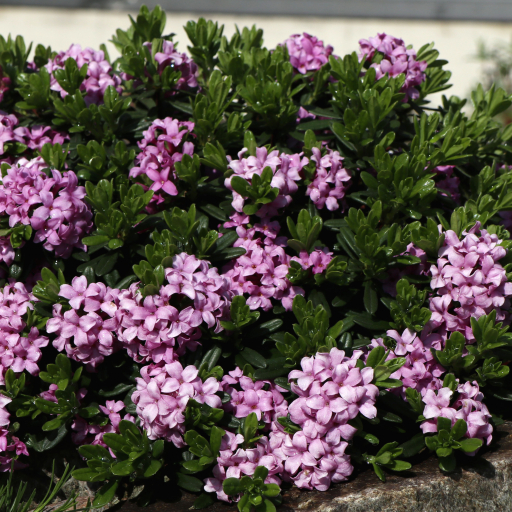
Plant Overview
Commonly known as the Rock Daphne, this rare alpine beauty is a resilient survivor from the ice age. Native exclusively to the limestone cliffs of the Muráň Plateau in Slovakia, it brings a touch of wild mountain elegance to specialized rock gardens. Its intoxicating, honey-sweet fragrance is its most famous trait, often perfume-filling the air long before the tiny blossoms are even spotted.
🔍 How to Identify
- 🌸 Starry Blooms: Dense clusters of waxy, tubular flowers in shades of deep pink to lilac-purple, usually appearing in late spring.
- 🍃 Needle-like Foliage: Narrow, dark green, leathery leaves that are evergreen and arranged densely along the woody stems.
- 🌿 Cushion Growth: A dwarf shrub that naturally forms low, rounded mats or "cushions," rarely growing taller than 6 inches (15 cm).
🏡 In Your Garden
- ⛰️ The Alpine Rule: Because it originates from high-altitude limestone, it demands "cool feet and a warm head." This means its roots should stay tucked under cool rocks while its foliage enjoys bright, indirect sunlight.
- 💧 Drainage is King: This plant is extremely sensitive to "wet feet." It requires gritted, alkaline soil that drains rapidly; otherwise, it is prone to sudden root rot.
- 🚫 Don't Move Me: Like most members of the Daphne family, it has a sensitive root system and a famous temper. It hates being transplanted, so ensure you choose its permanent home carefully.
⚠️ Safety & Toxicity
- 💀 Highly Toxic: All parts of the Rock Daphne—including the stems, leaves, and sap—are poisonous if ingested.
- 🧤 Skin Irritant: The sap contains mezerein, which can cause blistering or rashes on sensitive skin. Always wear gloves when pruning or handling the plant, and keep it away from curious pets and children.
✨ Fun Fact
- ⏳ A Living Relict: Daphne arbuscula is considered a "glacial relict." It has survived in its tiny mountain pocket for thousands of years since the end of the last Ice Age, making it a literal living piece of prehistoric history.

Detailed Care Instructions
To grow a Daphne Arbuscula plant, you can follow these steps:
- Choose the right location: Daphne Arbuscula thrives in cool, temperate zones. Select a location that receives partial shade or filtered sunlight. The soil should be well-drained and rich in organic matter.
- Planting: Dig a hole slightly larger than the root ball of the plant. Place the root ball in the hole and backfill with soil, gently firming it around the roots. Make sure the plant is at the same level as it was originally planted.
- Watering: Keep the soil consistently moist, but not waterlogged. Daphne Arbuscula prefers slightly damp soil, so water it regularly, especially during hot and dry periods. Avoid overwatering, as it can lead to root rot.
- Mulching: Apply a layer of organic mulch around the base of the plant to help retain moisture, suppress weeds, and regulate soil temperature.
- Pruning: Daphne Arbuscula requires minimal pruning. However, you can remove any dead or damaged branches to maintain shape and promote airflow.
- Fertilizing: You can apply a balanced slow-release fertilizer in early spring to provide the necessary nutrients. Avoid high nitrogen fertilizers as they can promote excessive leaf growth at the expense of flowers.
- Pests and diseases: Daphne Arbuscula is generally resistant to most pests and diseases. However, keep an eye out for aphids, scale insects, and powdery mildew. If necessary, treat with appropriate organic insecticides or fungicides.
- Winter care: Daphne Arbuscula is cold-hardy, but it may benefit from protection during severe winters. Apply a layer of mulch around the base of the plant to insulate the roots.
Remember, Daphne Arbuscula is a slow-growing plant, so be patient and provide it with the care it needs for healthy growth.
To water this plant, it is best to use a watering can or hose with a gentle, steady stream of water. Avoid getting water on the leaves of the plant, as this can lead to fungal issues. Make sure to water the soil thoroughly until it is damp but not soaking. Allow the soil to dry out slightly before watering again, as this plant does not like to sit in soggy soil. It is important to water consistently throughout the growing season, especially during periods of drought or hot weather. Additionally, if the plant is in a container, make sure it has proper drainage to prevent waterlogged soil.
For best results, fertilize this plant in early spring with a slow-release fertilizer that is high in phosphorous. Avoid fertilizing during periods of drought or high heat, as this can stress the plant. Apply the fertilizer evenly around the base of the plant, and water thoroughly after application. Repeat the fertilization process annually for optimal growth and health.
Daphne Arbuscula is a type of plant that grows best in well-draining soil that is rich in organic matter. It requires a soil that is slightly acidic, with a pH level ranging between 5.5 and 6.5. It is recommended to use a sandy loam soil mix that is composed of equal parts topsoil, peat moss, and sand. This soil mix should also be supplemented with some slow-release fertilizer to provide the plant with the necessary nutrients. It is important to avoid heavy clay soils or soils that retain too much moisture as this can lead to root rot and damage to the plant. Overall, a well-draining, nutrient-rich soil mix that is slightly acidic is ideal for Daphne Arbuscula.
To propagate this plant, you need to take a cutting from the tip or from a lateral branch. The cutting should be about 5-10cm long and should include a small portion of the stem. Remove any leaves from the bottom half of the cutting and dip the end in rooting hormone. Plant the cutting in well-drained soil and water regularly to keep the soil moist. Place the pot in a warm, bright location but out of direct sunlight. The cutting should start to root in about 4-6 weeks. Once new growth has developed, you can transplant the new plant to a larger container or to the garden.








