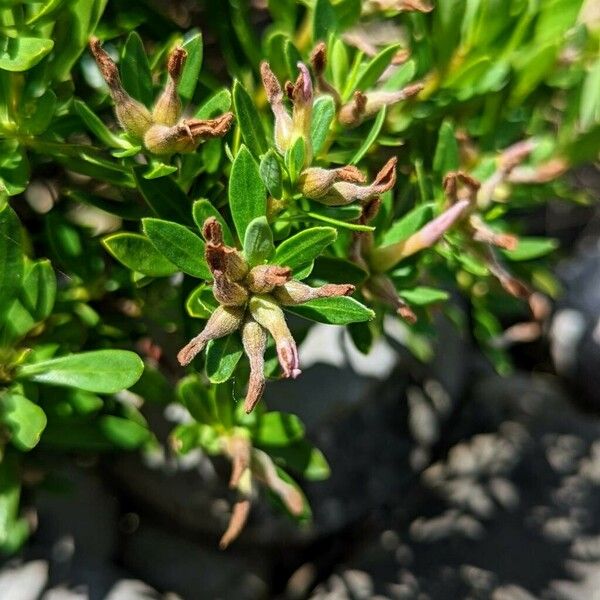
Plant Overview
Often called the "Garland Flower," the Daphne cneorum 'Domini' is a miniature masterpiece of the alpine world. Famous for a fragrance so powerful it can perfume an entire garden, this low-growing evergreen is a favorite among rock garden enthusiasts and collectors. In ancient legends, Daphne was a nymph who transformed into a tree to escape the pursuit of a god, and this plant carries that same ethereal, elusive charm in its delicate pink clusters.
🔍 How to Identify
- 🌸 Star-Shaped Blooms: Features dense, rounded clusters of tiny, four-petaled flowers that are a vibrant rose-pink and have a distinctive waxy texture.
- 🍃 Leathery Foliage: The leaves are small, narrow, and deep green, arranged spirally along the stems to provide a lush, year-round carpet of color.
- 📏 Prostrate Habit: This specific cultivar is a "ground-hugger," forming a spreading mat that rarely exceeds 6 to 10 inches in height, making it perfect for cascading over stone walls.
🏡 In Your Garden
- 🏔️ The Alpine Temperament: Since its ancestors hail from European mountains, 'Domini' thrives with "cool" roots. Using a top-dressing of gravel or decorative stones can help keep the soil temperature down while the foliage enjoys the sun.
- 🚫 The "Daphne Drama": This plant is notorious for "Daphne Sudden Death Syndrome" if its roots are disturbed. It possesses a sensitive taproot and absolutely hates being moved once established—choose its home wisely the first time.
- 💧 Drainage is Non-Negotiable: While it enjoys consistent moisture, "wet feet" are its biggest enemy. It requires gritty, aerated soil to prevent the root rot that frequently plagues less-drained garden beds.
⚠️ Safety & Toxicity
- 🚫 Highly Poisonous: All parts of the plant, including the leaves and the rarely-seen berries, contain daphnin and mezerein, which are toxic if swallowed.
- 🐾 Pets & Children: Ingestion can cause severe burning of the mouth and digestive tract. It should be planted in areas where curious pets or small children won't be tempted to nibble.
- 🧤 Skin Irritant: The sap can cause contact dermatitis (itchy rashes) in sensitive individuals. It is highly recommended to wear gardening gloves when pruning or handling the stems.
✨ Fun Fact
✨ The Heavyweight of Scent: Despite its tiny stature, the 'Domini' is considered one of the most fragrant plants in existence. A single specimen in full bloom can be detected by the human nose from over 30 feet away, easily out-scenting shrubs ten times its size!

Detailed Care Instructions
To successfully grow a Daphne odora (Daphne Domini) plant, follow these steps:
- Choose the right location: Daphne odora prefers a partially shaded spot with well-drained soil. It can tolerate full sun but may require additional watering. Avoid planting in areas with strong winds.
- Prepare the soil: Amend the soil with organic matter, such as compost, to improve drainage and fertility. Ensure the pH range is slightly acidic to neutral, ideally between 5.5 and 7.0.
- Planting: Dig a hole that is slightly wider and deeper than the plant's root ball. Gently remove the plant from its container and place it in the hole. Ensure that the top of the root ball is level with or slightly above the soil surface. Backfill the hole with soil, lightly firming it around the plant.
- Watering: Proper watering is crucial for Daphne odora. Keep the soil evenly moist, but not waterlogged. Water deeply once or twice a week, especially during dry periods or hot weather. Mulching around the plant can help retain moisture and prevent weeds.
- Fertilizing: Apply a slow-release fertilizer formulated for woody plants in early spring. Follow the package instructions for dosage and application method. Avoid over-fertilizing, as it can lead to weak growth.
- Pruning: Prune your Daphne odora plant after it finishes flowering in late spring or early summer. Remove dead or damaged branches and lightly shape the plant. Avoid extensive pruning as it may reduce flower production.
- Pests and diseases: Daphne odora is generally low-maintenance, but it can suffer from aphids, scale insects, or powdery mildew. Regularly inspect the plant for signs of pests or diseases, and take appropriate measures if necessary, such as using insecticidal soap or horticultural oil.
- Winter protection: In colder regions, apply a layer of mulch around the plant's base in late fall to provide insulation and protect the roots from freezing temperatures.
Remember that Daphne odora is considered a somewhat temperamental plant and may require patience and care.
When watering this plant, it is important to be very cautious and mindful of how much water is being given. This plant does not tolerate excessive watering, and can easily drown if given too much water. It is best to water it sparingly, only providing just enough moisture to keep the soil barely damp. This can usually be achieved by giving the plant a small amount of water every few days, or by providing moderate amounts of water once a week. It is also important to make sure that the water is able to drain well from the soil, as this plant is susceptible to root rot if left in waterlogged soil. To accomplish this, it is often helpful to plant the Daphne Domini in soil that has good drainage, and to use a pot with drainage holes to allow excess water to escape. Finally, it is best to avoid getting water on the leaves or flowers of the plant, as this can cause damage or encourage the development of fungal diseases.
To fertilize this plant, use a balanced fertilizer with equal amounts of nitrogen, phosphorus, and potassium. Apply the fertilizer in the early spring before new growth appears, and again in the fall after the plant has finished blooming. Water the plant thoroughly before and after applying fertilizer to prevent root burn. Use the recommended amount of fertilizer according to the label instructions, and be sure to avoid over-fertilization as this can damage the plant.
For optimal growth, the Daphne Domini plant requires well-draining soil with a slightly acidic pH level. The ideal soil mixture for this plant would consist of a combination of peat moss, perlite, and coarse sand. Additionally, it is important to ensure that the soil is not compacted, as this can lead to poor root development and an increased risk of disease. It is recommended to amend the soil with organic matter, such as compost, to promote healthy growth and provide the plant with essential nutrients. Adequate moisture levels should also be maintained to prevent the soil from drying out, but care should be taken to avoid overwatering, as this can lead to root rot.
Propagation of the plant with yellow flowers and fragrant scent can be done through softwood cuttings. Select healthy stems that are not yet woody and are actively growing. Cut a section about 10 cm long just below a leaf node and remove all leaves from the lower half of the cutting. Dip the end of the cutting in rooting hormone powder and plant it in a container filled with well-draining soil and perlite mix. Keep the soil moist but not waterlogged and place the container in a shaded area. After several weeks, the cutting should have developed roots and can be transplanted to a larger container or outdoors in a protected area.








