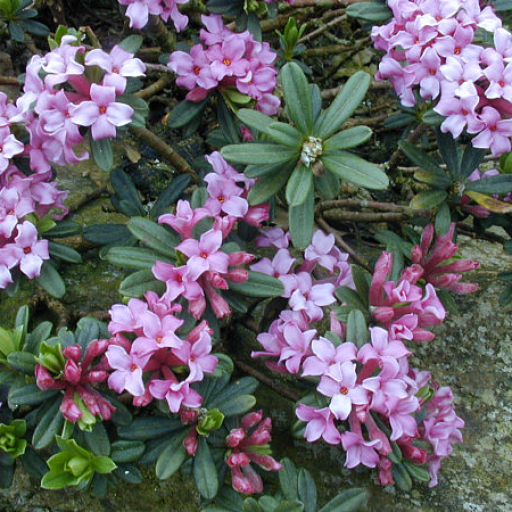
Plant Overview
Known as the Silver Daphne, this Mediterranean gem is a favorite among rock garden enthusiasts for its intoxicating, sweet fragrance and elegant evergreen foliage. Native to the rocky hillsides of Italy, Greece, and Turkey, it is a hardy survivor that brings a touch of the wild, sun-drenched coast to your backyard. Whether it’s tucked into a stone crevice or featured in a container, its clusters of pink blooms are a sensory delight in early spring.
🔍 How to Identify
- 🌸 The Flowers: Produces dense, rounded clusters of 5 to 15 tubular flowers. They typically range from a soft rose-pink to a deep purplish-pink and emit a powerful, spicy-sweet scent.
- 🍃 The Foliage: Small, leathery, oval leaves that are dark green and glossy on top. The name "sericea" refers to the "silky" underside of the leaves, which have a fine, silvery sheen.
- 🌿 The Growth Habit: A compact, slow-growing evergreen shrub. It naturally forms a tidy, mounded shape, rarely reaching more than 2 to 3 feet in height.
🏡 In Your Garden
- 🪨 Drainage is Key: This plant is an "alpine" at heart. It demands excellent drainage and will quickly suffer from root rot if kept in heavy, soggy soil. Adding grit or gravel to your planting hole is a must.
- 🚫 Look But Don't Touch (The Roots): Daphnes are notoriously "fussy" about their root systems. They possess a sensitive taproot and absolutely hate being transplanted. Choose its permanent home wisely, as moving it later often results in the plant failing.
- ☀️ Sun & Shelter: It prefers a spot in full sun to light dappled shade. While it loves the light, it appreciates protection from harsh, drying winter winds which can scorch its evergreen leaves.
⚠️ Safety & Toxicity
- 🚫 Status: Highly Toxic.
- 🐾 Details: All parts of the Silver Daphne—including the leaves, bark, and any berries it may produce—contain mezerein and daphnin. These toxins are dangerous to humans, cats, and dogs if ingested.
- 🧤 Skin Sensitivity: The sap can be a skin irritant. It is highly recommended to wear gardening gloves when pruning or handling the plant to avoid "Daphne dermatitis" (redness or itching).
✨ Fun Fact
The name sericea comes from the Latin word for "silky." If you flip a leaf over and run your finger across the back, you’ll feel the tiny, microscopic hairs that give the plant its signature silvery shimmer and help it retain moisture in the hot Mediterranean sun!

Detailed Care Instructions
To grow a Daphne sericea plant, also known as the Himalayan daphne, you can follow these steps:
- Choose a suitable location: Daphne sericea prefers partial shade to full shade conditions. Find a place in your garden that receives morning sun and afternoon shade, or dappled shade throughout the day. The soil should be well-draining and slightly acidic.
- Prepare the soil: Daphne sericea thrives in slightly acidic soil with good drainage. Amend the soil with organic matter such as compost, peat moss, or well-rotted manure to improve drainage and fertility.
- Planting: Dig a hole in the prepared soil that is slightly larger than the plant's root ball. Gently remove the plant from its container, loosening the roots if necessary, and place it in the hole. Ensure that the base of the stem is level with or slightly above the soil surface. Backfill the hole with soil, firming it gently around the roots.
- Watering: Daphne sericea requires regular watering to establish and grow, especially during dry periods. Water deeply and thoroughly, aiming for moist (not soggy) soil. However, be cautious not to overwater, as excessive moisture can cause root rot.
- Mulching: Apply a layer of organic mulch around the plant to conserve moisture, suppress weeds, and regulate soil temperature. An organic mulch such as wood chips or bark is ideal.
- Pruning: Daphne sericea does not require regular pruning, but you can remove any dead, damaged, or crowded branches. Prune after the flowering season to shape the plant if necessary. Be careful when pruning, as the foliage and stems of Daphne plants are toxic if ingested and may cause skin irritation.
- Fertilizing: While Daphne sericea does not typically require regular fertilization, you can apply a balanced, slow-release fertilizer in early spring to promote healthy growth. Follow the manufacturer's instructions for application rates.
- Protection: Daphne sericea may require protection during harsh winter conditions or in areas with freezing temperatures. Consider covering the plant with burlap or providing a windbreak to shield it from severe weather.
- Monitoring: Regularly monitor your Daphne sericea plant for signs of pests or diseases, such as aphids, scale insects, or fungal infections. Treat any issues promptly using appropriate organic or chemical controls.
Remember to be patient when growing Daphne sericea as it can be slow-growing, but with proper care, it will reward you with its beautiful scented flowers.
To water this plant, first check the soil moisture level by inserting your finger into the soil up to the first knuckle. If the soil is dry, give the plant a thorough watering, making sure that the water reaches all parts of the root system. Allow the soil to dry out slightly between waterings, but do not let it become completely dry. Be careful not to overwater, as this can lead to root rot. Water at the base of the plant, avoiding wetting the foliage. Use room temperature water, and avoid using water that is high in minerals or chemicals.
For best results, fertilize this plant during the early spring with a slow-release fertilizer containing equal parts nitrogen, phosphorus, and potassium. Use a balanced fertilizer with a ratio of 10-10-10 or 14-14-14. Apply the fertilizer evenly around the base of the plant, avoiding contact with the leaves and stems. Water the area immediately after fertilizing to help the nutrients reach the roots. Avoid fertilizing during the summer or fall, when the plant is dormant.
The recommended soil for this plant is a well-draining, slightly acidic soil with a pH level of 4.5 to 6.5. The ideal soil composition should include organic matter, such as peat moss or compost, to improve soil structure and provide nutrients. The soil should also have good water-retaining capacity, but not excessive moisture, as excessive water can lead to root rot. It is also advisable to add mulch or gravel to the soil surface to minimize weeds and keep soil moisture levels even. Finally, it is essential to maintain a consistent watering schedule, ensuring the soil remains moist, but not waterlogged.
Daphne Sericea plant can be propagated through two methods- seed propagation and stem cuttings propagation.
Seed propagation: In this method, collect mature and ripened seeds from the parent plant. The seeds should be sown in a well-draining potting mix that is rich in compost. Cover the seeds with a thin layer of soil and water the pot gently to settle the seeds in place. After sowing, place the pot in a warm and bright location where it will receive indirect sunlight. Water the pot regularly to keep the soil moist but not waterlogged. Within a few weeks, the seeds will typically germinate, and new seedlings will start to grow. Once the seedlings have grown to a decent size, they can be transplanted into individual pots with fresh potting soil.
Stem cuttings propagation: In this method, identify a healthy and mature stem from the parent plant. Cut a 6-inch-long stem from the plant, making sure to cut just below a node. Remove the lower leaves from the stem, leaving only a few leaves at the tip. Dip the cut end of the stem in rooting hormone powder and insert it into well-draining potting soil. Pat the soil gently and water the pot thoroughly. Cover the pot with a plastic bag or a glass jar to retain moisture and create a humid environment. Place the pot in a shaded area, away from direct sunlight. Within a few weeks, the stem cutting will start to grow roots and new foliage. Once the roots have developed, the cutting can be transplanted into individual pots with fresh potting soil.








