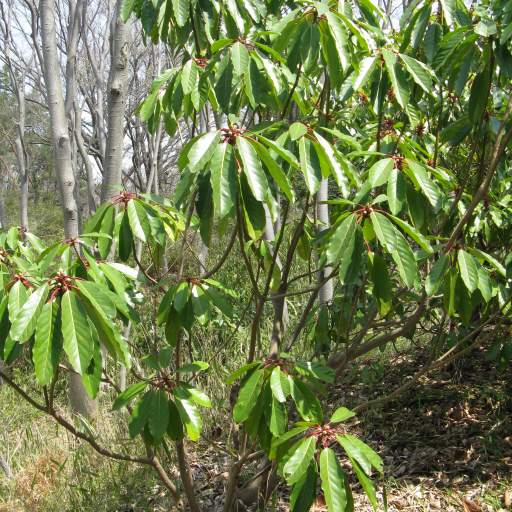
Plant Overview
Often called the "False Daphne" or "Rhododendron-leaf Daphniphyllum," this architectural evergreen is a hidden gem from East Asia. While it mimics the look of a Rhododendron, it offers a unique, tropical-looking structure that stays lush and green year-round. It is a slow-growing aristocrat of the shade garden, beloved for its striking red leaf stems and its ability to thrive where other plants might struggle.
🔍 How to Identify
- 🌿 The Foliage: Large, leathery, oblong leaves that are dark green on top and a soft, pale glaucous (bluish-white) underneath.
- 🧣 Pink Petioles: One of its most striking features is the vibrant pink-to-red color of the leaf stalks (petioles), which contrast beautifully against the green blades.
- 🍇 Cluster Blooms: In spring, it produces small, petal-less flower clusters tucked under the leaves. On female plants, these turn into dark, grape-like berries by autumn.
🏡 In Your Garden
- 🌥️ Shadow Play: This plant is a "shade specialist." It thrives in dappled sunlight or woodland conditions where it can avoid the scorching afternoon sun, which can bleach its deep green leaves.
- 💧 Moisture Balance: It prefers consistent moisture and acidic soil. Because it has a sensitive root system, it dislikes being moved once established, so choose its "forever home" carefully to avoid transplant shock.
- 🛡️ Natural Resilience: Unlike Rhododendrons, which can be finicky and prone to many pests, the Daphniphyllum is remarkably hardy and rarely suffers from significant diseases or insect attacks.
⚠️ Safety & Toxicity
- 🚫 Status: Toxic if ingested.
- 🐾 Details: The plant contains various alkaloids (such as daphniphylline) that are harmful to humans, cats, and dogs if eaten. It can cause nausea, vomiting, or more serious digestive distress. It is best placed in a part of the garden where curious pets or small children won't be tempted to sample the foliage or berries.
✨ Fun Fact
The species name macropodum literally translates to "large footed," which refers to the unusually long and sturdy stalks that hold the heavy, leathery leaves in place!

Detailed Care Instructions
To grow a Daphniphyllum Macropodum plant, you can follow these steps:
- Choose a suitable location: Select a spot that receives partial shade or filtered sunlight. Daphniphyllum Macropodum prefers a slightly acidic and well-draining soil.
- Propagation method: You can start by growing the plant from seeds or by taking stem cuttings. Seeds can be collected from mature fruits. For stem cuttings, select a healthy branch and cut a 4-6 inch piece just below a leaf node.
- Soil preparation: Prepare a pot or planting bed by using a mix of well-draining soil, such as a combination of peat moss, compost, and perlite. This will help ensure good drainage for the plant.
- Planting: Plant the seeds or stem cuttings about 2 inches deep in the soil, leaving a few nodes exposed. Water the plant thoroughly after planting to settle the soil and promote root development.
- Watering: Keep the soil consistently moist but not waterlogged. Daphniphyllum Macropodum generally prefers evenly moist soil, so regular watering is essential.
- Fertilizing: Apply a slow-release balanced fertilizer in spring or early summer. Follow the instructions on the fertilizer packaging for application rates. Avoid over-fertilizing, as this can cause leaf burn.
- Pruning: Prune the plant to maintain its shape and remove dead or damaged branches. Pruning is best done in early spring before new growth begins.
- Protection from extreme temperatures: Daphniphyllum Macropodum is not tolerant of extreme cold or heat. Protect the plant from frost in winter and provide shade during hotter months.
- Mulching: Apply a layer of organic mulch, such as wood chips or shredded leaves, around the plant to help retain moisture, suppress weeds, and regulate soil temperature.
- Pest and disease control: Regularly inspect the plant for pests like aphids or scale insects. Use appropriate natural or chemical methods to control pests if necessary. Ensure good air circulation around the plant to prevent fungal diseases.
Remember to research specific care requirements for Daphniphyllum Macropodum in your region, as different climates may have varying needs for this plant species.

Place in a window with dappled sun or a spot in the middle of a room. Or directly in a window facing west or east.

Daphniphyllum macropodum is a plant that requires consistent and even moisture levels in its soil to thrive. When watering this plant, it is important to avoid both over-watering and under-watering.
To water Daphniphyllum macropodum, start by checking the soil moisture level by sticking your finger about an inch into the soil. If the soil feels moist, wait to water until it dries out a bit. If the soil is dry, water the plant thoroughly until water drains out of the bottom of the pot or the soil around the base of the plant feels moist.
Be sure to water the plant evenly, making sure that all areas of the soil receive water. It is also important to avoid watering the leaves directly, as this can cause problems with mold and fungal growth. Instead, water the soil around the base of the plant.
During the winter months, you may need to reduce the frequency of watering, as the plant's growth slows down. However, it is still important to keep the soil moderately moist.
Overall, the key to watering Daphniphyllum macropodum is to maintain a consistent level of moisture in the soil without over-watering or under-watering the plant.
To fertilize this plant, use a balanced, slow-release fertilizer during the growing season (spring and summer). Apply the fertilizer according to the package instructions, and be careful not to over-fertilize, as this may damage the plant. Water the plant thoroughly after fertilizing to help the nutrients reach the roots. Use organic fertilizers if possible, as they can improve soil fertility and overall plant health. Avoid fertilizing in the fall and winter, as the plant is in a dormant phase during these seasons.
Daphniphyllum Macropodum plant prefers well-draining soil that is rich in organic matter. The soil should have good aeration and be slightly acidic, with a pH between 5.5 and 6.5. A mixture of peat moss, perlite, and pine bark can make an ideal soil mixture for this plant. It is important to avoid compacted soils or heavy clay soils as they could affect the plant's overall health. Additionally, the plant can benefit from regular fertilization with a balanced fertilizer during the growing season. Overall, the soil should be kept moist but not waterlogged to ensure proper growth and development of the plant.
To propagate this plant, you will need to take a stem cutting from a healthy plant. Use clean, sharp scissors or a knife to make a clean cut that is about 4-6 inches long. Remove any leaves from the lower half of the cutting, leaving only a few leaves at the top. Dip the cut end of the stem in rooting hormone powder, if desired.
Fill a small pot or container with well-draining potting mix. Make a hole in the soil with a pencil or your finger and insert the stem cutting into the hole. Firmly press the soil around the stem to hold it in place. Water the cutting thoroughly and cover it with a plastic bag or a clear plastic container to create a humid environment.
Place the pot or container in a bright, indirect light location. Keep the soil moist but not waterlogged, and make sure the humidity inside the bag or container stays high. After a few weeks, the cutting should start to develop roots. You can gently tug on the stem to check if it's anchored in the soil.
When the cutting has developed a good root system, you can remove the plastic covering and transplant it into a larger pot or into your garden. Keep the newly transplanted plant in a shaded location for a few days before exposing it to full sun. With proper care, your propagated Daphniphyllum Macropodum plant should grow into a healthy, mature plant over time.








