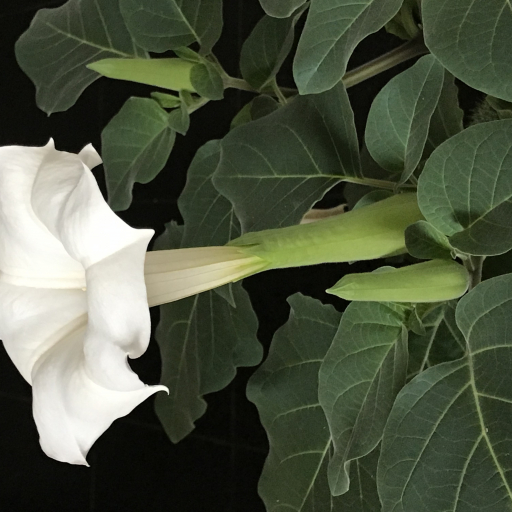
Plant Overview
Often called the Moonflower, Pricklyburr, or Thorn Apple, Datura innoxia is a plant of ethereal beauty and dark reputation. Native to the Americas, this "Queen of the Night" is famous for its massive, snowy-white blossoms that unfurl at dusk to release a heavy, intoxicating fragrance. While it carries a mystical allure in folklore and ancient rituals, it is a plant that demands deep respect and a "look but don't touch" approach.
🔍 How to Identify
- 🎺 The Bloom: Look for large, upright, trumpet-shaped white flowers that can reach up to 7 inches in length. They often have five subtle "teeth" along the rim.
- 🍃 Velvety Foliage: Unlike its cousin Datura stramonium, the leaves of innoxia are covered in a fine, grayish-white down, giving them a soft, velvety texture and a matte appearance.
- 🦔 The "Thorn Apple": Its fruit is a nodding, walnut-sized capsule covered in sharp, slender spines. When ripe, it bursts open to scatter hundreds of brown seeds.
🏡 In Your Garden
- ☀️ Sun Seeker: This plant thrives in full sun and poor, well-draining soil. It is incredibly drought-tolerant once established, thanks to a thick, fleshy taproot that acts as a water reservoir.
- 🦋 Nocturnal Guests: Because it blooms at night, it serves as a vital landing pad for Sphinx moths (Hawkmoths). Watching these large, hovering moths drink from the deep trumpets at twilight is a magical garden experience.
- 🚫 Disturbance Sensitive: Datura hates having its roots disturbed. If you are growing it from seed, plant it exactly where you want it to stay, as its long taproot makes transplanting very difficult.
⚠️ Safety & Toxicity
- 💀 Status: HIGHLY TOXIC. All parts of the plant—roots, leaves, flowers, and especially seeds—contain dangerous tropane alkaloids (scopolamine and atropine).
- 🛑 The Risks: Ingestion can lead to severe delirium, racing heart, hyperthermia, and in some cases, can be fatal. It is not a plant for gardens with curious pets or young children.
- 🧤 Handling: Always wear gloves when pruning or handling the plant, as the sap can cause skin irritation or accidental eye dilation if you touch your face after handling the leaves.
✨ Fun Fact
The Datura flower is a master of timing; it begins to unfurl in the late afternoon with such speed that you can actually watch the petals spiral open in a matter of minutes, glowing like a lantern under the moonlight.

Detailed Care Instructions
Growing Datura innoxia, also known as Angel's Trumpet or Moonflower, can be a rewarding but challenging experience. Here is a step-by-step guide to help you grow this plant successfully:
- Obtain Datura innoxia seeds or young plants from a reputable source. Make sure to research local regulations regarding the cultivation of this plant, as it may be considered illegal or regulated in some regions due to its toxic properties.
- Choose a suitable location with full sunlight. Datura innoxia prefers warm climates and thrives in temperatures between 70-85°F (21-29°C).
- Prepare the soil by cultivating it deeply, removing any weeds or debris, and adding organic matter like compost or well-rotted manure. Datura innoxia prefers well-draining soil with a pH between 6.5-7.5.
- Plant the seeds or young plants after the last frost when the soil has warmed up. If planting seeds, soak them in water for 24 hours before sowing. Sow the seeds directly on the soil surface and gently press them in without covering. Maintain a spacing of about 12-18 inches (30-45 cm) between plants.
- Water the seeds or young plants regularly, ensuring that the soil remains consistently moist but not waterlogged. Datura innoxia is drought-tolerant, but consistent watering promotes healthy growth and flowering.
- As the plants grow, provide support such as trellises or stakes to help them climb upright. This will prevent them from sprawling on the ground and encourage better air circulation.
- Apply a balanced slow-release fertilizer according to package instructions once every 4-6 weeks during the growing season. Alternatively, you can use a liquid fertilizer diluted to half strength every 2-3 weeks.
- Keep an eye out for common pests such as aphids, whiteflies, or hornworms, which can infest Datura innoxia. Control them using organic pest control methods such as insecticidal soap or neem oil.
- Prune the plants as needed to promote bushier growth and encourage flower production. Removing spent flowers can also prolong the blooming period.
- Remember that all parts of the Datura innoxia plant are highly toxic if ingested. Take necessary precautions and keep it out of the reach of children and pets.
- Enjoy the beautiful and fragrant blooms of Datura innoxia, which typically appear from mid-summer to early fall.
Please note that Datura innoxia is a potentially dangerous plant, and if you decide to grow it, do thorough research on its toxicity and appropriate safety measures.

Place in a bright room that is sun drenched almost all day. Or directly in a south-facing window.

To water this type of plant, you will need to follow a specific set of instructions. These instructions include ensuring that the soil is always moist without being too wet, providing regular watering during the growing period, and reducing watering frequency during the winter months. It is recommended to use a watering can or hose-end nozzle to water the soil around the plant's roots, avoiding getting water on the leaves or flowers. Additionally, it is important to avoid letting standing water collect in the pot or container as this can cause root rot. Checking the soil regularly and adjusting watering frequency as needed will help promote healthy growth and flowering of this plant.
For fertilizing Datura Innoxia, use a balanced fertilizer once a month during the growing season. Be sure to dilute the fertilizer to half its strength before application and apply it to the soil around the plant, rather than directly to the leaves. Avoid fertilizing during the plant's dormant season, which usually occurs in the winter months. Over-fertilizing can cause the plant to grow too quickly and become weak, so be sure to follow the recommended fertilizing schedule.
The ideal soil for the Datura Innoxia plant should be well-draining, loose, and nutrient-rich. It should have a slightly acidic pH level, between 5.5 and 7.0. A mix of sand, peat moss, and perlite with some added compost or aged manure is a good option. The plant prefers moist but not waterlogged soil, so make sure to water it regularly. Avoid using heavy clay soils or ones that are prone to retaining too much moisture, as this can lead to root rot.
One way to propagate this plant is to take cuttings from a mature plant. Select a healthy stem and use clean, sharp pruning shears to cut a section that is about 4-6 inches in length. Remove any leaves from the bottom one-third of the cutting. Dip the cut end of the stem in rooting hormone powder to encourage the development of roots. Plant the cutting in a well-draining potting mix, keeping the soil moist but not waterlogged. Place the cutting in a warm, brightly lit location, but avoid direct sunlight. Within a few weeks, the cutting should develop roots and new growth. Transplant the new plant to a larger container or in the garden once it has established itself.








