Plant Overview
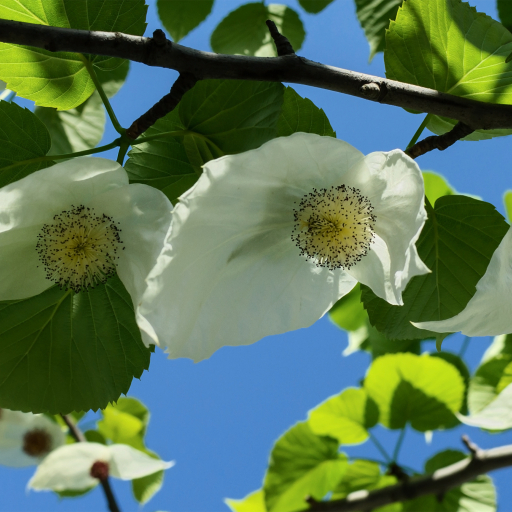
Commonly known as the Handkerchief Tree or the Dove Tree, Davidia involucrata is a botanical marvel that looks like it belongs in a fairytale. When in full bloom, its branches are draped in large, snowy-white bracts that flutter in the breeze like a thousand resting doves or laundry hung out to dry. Originally discovered in the high-altitude forests of China, this "living fossil" is a prized centerpiece for any patient gardener.
🔍 How to Identify
- 🕊️ The "Handkerchiefs": The most striking feature isn't actually the flower, but two unequal, creamy-white bracts (specialized leaves) that can grow up to 7 inches long, fluttering around a small, purple-red flower head.
- 🍃 Heart-Shaped Foliage: The leaves are bright green, heart-shaped (cordate), and have sharply toothed edges, resembling the leaves of a lime tree or linden.
- 🌳 Growth Habit: This tree typically maintains a neat, pyramidal shape when young, eventually spreading into a broad, rounded canopy that provides excellent shade.
🏡 In Your Garden
- ⏳ Patience is Key: One of the most important things to know is that Davidia is a "slow burner." It can take anywhere from 10 to 20 years to produce its first set of handkerchiefs, so it is often planted as a legacy tree.
- 🌬️ Shelter and Soil: It thrives in rich, moisture-retentive, but well-drained soil. Because the delicate white bracts can be easily torn or bruised by the wind, it should be planted in a sheltered spot away from harsh gusts.
- ❄️ Late Frost Sensitivity: While the tree is hardy, a late spring frost can unfortunately zap the developing bracts, turning your "doves" brown before they have a chance to take flight.
⚠️ Safety & Toxicity
- ✅ Safe Status: Davidia involucrata is generally considered non-toxic to humans, cats, and dogs.
- 🚫 Not Edible: While not poisonous, the nut-like fruits are hard and unpalatable. They are best left for the local squirrels rather than curious toddlers.
✨ Fun Fact
The quest to bring this tree to the West was so intense that famous plant hunter Ernest Wilson was sent on a specific mission to China in 1899 just to find it. He nearly lost his life in a boat accident during the journey, but he managed to save the seeds that populated many of the famous gardens we see today!

Detailed Care Instructions
To grow Davidia involucrata, also known as the ghost tree or handkerchief tree, follow these steps:
- Climate and location: Ghost trees prefer mild, temperate climates with cool winters and moderate summers. They thrive in USDA hardiness zones 6-9. Choose a location with well-draining soil and partial shade to protect the tree from hot afternoon sun.
- Start from seeds: Ghost trees are typically grown from seeds. Collect fresh seeds from a mature tree in autumn, when the tree's unique "handkerchief" flowers (white bracts) turn brown. Clean the seeds and place them in a plastic bag with moist sand or peat moss, then store in a cool place for 3-4 months for stratification.
- Prepare the soil: Choose a slightly acidic to neutral soil with good organic content. Till the soil, removing any weeds or rocks, and improve drainage if necessary. Incorporate compost or well-rotted manure to enrich the soil.
- Sow the seeds: Select a planting area with dappled shade or indirect sunlight. Sow the seeds in the prepared soil during early spring, spacing them about 2 inches apart. Cover the seeds with a thin layer of soil and gently pat it down.
- Mulch and water: Apply a layer of organic mulch, such as wood chips or straw, around the seedlings to retain moisture and suppress weed growth. Water regularly but avoid overwatering, as soggy soil can cause root rot. Keep the soil moist but not waterlogged.
- Transplanting: After the seedlings have grown for a year, they can be transplanted to a larger container or directly into the ground. Choose a well-drained, partially shaded spot. Dig a hole slightly larger than the root ball of the seedling, gently place it in the hole, and fill it with soil. Water thoroughly after transplanting.
- Pruning and maintenance: Prune the tree during the dormant season (winter or early spring). Remove any dead, damaged, or crossing branches to maintain a well-shaped tree. Be mindful not to over-prune, as ghost trees have a naturally elegant structure.
- Fertilization: Apply slow-release, balanced fertilizer in early spring and early summer to provide necessary nutrients. Follow the manufacturer's instructions regarding dosage and application.
- Protection from extreme temperatures: Cover the young tree with freeze cloth during severe frost or protect it from excessive heat to help it establish.
- Patience: Davidia involucrata is a slow-growing tree, and it may take several years for it to reach maturity and start producing its unique handkerchief-like flowers.
Remember that growing trees can be a long-term commitment, so make sure you have the necessary space, time, and resources to care for the Davidia involucrata properly.

Place in a bright room that is sun drenched almost all day. Or directly in a south-facing window.

To water this plant, you should give it a thorough soaking when the top inch of soil feels dry to the touch. This typically means watering once a week during the growing season, and reducing watering frequency during the dormant season. Be sure to water deeply, so the water reaches the roots. Avoid getting the leaves wet, as this can contribute to fungal diseases. In hot, dry weather, it may be necessary to increase watering frequency to prevent the plant from drying out.
To fertilize this plant, you should apply a balanced fertilizer with equal amounts of nitrogen, phosphorus, and potassium during the growing season. It is best to apply the fertilizer in spring and again in early summer. Avoid fertilizing during fall and winter when the plant is dormant. Always follow the manufacturer's instructions for proper application rates.
The ideal soil for this plant is a rich, loamy soil that is well-draining. It should be slightly acidic, with a pH range of 5.5 to 6.5. The soil should be moist but not waterlogged, as too much water can harm the plant. Adding organic matter such as compost or leaf mold to the soil can improve its fertility and texture. It is important to avoid using heavy, clay soils, as these can restrict root growth and drainage. Additionally, the plant prefers to be located in a partially shaded area that is protected from strong winds.
Davidia Involucrata is a deciduous tree that is propagated through seeds or cuttings. To propagate through seeds, collect fresh seeds from the tree in the fall and remove the fleshy coating. Soak the seeds in warm water for 24 hours before planting in a soilless mixture. Keep the mixture moist and keep the seeds in a cool location (around 40-50°F) for stratification. The seeds will usually germinate in the spring.
To propagate through cuttings, take hardwood cuttings in the fall or winter and plant them in a soilless mixture. Keep the mixture moist and cover with a plastic bag to create a humid environment. Cuttings will root in about six to eight weeks.
After both methods, transplant the plant to a larger pot or directly into the ground in a well-draining soil, and water regularly until established.








