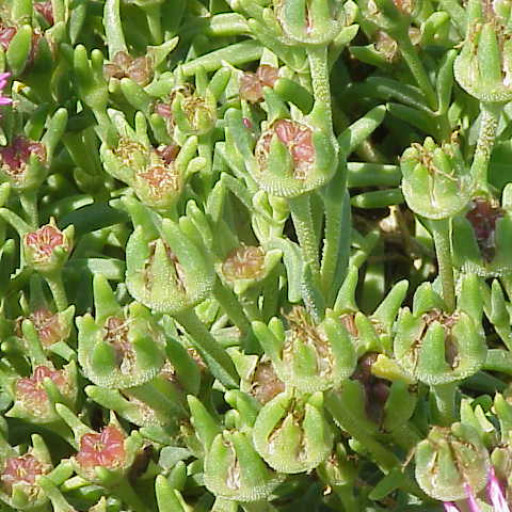
Plant Overview
Known as the Hardy Ice Plant or Purple Ice Plant, this South African native is a high-octane groundcover that transforms rocky, dry soil into a neon-colored carpet. It gets its "ice" moniker not from the cold, but from the tiny, light-reflecting hairs on its leaves that shimmer like frost crystals under the afternoon sun. It is a resilient survivor that loves the heat and thrives on neglect.
🔍 How to Identify
- 🌸 Neon Blooms: Features brilliant, daisy-like flowers with thin, needle-like petals in shades of intense magenta, purple, or pink, usually with a pale white center.
- 💧 Succulent Foliage: The leaves are fleshy, cylindrical, and bright green, growing in a dense, creeping mat that stays low to the ground.
- ✨ Glistening Texture: Upon close inspection, the foliage looks as though it has been dusted with fine salt or frozen dew, a unique adaptation for water storage.
🏡 In Your Garden
- ☀️ Sun-Driven Blooms: This plant is a sun-worshipper; its flowers will literally "sleep" (close up) during cloudy weather or at night, only revealing their full glory under direct sunlight.
- 🪨 The Drainage Rule: While it is incredibly drought-tolerant, it has a "death wish" for soggy feet. It is best planted in gravelly soil or rock gardens where water can escape quickly, especially during the winter months.
- 🐝 Pollinator Magnet: Despite its alien, succulent appearance, it is a significant draw for bees and butterflies, providing a nectar-rich pitstop in dry landscapes.
⚠️ Safety & Toxicity
- 🟢 Status: Generally Non-Toxic.
- 🐾 Details: Delosperma cooperi is widely considered safe for cats, dogs, and children. However, like many succulents, it contains small amounts of oxalates; if a pet grazes on a large amount, they may experience mild stomach upset or drooling.
✨ Fun Fact
The "Ice Plant" doesn't just look cool—it's a master of chemistry! It can switch its photosynthetic process during extreme drought, closing its pores during the day to prevent water loss and "breathing" only at night to stay alive in scorching conditions.

Detailed Care Instructions
| Color | Glossy Red-Purple |
| Soil Ph | 6.1 To 7.8; Prefers Relatively Neutral Soil |
| Humidity | Dry |
| Lighting | Full Sun |
| Soil Type | Dry, Well-Drained Soil |
| Bloom Time | Summer |
| Difficulty | Easy |
| Plant Type | Herbaceous Perennial |
| Hibernation | Cold Period |
| Mature Size | 3 To 6 Inches In Height, With A Spread Of 12 To 24 Inches |
| Native Area | Dry Mountains And Desert Plateaus Of Southern Africa |
| Temperature | 20°C - 35°C |
| Sun Exposure | Full Sun |
| Hardiness Zones | 5 To 10 |
To grow Delosperma cooperi, also known as ice plant or purple ice plant, follow these steps:
- Choose a suitable location: Delosperma cooperi thrives in full sun, so select a spot in your garden or patio that receives at least 6-8 hours of direct sunlight per day.
- Prepare the soil: The plant prefers well-draining soil. Before planting, loosen the soil and incorporate organic matter such as compost or peat moss to improve drainage.
- Planting: Dig a hole that is slightly larger than the root ball of the plant. Place the plant in the hole, making sure the crown is level with or slightly above the soil surface. Backfill the hole with soil and gently firm it around the plant, ensuring there are no air pockets.
- Watering: Water the plant thoroughly after planting to settle the soil and promote root growth. Once established, Delosperma cooperi is drought-tolerant and does not require regular watering. Water only when the soil is dry, about once every 7-10 days.
- Mulching: Apply a layer of mulch around the plant to conserve moisture and suppress weed growth. This also helps regulate soil temperature.
- Pruning: Deadhead the faded flowers to encourage continuous blooming and a neater appearance. Trim back any leggy or overgrown stems in early spring to promote compact growth.
- Fertilization: Delosperma cooperi is a low-maintenance plant and does not require frequent fertilization. However, you can apply a slow-release, balanced fertilizer in early spring to provide some nutrients for vigorous growth.
- Cold protection: Protect the plant from frost if you live in a region with cold winters. Applying a thick layer of mulch around the base can provide insulation.
With proper care, Delosperma cooperi will spread and form a beautiful, colorful groundcover. Enjoy its vibrant blooms and unique succulent foliage.

Place in a bright room that is sun drenched almost all day. Or directly in a south-facing window.

One way to water this plant is to wait until the top inch of soil is dry before watering. When watering, ensure that the water is applied evenly and saturates the entire soil surface. It's better to water deeply, but less frequently, as the plant is drought-tolerant. Avoid overwatering, as this can lead to root rot. Water the plant early in the day, so it has enough time to dry out before the nightfall. Ensure that the pot has proper drainage holes, as standing water can cause damage to the roots.
To properly fertilize this plant, start by choosing a fertilizer that is specific to its needs. It should have a balanced NPK ratio (Nitrogen, Phosphorus, and Potassium), with a slightly higher ratio of phosphorus and potassium than nitrogen. Apply the fertilizer according to the package instructions, making sure not to apply too much or too often, as over-fertilization can harm the plant. It is best to fertilize this plant in the early spring and mid-summer, when it is actively growing. Make sure the soil is consistently moist before and after fertilization. Avoid fertilizing during periods of drought or extreme heat. Additionally, consider incorporating organic matter, like compost or coffee grounds, into the soil to provide additional nutrients and improve the soil quality.
The best soil to use with this plant is a well-draining, sandy or gravelly soil mix with a pH range of 6.0 to 7.5. It should be comprised of a mixture of loamy soil, coarse sand, and gravel or perlite to provide good drainage and prevent waterlogging. Additionally, it is important to avoid using heavy, clay soils as these can retain too much moisture and lead to root rot. Additions of organic matter such as compost or peat moss can improve soil nutrient levels but should be added sparingly as Delosperma species prefer low-nutrient soils. The soil also needs to be placed in a sunny location to encourage healthy growth and flowering.
To propagate this succulent plant, you will need to take stem cuttings. Select a healthy stem that is at least 3 inches long and has several sets of leaves. Using a sharp, sterile pair of scissors or pruning shears, cut the stem just below a set of leaves. Remove any leaves from the lower two-thirds of the stem.
Prepare a well-draining potting mix by combining equal parts of sand, perlite, and peat moss. Moisten the mix lightly. Dip the cut end of the stem into rooting hormone powder, if desired, to encourage root growth.
Make a hole in the potting mix and insert the cutting, burying the lower two-thirds of the stem. Gently press the mix around the cutting to hold it in place.
Place the pot in a warm, bright location but out of direct sunlight. Keep the soil moist but not waterlogged, and mist the cutting regularly to keep it hydrated.
After a few weeks, the cutting should start to develop roots. You can gently tug on the stem to check if it's rooted. Once it's rooted, you can transplant the young plant to a larger container or individual pots.
With proper care, the new plants will start to grow and branch out, eventually forming a lush and vibrant display.








