Plant Overview
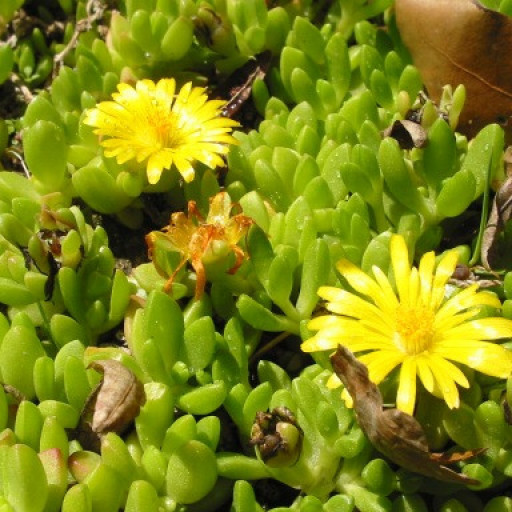
Known as the Hardy Ice Plant or Yellow Ice Plant, this resilient succulent is a "living carpet" from the high-altitude mountains of South Africa. Its nickname "Ice Plant" doesn't come from its cold tolerance, but from the shimmering, translucent hairs on its leaves that look like tiny frost crystals in the sun. It is a favorite for rock gardens because it transforms from a lush green mat into a brilliant field of gold during its peak bloom.
🔍 How to Identify
- 🌿 Succulent Foliage: The leaves are small, fleshy, and cylindrical, typically lime-green in summer but turning a striking reddish-bronze or purple when the winter chill sets in.
- 🌼 Golden Blooms: It produces masses of daisy-like, brilliant yellow flowers that sit flat against the foliage, often hiding the leaves entirely during late spring.
- 📏 Mat-Forming Habit: It stays very low to the ground (only about 1-2 inches tall) but spreads wide, creating a dense, weed-suppressing rug over the soil.
🏡 In Your Garden
- 🏔️ Mountain Roots: Because it originates from the Drakensberg Mountains, it is significantly more cold-hardy than its cousins. However, it "breathes" through its roots; if the soil stays soggy during winter, the plant will likely rot. Always prioritize grit and drainage over rich soil.
- 🏃 Goundcover Strategy: It spreads by rooting at the nodes where its stems touch the ground. If you want to fill a large area, you can easily snip a piece and tuck it into the dirt nearby—it’s a champion at self-propagation.
⚠️ Safety & Toxicity
- ✅ Non-Toxic: Delosperma nubigenum is generally considered safe and non-toxic for humans and common household pets like cats and dogs.
- 🌱 Mild Irritation: While not poisonous, the sap of most succulents can cause very mild stomach upset if a curious pet decides to graze on a large amount. It’s best kept as a visual treat rather than a snack.
✨ Fun Fact
The specific epithet nubigenum literally translates to "born of clouds" or "cloud-born," referring to the misty, high-altitude peaks where this plant was first discovered!

Detailed Care Instructions
Here are some steps to help you grow Delosperma Nubigenum (also known as Hardy Ice Plant):
- Start with a healthy plant: Purchase a Delosperma Nubigenum plant from a reputable nursery or garden center. Look for a plant with vibrant, green leaves and no signs of disease or pests.
- Choose the right location: Delosperma Nubigenum prefers full sun to light shade. It thrives in well-draining soil and is tolerant of dry and sandy conditions. Make sure the chosen area has good drainage to prevent root rot.
- Prepare the soil: If your soil is heavy or compacted, amend it with organic matter such as compost or well-rotted manure. This will improve drainage and provide nutrients for the plant.
- Planting: Dig a hole that is slightly larger than the plant's root ball. Place the plant in the hole, ensuring that the top of the root ball is level with the soil surface. Backfill the hole with soil and gently firm it around the plant to remove any air pockets.
- Watering: Water the newly planted Delosperma Nubigenum thoroughly, moistening the root ball. Afterward, allow the soil to dry out slightly between waterings. These plants are drought-tolerant, so be careful not to overwater.
- Mulching: Apply a layer of organic mulch around the plant to conserve moisture, suppress weeds, and protect the roots from extreme temperatures.
- Fertilizing: Delosperma Nubigenum generally does not require heavy fertilization. If desired, you can apply a balanced, slow-release fertilizer in spring, following the manufacturer's instructions.
- Pruning: While not necessary, you can prune back leggy or overgrown stems in early spring to maintain a neater appearance. This can also encourage bushier growth.
- Propagation: Delosperma Nubigenum can be propagated by division, stem cuttings, or by collecting and sowing its seeds. Division is typically done in spring or early fall when the plant is actively growing.
- Winter care: Delosperma Nubigenum is a hardy plant and can tolerate frost and cold temperatures. However, if you are in an extremely cold climate, you may want to provide some extra protection by applying a layer of mulch or covering the plant with a frost cloth during the winter months.
With proper care and conditions, Delosperma Nubigenum should thrive and provide beautiful, colorful blooms throughout the growing season.

Place in a bright room that is sun drenched almost all day. Or directly in a south-facing window.

Delosperma Nubigenum is a type of plant that requires a specific watering routine to maintain its health and vibrancy. To water this plant, it is important to ensure that the soil is completely dry before adding any water. Once the soil has dried out, fill a watering can with room temperature water and direct the water towards the base of the plant, avoiding getting water on the leaves or flowers. It is best to water the plant in the morning or early evening when the temperature is cooler to prevent the water from evaporating too quickly. Overwatering can cause damage to the roots and lead to root rot, so it is important to not water the plant too frequently. It is recommended to water Delosperma Nubigenum once every one to two weeks, but this may vary depending on the climate and humidity of the plant's environment.
To properly fertilize this plant, you should choose a balanced, water-soluble fertilizer. Dilute the fertilizer to half strength according to the manufacturer's instructions. Feed the plant once a month from spring until the end of summer. During the fall and winter months, reduce the fertilization to every two months. Always water the plant thoroughly before and after fertilization to prevent any root damage. Avoid fertilizing the plant during periods of hot, dry weather or when the plant is showing signs of stress.
The ideal soil for this specific plant is a well-draining, sandy soil with a pH between 6.0 and 7.0. It is important to avoid heavy, clay soils or soils with high organic matter content, as these can retain too much moisture and cause root rot or other diseases. A soil mix that includes a high percentage of coarse sand or perlite can help improve drainage. In addition, adding a small amount of gravel or crushed rock to the bottom of the planting hole can further enhance drainage. Overall, the goal is to create a soil environment that mimics the plant's native habitat, which typically consists of rocky, dry slopes at high altitudes in the mountainous regions of southern Africa.
To propagate this plant, take a cutting from the parent plant. Make sure the cutting is at least 2 inches long and remove any leaves from the bottom of the stem. Dip the cut end of the stem into rooting hormone powder and plant it in well-draining soil. Keep the soil moist and place the cutting in a bright, indirect light location. In about 2 to 3 weeks, the cutting should begin to root and new growth will appear. Once the plant has established itself, it can be transplanted to its permanent location.








