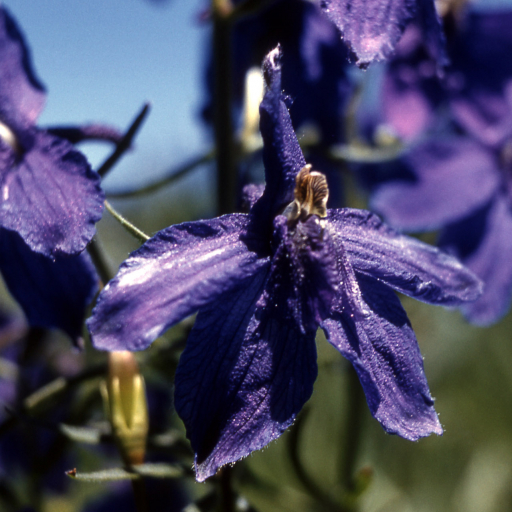
Plant Overview
Known as the "Little Larkspur," Delphinium bicolor is a jewel of the Western North American wilderness. These striking wildflowers often signal the true arrival of spring in the foothills and mountain meadows, sporting elegant "spurred" blooms that resemble the claw of a lark. Despite their dainty, graceful appearance, they are resilient survivors of rocky, high-altitude terrain.
🔍 How to Identify
- 🌸 The Spurred Bloom: Look for deep indigo or violet-blue flowers featuring a distinctive long "spur" poking out the back, which acts as a nectar reservoir.
- ⚪ Bicolor Contrast: The center of the flower (the "bee") usually features two smaller, lighter petals—often white or pale blue—that stand out sharply against the darker outer sepals.
- 🍃 Lobed Foliage: The leaves are deeply divided into narrow, finger-like segments, giving the plant a delicate, feathery look near the base of the stem.
🏡 In Your Garden
- 🏔️ Mountain Heritage: Because it is a native of slopes and open woods, it demands exceptional drainage. It hates "wet feet" and prefers gravelly or sandy soils that mimic its home in the Rockies.
- 🐝 Bumblebee Favorite: This plant has a special relationship with long-tongued bumblebees and hummingbirds; they are among the few creatures strong enough to pry open the petals and reach the nectar hidden in the spur.
- 💤 Summer Dormancy: Don’t panic if it disappears! This is a spring ephemeral. Once the summer heat intensifies, the plant naturally dies back to its roots to save energy for next year.
⚠️ Safety & Toxicity
- 🚫 Highly Toxic: Every part of the Little Larkspur contains potent delphinine alkaloids. It is considered a "deadly" category plant if ingested in significant amounts.
- 🐾 Livestock & Pets: It is a major concern for cattle ranchers, as it is highly toxic to grazing animals. In a home setting, it should be kept far out of reach of dogs, cats, and curious children. Contact with the sap may also cause minor skin irritation for some individuals.
✨ Fun Fact
The name Delphinium comes from the Greek word for "dolphin," because the flower buds were thought to look like the nose of a dolphin before they fully opened!

Detailed Care Instructions
Here are some steps to help you grow a Delphinium Bicolor plant:
- Choose a suitable location: Delphinium Bicolor plants prefer full sun to partial shade. Select a well-draining spot in your garden that gets at least 6-8 hours of sunlight each day.
- Prepare the soil: Delphiniums prefer rich, moist soil with good drainage. Amend the soil with organic matter such as compost or well-rotted manure to improve its fertility and drainage.
- Start from seeds or transplants: You can either start the plants from seeds or purchase young transplants from a nursery. Follow the instructions on the seed packet or nursery tag regarding seed starting or planting depth for transplants.
- Sow or plant at the right time: Delphinium Bicolor can be sown directly in the garden in early spring or fall. If you're using transplants, plant them after the last frost date in spring.
- Water regularly: Delphiniums require regular watering to keep the soil evenly moist. A deep watering once or twice a week is usually sufficient, but adjust based on the weather conditions and soil type.
- Mulch around the plants: Apply a layer of organic mulch around the base of the plants to help retain soil moisture, suppress weeds, and regulate soil temperature.
- Provide support: Delphiniums have tall flower spikes that may require staking or other support to prevent them from bending or breaking under their own weight. Install stakes or a supportive framework before the plants grow too tall.
- Fertilize sparingly: Delphiniums are not heavy feeders, but you can provide a balanced, slow-release fertilizer in early spring or top dress with compost to provide nutrients.
- Monitor for pests and diseases: Keep an eye out for common garden pests like aphids, slugs, or snails. Treat them using organic pest control methods. Also, ensure good air circulation around the plants to minimize the risk of diseases like powdery mildew.
- Prune after flowering: After the flowers start to decline, you can trim back the spent flower spikes to encourage new growth and potentially a second flowering.
Remember to always consult specific care instructions for your Delphinium Bicolor variety, as some cultivars may have additional requirements or preferences.

Place in a bright room that is sun drenched almost all day. Or directly in a south-facing window.

To water this plant, first make sure that the soil is dry to the touch before watering. Using a watering can or hose with a gentle spray setting, water the plant at the base, taking care not to get water on the leaves or flowers. Allow the soil to fully absorb the water, and then discard any excess water from the saucer or tray underneath the pot. It is best to water this plant deeply and infrequently rather than frequently but lightly, as it prefers moist but well-draining soil. In hot or dry weather, it may require more frequent watering to prevent the soil from drying out completely.
To fertilize this plant, use a balanced fertilizer with equal amounts of nitrogen, phosphorus, and potassium. Apply the fertilizer every two to three weeks during the growing season, being careful not to over-fertilize as this can lead to excessive foliage growth and reduced flowering. Water the plant thoroughly before and after fertilizing to ensure the fertilizer reaches the plant's roots.
Delphinium Bicolor plants prefer a well-draining soil that is rich in organic matter. A high-quality soil mix with a pH between 6.5 and 7.5 is preferred. It is important that the soil is not too compacted or heavy as this can lead to poor drainage and root rot. A good soil mix for Delphinium Bicolor plants can be made by combining equal parts of peat moss, perlite, and sterilized garden soil. This soil mix should be well-draining and allow for adequate air circulation to the roots of the plant. Additionally, adding compost or well-aged manure to the soil mix can provide additional nutrients to help enrich the soil. It is important to ensure that the soil remains moist but not waterlogged, as this can also lead to root rot.
Delphinium Bicolor plant can be propagated through various methods such as division, cuttings, and seeds. To propagate through division, simply dig up the plant and divide it into smaller pieces, making sure each piece has roots. Replant the sections into well-draining soil and water thoroughly.
To propagate through cuttings, take a 4-6 inch stem cutting from a healthy plant and remove the lower leaves. Dip the cut end into rooting hormone and plant it in a pot filled with moist soil. Place the pot in a shaded location and keep the soil moist until the cutting has rooted.
To propagate through seeds, collect mature seed pods from the plant and allow them to dry out. Once dry, gently tap the pods to release the seeds. Sow the seeds in a pot filled with well-draining soil and cover lightly with soil. Keep the soil moist and when the seedlings are large enough, transplant them into individual pots or into the ground.








