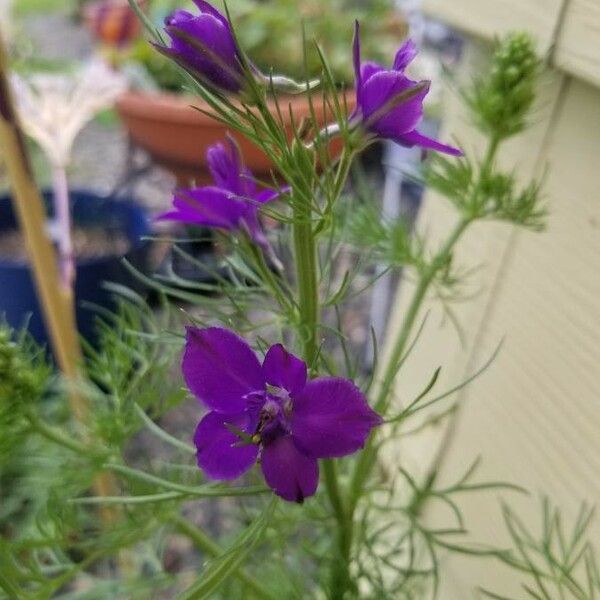
Plant Overview
Commonly known as Larkspur, this elegant wildflower is the cottage garden’s answer to the "blue sky" aesthetic. Native to the Mediterranean and Europe, it has been a staple in folklore for centuries, often associated with protection and lightheartedness. While it looks like a delicate wand of blossoms, it is a hardy survivor that paints fields in shades of royal indigo, soft pink, and snowy white.
🔍 How to Identify
- 🌸 The "Spur": Each flower features a distinctive backward-projecting "spur" formed by the sepals, which many believe resembles the long hind toe of a lark.
- 🌿 Feathery Foliage: Unlike the broad leaves of its perennial Delphinium cousins, this species has deeply divided, thread-like leaves that give the plant a misty, airy appearance.
- 📏 Growth Habit: It typically grows as a single, upright stalk—earning it the nickname "Rocket Larkspur"—reaching heights of 1 to 3 feet topped with a dense cluster of blooms.
🏡 In Your Garden
- 🌱 Root Sensitivity: This plant develops a deep taproot early in its life, which means it "hates" being moved. For the best results, sow seeds directly into the garden soil rather than starting them in pots.
- 🌬️ Support and Wind: Because they are tall and slender, they can become top-heavy when in full bloom. Planting them in tight groups allows them to support one another, or you may need discrete stakes to prevent them from flopping after a summer rain.
- ❄️ The Cold Start: Larkspur seeds actually require a "cold snap" to germinate properly. Sowing them in the autumn or very early spring gives them the necessary chill to wake up and thrive.
⚠️ Safety & Toxicity
- 🚫 High Toxicity: All parts of this plant are poisonous. It contains potent alkaloids (including delsoline and delcosine) that can be fatal if ingested.
- 🐾 Pet & Livestock Warning: Keep this plant away from curious dogs, cats, and horses. Ingestion can cause neuromuscular blockage, respiratory failure, and severe digestive distress.
- 🧤 Skin Sensitivity: Some gardeners experience contact dermatitis (an itchy rash) when handling the foliage. It is always best to wear gloves when pruning or thinning these plants.
✨ Fun Fact
In historical England, the juice from crushed Larkspur flowers was mixed with alum to create a permanent blue ink. It was also a popular "magical" herb—ancient lore suggested that rubbing the flowers on your eyelids would allow you to see ghosts!

Detailed Care Instructions
Here are some tips for growing Delphinium Consolida plants:
- Choose the right location: Delphinium Consolida plants prefer full sun but can tolerate partial shade. Make sure the soil is well-draining and rich in organic matter.
- Prepare the soil: Before planting, amend the soil by adding compost or well-rotted manure to improve its fertility and drainage.
- Sow seeds directly: Delphinium Consolida seeds can be sown directly into the garden in early spring or autumn. Scatter the seeds over the prepared soil and lightly press them into the ground. Keep the soil moist until germination occurs.
- Thin out seedlings: Once the seedlings are about 2-3 inches tall, thin them out to allow sufficient space for each plant to grow. Space the seedlings about 12-18 inches apart.
- Watering: Keep the soil evenly moist, especially during dry spells. Water deeply at the base of the plant to encourage strong root growth.
- Fertilize: Apply a balanced fertilizer or compost to the soil in early spring to provide nutrients for healthy growth. Avoid over-fertilizing, as this can lead to leggy growth and reduced flower production.
- Provide support: Delphinium Consolida plants can grow tall, and their heavy flower spikes may require staking or support. Use bamboo stakes or plant supports to keep the plant upright and prevent it from bending or breaking.
- Mulching: Apply a 2-3 inch layer of mulch around the base of the plant to help retain soil moisture, suppress weed growth, and regulate soil temperature.
- Deadhead spent flowers: Removing spent flowers regularly will encourage the plant to produce more blooms. Cut the flower stalks back to the first pair of leaves to promote new growth.
- Protect from pests: Delphinium Consolida plants can be susceptible to aphids, snails, and slugs. Regularly inspect the plants for any signs of pests and take appropriate measures such as using organic pest control methods or picking pests off by hand.
By following these guidelines, you can grow healthy and vibrant Delphinium Consolida plants in your garden.

Place in a bright room that is sun drenched almost all day. Or directly in a south-facing window.

To properly water this type of plant, you will need to carefully pour water around the base of the stem, making sure to avoid watering the leaves or flowers. It is important to ensure that the soil is moist, but not overly saturated, as this can lead to root rot. Avoid watering too frequently, and instead aim to water deeply and thoroughly once or twice a week, depending on the humidity and temperature of your environment. It can also be helpful to add mulch to the soil around the plant to help retain moisture and regulate temperature.
To fertilize this plant, use a balanced fertilizer with equal amounts of nitrogen, phosphorus, and potassium. Apply the fertilizer once a month during the growing season, being careful not to over-fertilize. Water the plant deeply after fertilizing to help the nutrients penetrate the soil and reach the roots. Avoid fertilizing during periods of drought or extreme heat, as this can harm the plant.
For the Delphinium Consolida plant, it is recommended to use a well-draining, fertile soil that is rich in organic matter. The pH level of the soil should be slightly acidic, ideally between 6.0 and 7.0. The soil should also be consistently moist, but not waterlogged, as the plant is susceptible to root rot. It is important to amend the soil with compost or aged manure prior to planting to ensure adequate nutrition for the plant. Avoid using heavy, clay soils that do not drain well as this can lead to a number of issues for the plant.
To propagate this plant, collect seeds from the mature seed pods once they have turned brown and brittle. Store the seeds in a cool, dry location until planting. In the early spring, sow the seeds indoors in a seed-starting tray filled with moist potting soil. Cover the seeds with a thin layer of soil and keep the tray in a warm location until the seeds germinate. Once the seedlings have developed their first true leaves, they can be transplanted into larger pots or directly into the garden. Alternatively, stem cuttings can be taken from the plant in late summer and rooted in water or moist potting soil. Place the cuttings in a warm, humid location until they develop roots and then transplant them into larger pots or the garden.
Common pests of the field larkspur include Aphids, larvae, snails. Make a habit of checking your field larkspur frequently for pests so that any infestations can be caught and managed early.








