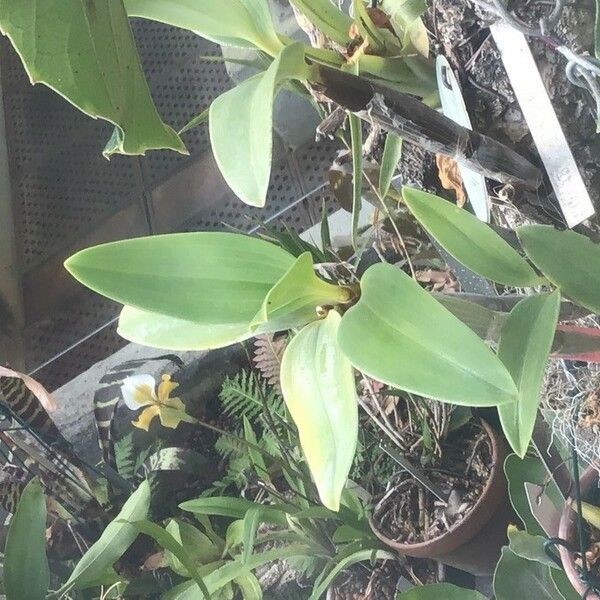
Plant Overview
Often called the "Alien Orchid," Dendrobium spectabile is a show-stopper that looks like it was plucked straight from a sci-fi movie. Native to the steaming jungles of New Guinea and the Solomon Islands, this orchid doesn’t just bloom; it performs. Its flowers are famously twisted, contorted, and intricately patterned, making it a "must-have" for collectors who appreciate the bizarre side of nature.
🔍 How to Identify
- 🌸 The "Alien" Bloom: The sepals and petals are heavily crinkled, curled, and streaked with deep maroon, brown, and creamy yellow patterns that look like prehistoric calligraphy.
- 🪵 Robust Canes: Unlike delicate grocery-store orchids, this species grows thick, upright, cigar-shaped pseudobulbs (canes) that can reach over a foot in height.
- 🍃 Leathery Foliage: The leaves are tough, dark green, and elliptical, appearing primarily at the top of the mature canes to soak up the tropical sun.
🏡 In Your Garden
- 🏺 Snug Roots: This orchid is famously claustrophobic. It hates being repotted and often "sulks" or stops growing if its roots are disturbed. It thrives best when kept in a pot that looks slightly too small for it.
- ☀️ Light & Warmth: This is a high-energy plant. To trigger those spectacular winter blooms, it requires very bright, indirect light and consistent tropical warmth. If it gets too cold, it may drop its leaves in protest.
- 💧 The "Wet-Dry" Balance: While it loves high humidity and frequent watering during its growth phase, it needs excellent drainage and airflow to prevent its roots from suffocating.
⚠️ Safety & Toxicity
- 🐾 Pet Friendly: Like most members of the Dendrobium family, this plant is generally considered non-toxic to cats and dogs.
- 👶 Safe for Humans: There are no known toxins or irritants, though the sturdy canes can be quite heavy and stiff, so keep it on a stable shelf away from high-traffic areas where it might be knocked over.
✨ Fun Fact
The name spectabile is Latin for "remarkable" or "visible," but many hobbyists argue that "extra-terrestrial" would have been more accurate! Its flowers are so structurally complex that they can stay in bloom for up to twenty days, looking like a swarm of exotic insects frozen in mid-air.

Detailed Care Instructions
Dendrobium spectabile is an orchid species native to New Guinea and surrounding areas. Here are some tips on how to grow Dendrobium spectabile successfully:
- Light: Dendrobium spectabile prefers bright, indirect light. Place it in a location where it will receive plenty of light but avoid direct sunlight, as this can scorch the leaves.
- Temperature: Dendrobium spectabile prefers warm temperatures, ideally between 65-85°F (18-29°C) during the day and slightly cooler at night. Provide good air circulation to prevent the plant from getting too hot.
- Humidity: Dendrobium spectabile likes high humidity levels. You can achieve this by placing the plant on a humidity tray or using a humidifier in the room.
- Watering: Water the plant when the top inch of the potting medium feels dry. Water thoroughly, allowing the excess water to drain out the bottom of the pot. Avoid letting the roots sit in water as this can lead to root rot.
- Fertilizing: Feed your Dendrobium spectabile with a balanced orchid fertilizer every 2-3 weeks during the growing season. Reduce fertilizing during the winter months when the plant is not actively growing.
- Potting: Repot your Dendrobium spectabile every 1-2 years using a well-draining orchid mix. Make sure the pot has good drainage holes to prevent water from collecting around the roots.
- Blooming: Dendrobium spectabile typically blooms in the spring or summer, producing stunning clusters of flowers on arching stems. Provide a slightly cooler temperature difference between day and night to encourage flower bud formation.
With proper care and attention to its growing requirements, your Dendrobium spectabile should thrive and reward you with beautiful blooms.
Dendrobium Spectabile plants should be watered thoroughly when the top inch of the soil feels dry to the touch. Use room temperature water and allow it to drain completely from the pot to avoid waterlogged roots. During the growing season, typically spring and summer, water more frequently as needed, but reduce watering in the dormant season. Avoid letting the plant sit in standing water to prevent root rot. Consider misting the plant occasionally to increase humidity levels, especially during dry indoor conditions. Regularly check the moisture level of the soil to ensure proper hydration for the Dendrobium Spectabile plant.
To fertilize this plant, use a balanced liquid fertilizer diluted to half strength. Apply the fertilizer every 2 weeks during the plant's active growing season, which is typically in the spring and summer months. Make sure to water the plant before fertilizing to avoid burning the roots. Stop fertilizing during the plant's dormant period in the fall and winter.
Dendrobium Spectabile plants prefer a well-draining potting medium that is rich in organic matter. A suitable soil mix for these plants should typically consist of a combination of coarse bark, sphagnum moss, perlite, and charcoal. This type of soil will provide adequate aeration and prevent the roots from becoming waterlogged. It is important to use a soil mix that allows for good drainage to prevent the roots from rotting. Additionally, including nutrients such as slow-release fertilizers or orchid-specific fertilizers can help to promote healthy growth and blooming in Dendrobium Spectabile plants.
To propagate Dendrobium Spectabile plants, you can use division or back bulbs. Division involves separating the plant into smaller clumps, each with its own roots and stems. This can be done during repotting, where you carefully split the plant into sections and plant them in their own pots.
Alternatively, you can propagate Dendrobium Spectabile using back bulbs. Back bulbs are older pseudobulbs that may not be actively growing but still have the potential to produce new growth. You can carefully remove these back bulbs from the main plant and plant them in a new pot with fresh potting mix.
It is important to ensure that the new plants have the proper growing conditions, including bright indirect light, high humidity, and a well-draining potting mix. Keep the newly propagated plants moist but not soggy, and provide them with regular fertilization to support healthy growth.
With proper care and attention, your propagated Dendrobium Spectabile plants should establish themselves and begin to grow into mature, flowering plants over time.








