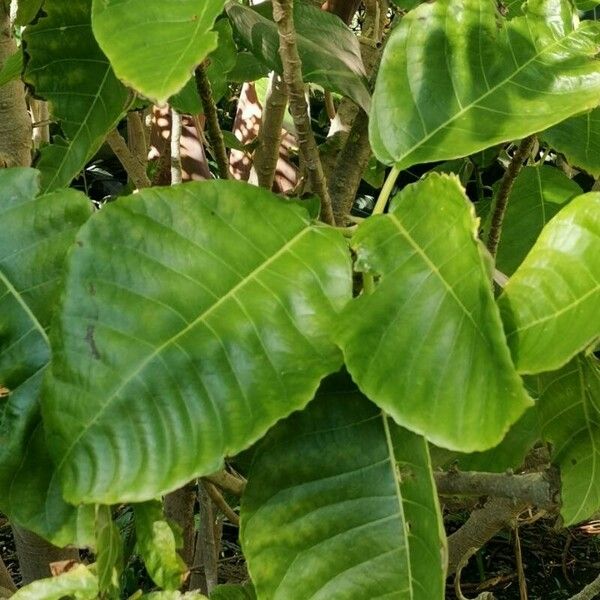
Plant Overview
Known in the Philippines as the "Lipang kalabaw" (Carabao Nettle), this tree is the heavyweight champion of the stinging plant world. Legend says its sting is so potent it can irritate the thick hide of a water buffalo. While it appears to be a lush, harmless tropical green, it guards itself with an invisible and painful biological arsenal.
🔍 How to Identify
- 🍃 Large, Velvety Leaves: The leaves are broad, ovate, and heart-shaped. They look deceptively soft to the touch, often reaching the size of a dinner plate.
- 🪡 Stinging Trichomes: If you look closely, the leaves and stems are covered in microscopic, hollow hairs. These act like hypodermic needles, injecting irritating toxins upon the slightest contact.
- 🍇 Fleshy Fruit Clusters: It produces small, inconspicuous greenish flowers that eventually turn into tiny, whitish, fleshy fruits that hang in drooping bunches.
🏡 In Your Garden
- 🌱 A Natural Security Fence: Because of its "bite," this plant is rarely kept as an indoor ornamental. In its native habitat, it grows as a woody shrub or small tree along forest edges, often serving as a natural deterrent for trespassers.
- 💧 Tropical Requirements: It thrives in high humidity and rich, moist soil. If it finds a spot with dappled sunlight, it can grow rapidly, asserting its dominance over smaller, less aggressive garden plants.
⚠️ Safety & Toxicity
- 🚫 Severe Irritant: Contact with the leaves or stems causes immediate, intense stinging, redness, and swelling. The sensation has been described as being burned by acid and electrocuted at the same time.
- 🌡️ Persistent Pain: Unlike a common nettle, the pain from a Dendrocnide can last for several days and may even resurface weeks later if the affected skin is exposed to cold water or temperature changes.
- 🐾 Pet Safety: Extremely dangerous for pets. Dogs or cats brushing against the leaves will experience significant distress and may require veterinary attention to manage the inflammatory reaction.
✨ Fun Fact
The city of Lipa in Batangas, Philippines, actually derives its name from this plant. Historically, the area was so densely populated with these stinging trees that they became the defining landmark of the region!

Detailed Care Instructions

Place in a bright room that is sun drenched almost all day. Or directly in a south-facing window.

When the top few inches of soil dry out, water your plants. If the top few inches of soil are still moist, do not water your plant. Wait a few days, then poke your finger into the soil to see if anything has changed. Overwatering poses a disease risk, such as the development of fungal diseases in the roots. These plants have adaptations in there leaves that allow them to survive in low water supply.







