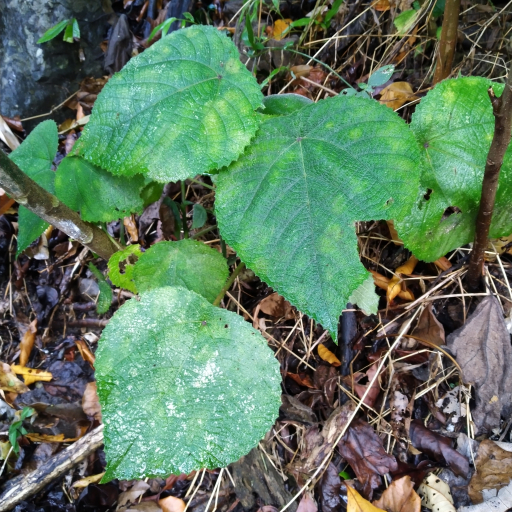
Plant Overview
Meet the "Gympie-Gympie," an innocent-looking shrub that holds the title of the world’s most painful stinging plant. Often called the "Suicide Plant" or "Mulberry-leaved Stinger," its reputation comes from a neurotoxin so potent that victims describe the sensation as being simultaneously burnt by hot acid and electrocuted. Found primarily in the rainforests of Australia and parts of Southeast Asia, it is a member of the nettle family that demands absolute distance.
🔍 How to Identify
- 🍃 Heart-Shaped Leaves: The plant features broad, heart-shaped leaves with finely serrated (toothed) edges that can grow quite large.
- 🕸️ Velvet-Like Hairs: Every inch of the leaves, stems, and fruit is covered in a dense, fuzzy layer of tiny, silvery hairs. These are actually hollow silica needles loaded with toxin.
- 🍇 Bright Fruit: It produces clusters of juicy-looking, pink-to-purple fruits that look suspiciously like mulberries, hanging from the stems.
🏡 In Your Garden
- 🚫 A Definite "No" for Landscapes: This is not a plant for home cultivation. In its native habitat, it acts as a "pioneer species," quickly popping up in forest clearings where sunlight hits the ground after a tree falls.
- 🌳 Deceptive Appearance: Because it looks like a soft, velvety bush, it is often accidentally brushed against by hikers. It lacks the "warning" look of a cactus, making it one of the most dangerous traps in the botanical world.
⚠️ Safety & Toxicity
- 🚨 Extreme Warning: DO NOT TOUCH. Even standing near the plant during a breeze can be dangerous, as the tiny stinging hairs can become airborne, leading to intense sneezing, nosebleeds, and respiratory distress.
- 🐾 Pets and Wildlife: The sting is excruciating for humans and can be fatal to dogs, cats, and horses. The toxin, moroidin, is incredibly stable; even dried leaves found on the forest floor can deliver a full-strength sting years after they have fallen.
- 🩹 Long-Lasting Pain: The pain from a sting can last for weeks or even months, often re-intensifying when the affected skin is exposed to cold water or changes in temperature.
✨ Fun Fact
Dried specimens of the Gympie-Gympie kept in museum cabinets for over 100 years have been known to still sting researchers who accidentally touch them!

Detailed Care Instructions








