Plant Overview
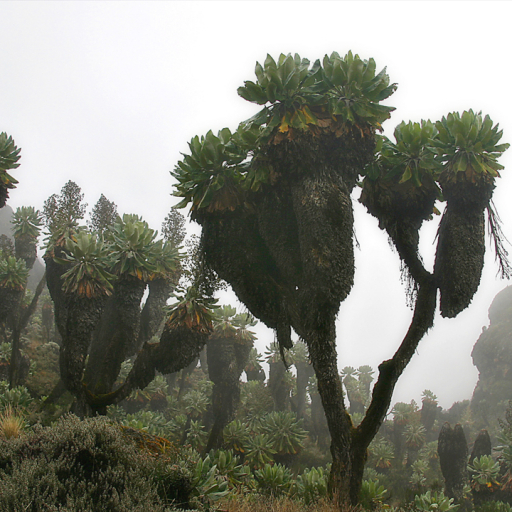
Standing as ancient sentinels on the slopes of Africa’s highest peak, the Dendrosenecio kilimanjari is a botanical marvel that looks like it stepped out of a science fiction novel. Often called the Giant Groundsel, these alien-looking trees are endemic only to Mount Kilimanjaro, thriving in a harsh "summer every day, winter every night" environment. They represent a fascinating evolutionary journey where a common daisy relative transformed into a woody giant to survive the alpine chill.
🔍 How to Identify
- 🍃 The Leaf Rosettes: Large, succulent-like green leaves form massive, tight rosettes at the tips of the branches. These rosettes fold inward at night to protect the central growing bud from freezing.
- 🧥 The "Skirt" of Dead Leaves: One of its most iconic features is the thick "shaggy" layer of brown, withered leaves that cling to the trunk. Instead of falling, they stay attached to provide vital thermal insulation.
- 🌳 Candelabra Form: While young plants look like large cabbages on the ground, older specimens develop thick, woody trunks that branch out into a distinct candelabra shape, reaching heights of up to 10 meters.
🏔️ Habitat & Ecology
- ❄️ Alpine Survivors: These plants live in the "Afro-alpine" zone, between 3,000 and 4,500 meters. They have adapted to survive extreme temperature swings where the ground freezes almost every single night of the year.
- ⏳ Centuries of Growth: They are incredibly slow-growing, often adding only a few centimeters of height per year. A tall, multi-branched specimen is likely several hundred years old, having witnessed centuries of shifting glaciers.
⚠️ Safety & Toxicity
- 🟢 Safe but Sensitive: There are no known toxic effects to humans or pets upon contact. However, they are not considered edible.
- 🛑 Conservation Alert: The primary "danger" regarding this plant is its survival. It is a protected species; because it grows nowhere else on Earth, it is highly vulnerable to climate change and should never be disturbed or collected by hikers.
✨ Fun Fact
The "skirt" of dead leaves is so effective at trapping heat that the internal temperature of the trunk can stay several degrees warmer than the freezing mountain air—it is essentially the plant's version of a heavy down jacket!

Detailed Care Instructions








