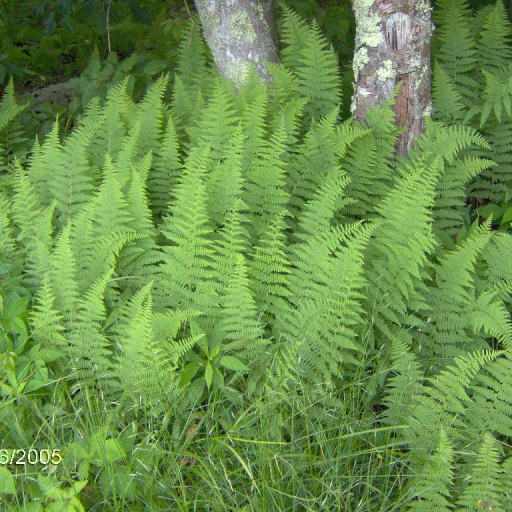
Plant Overview
The Hay-scented Fern is a favorite among woodland gardeners for its ability to create soft, undulating "carpets" of green. Known for the sweet, nostalgic aroma of fresh-mown hay it releases when crushed or brushed against, this fern brings a sensory delight to any shady corner. Often called the "Boulder Fern" for its tendency to grow around rocky outcrops, it is a hardy survivor that thrives where other plants might struggle.
🔍 How to Identify
- 🌿 Lacy Fronds: The leaves are bipinnate-pinnatifid, meaning they have a highly divided, delicate, and almost "see-through" appearance.
- 🧤 Fuzzy Texture: Unlike many smooth ferns, the stems and undersides are covered in tiny, glandular hairs that give the plant a slightly sticky or velvety feel.
- 👃 The Scent Test: If you aren't sure, gently rub a leaflet between your fingers; the distinct smell of drying grass or hay is a definitive giveaway.
- ☕ Cup-Shaped Sori: If you look at the underside of the leaves in late summer, the spores are tucked into tiny, cup-like structures located right at the margins.
🏡 In Your Garden
- 🏃 A Fast Runner: This fern spreads via underground rhizomes. It is an excellent choice for stabilizing slopes or filling large gaps, but it can be a bit of a "bully" in a small flower bed with delicate neighbors.
- 🦌 Deer Resistant: Because of its texture and fragrance, deer and rabbits typically find it unappealing, making it a "must-have" for rural gardeners frustrated by nibbling wildlife.
- 🌞 Sun Tolerance: While most ferns demand deep shade, the Hay-scented Fern is surprisingly tolerant of dappled sunlight, provided the soil stays consistently moist.
⚠️ Safety & Toxicity
- ✅ General Safety: This fern is considered non-toxic to humans and is generally safe to handle without gloves.
- 🐾 Pet Friendly: It is not listed as toxic by the ASPCA, making it a safe choice for gardens shared with curious cats and dogs.
- 🚫 Don't Garnish: While not "poisonous" in the traditional sense, ferns contain thiaminase (an enzyme that depletes Vitamin B1), so they should never be consumed as a food source by humans or pets.
✨ Fun Fact
The Hay-scented Fern is a bit of a forest rebel; it is "allelopathic," meaning it releases special chemicals into the soil that prevent the seeds of certain trees (like Black Cherry) from germinating. This helps it maintain its thick, grassy colonies without being shaded out by new saplings!

Detailed Care Instructions
To grow Dennstaedtia punctilobula plant, also known as Hay-scented fern, you can follow the following steps:
- Location: Choose a suitable location that provides filtered to partial shade. Hay-scented fern prefers shade or dappled sunlight rather than direct sunlight.
- Soil: Ensure the soil is well-draining and rich in organic matter. Add compost or well-rotted manure to improve soil fertility.
- Planting: In early spring or fall, dig a hole slightly larger than the root ball of the fern. Place the plant in the hole, making sure the crown (where the roots meet the fronds) is level with the soil surface. Backfill the hole with soil, firming it gently around the roots.
- Water: Keep the newly planted fern consistently moist, but avoid waterlogging the soil. Watering deeply once a week should be sufficient during the growing season.
- Mulching: Apply a layer of mulch around the base of the plant to help retain moisture, suppress weed growth, and insulate the roots. Use organic mulch like shredded leaves or bark chips.
- Fertilizer: In early spring, you can apply a slow-release, balanced fertilizer to provide necessary nutrients. Follow the package instructions for application rates.
- Maintenance: Regularly remove any dead or damaged fronds by cutting them off at the base. This will encourage new growth and maintain a tidy appearance.
- Protection: If your area experiences severe winter conditions, provide some protection to your fern by mulching heavily around the crown area. This will help insulate the plant and prevent winter damage.
- Propagation: Hay-scented fern can be propagated by division. In early spring or fall, carefully dig up the plant and separate the clumps into smaller sections with a sharp knife. Replant these divisions in suitable locations and water them thoroughly.
By following these steps, you should be able to successfully grow Dennstaedtia punctilobula or Hay-scented fern in your garden or landscape.

Place in a window with dappled sun or a spot in the middle of a room. Or directly in a window facing west or east.

To water this particular plant, it is important to use a well-draining soil mix and a pot with drainage holes to prevent waterlogging. It is best to wait until the top inch of soil has dried out before watering, and then to water thoroughly until water runs out of the drainage holes. Overwatering can be detrimental to the health of this plant, so it is important to allow the soil to dry out a bit between waterings. Additionally, it is important to avoid getting water on the foliage of the plant, as this can lead to fungal or bacterial issues. Instead, water the soil directly at the base of the plant.
To fertilize this plant, use a balanced fertilizer with equal amounts of nitrogen, phosphorus, and potassium. Apply the fertilizer in the early spring before new growth emerges and again in midsummer, following the manufacturer's instructions. Avoid over-fertilizing as it can burn the roots. Water the plant thoroughly before and after applying the fertilizer to prevent damage and promote absorption.
The ideal soil for this plant should be well-draining, rich in minerals, and slightly acidic. It should have a pH level between 5.5 and 6.5. The soil should be a mix of organic matter such as peat moss, leaf mold, and compost, as well as sand or perlite to ensure good drainage. The plant prefers moist soil that is consistently damp but not waterlogged. It also requires plenty of nutrients, so regular fertilization with a balanced fertilizer is recommended.
The propagation of this plant can be accomplished through spores or division. If using spores, harvest them from the fronds and sow them on damp growing medium in a warm, humid environment. It may take several weeks for the spores to germinate and begin producing new growth.
To propagate through division, carefully remove the plant from its container or outdoor location and gently separate the roots into smaller sections. Each section should have at least one healthy frond attached. Plant these divisions in fresh, well-draining soil and keep them moist until new growth appears.
Common pests of the eastern hayscented fern include Mealybugs, spider mites, aphids. Make a habit of checking your eastern hayscented fern frequently for pests so that any infestations can be caught and managed early.








