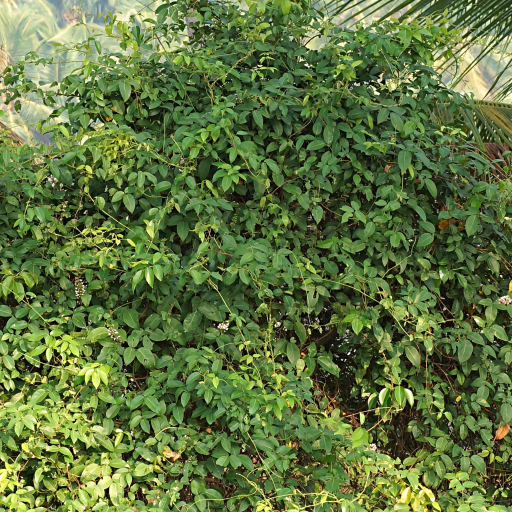
Plant Overview
Often called the Sea Derris or Common Derris, this resilient woody climber is a master of the shoreline. It drapes itself over mangrove trees like a living green curtain, thriving in places where most plants would succumb to salt spray and rising tides. In coastal folklore across the Indo-Pacific, it is both respected and feared for its potent chemical properties.
🔍 How to Identify
- 🍃 The Leaflets: It typically features three (trifoliate) or occasionally five glossy, oval-shaped leaflets. They have a smooth, waxy texture that helps the plant shed salt and retain moisture.
- 🌸 The Blooms: Look for clusters of small, pea-like flowers that range from snowy white to a delicate pale pink, dangling in elegant stalks known as racemes.
- 🪵 The Growth Habit: This is a "liana"—a woody vine that acts like a structural architect in the wild, twisting and winding its way up the trunks of trees to reach the sunlight.
🏡 In Your Garden
- 🌊 Coastal Specialist: Because it naturally grows near mangroves, it is incredibly salt-tolerant. It’s an ideal choice for seaside gardens where "salt burn" kills more sensitive species, but it requires high humidity to truly thrive.
- 🌿 Space Requirements: In a garden setting, it needs a very sturdy trellis or a large, mature tree to climb. Without regular pruning, its aggressive "vining" nature can quickly smother smaller shrubs or garden ornaments.
⚠️ Safety & Toxicity
- 🚫 Status: Highly Toxic: This plant contains Rotenone, a powerful natural chemical that is famously used as a botanical insecticide and piscicide (fish poison).
- 🐾 Risk to Life: It is extremely toxic to fish and aquatic life—never plant it near a koi pond. If ingested by pets or humans, it can cause severe stomach upset, vomiting, and in high doses, respiratory distress. Always wear gloves when pruning to avoid skin irritation.
✨ Fun Fact
- 🎣 The Fishing Vine: For centuries, traditional fishing communities would crush the roots of Derris trifoliata and throw them into tide pools. The Rotenone would temporarily "stun" the fish by blocking their ability to absorb oxygen through their gills, making them float to the surface for an easy catch!

Detailed Care Instructions
To grow Derris trifoliata (also known as kapok vine) plant, you can follow these steps:
- Location: Choose a well-drained sunny or partially shaded spot for planting the vine. Make sure it gets at least 6-8 hours of sunlight daily.
- Soil: The plant prefers slightly acidic to neutral soil with a pH range of 6 to 7.5. Ensure the soil is rich in organic matter and well-draining.
- Planting: Dig a hole that is slightly larger than the plant's rootball. Place the plant in the hole and backfill with soil, gently firming it around the plant.
- Watering: Water the vine thoroughly after planting and keep the soil moist but not waterlogged during the growing season. Reduce watering in winter, allowing the soil to dry slightly between waterings.
- Mulching: Apply a layer of organic mulch around the base of the plant to conserve moisture, suppress weeds, and regulate soil temperature.
- Supporting: Install a trellis, fence, or other support structure near the vine to help it climb. The kapok vine is a climber that can reach heights of 10-20 feet.
- Pruning: Trim back any dead, damaged, or overgrown branches to maintain the shape and promote bushier growth. Prune in early spring before new growth starts.
- Fertilization: Feed the plant with a slow-release balanced fertilizer in the spring before new growth emerges. Follow the packaging instructions for dosage.
- Pests and diseases: Keep an eye out for common pests like aphids, spider mites, or scale insects. Treat affected plants with insecticidal soap or appropriate organic pest control measures. Watch for signs of diseases such as powdery mildew or root rot and take necessary action as needed.
- Harvesting: Derris trifoliata produces pods that contain seeds. Harvest the mature pods when they turn brown and dry. Open the pods to collect the seeds for propagation or for other purposes.
Remember to research any local regulations or requirements regarding the cultivation of Derris trifoliata in your area, as it may be invasive in some regions.

Place in a bright room that is sun drenched almost all day. Or directly in a south-facing window.

To properly water this plant, it is essential to understand its moisture requirements. Derris Trifoliata should be watered regularly, but only when the soil surface feels dry to the touch. Overwatering can cause root rot, so it is important not to water the plant too frequently.
When watering, be sure to thoroughly saturate the soil, ensuring that moisture reaches the roots. It is best to water the soil directly, rather than the leaves, as this can cause mold and other fungal diseases. If the plant is housed in a container, allow excess water to drain out through the bottom.
In addition to regular watering, this plant benefits from occasional misting or humidity. This can be achieved by placing a tray of water near the plant or using a humidifier in the room.
Lastly, it is important to adjust watering frequency according to the plant's environment. Warmer temperatures, increased light levels, and higher humidity will cause the plant to require more water, while cool, dark conditions will slow its growth and reduce its moisture needs.
To fertilize this plant, you should apply a balanced fertilizer that contains equal amounts of nitrogen, phosphorus, and potassium. This should be done once a month during the growing season, which is typically spring through fall. When applying the fertilizer, make sure to water the plant thoroughly before and after applying to avoid burning the roots. It's also important to follow the manufacturer's instructions for the amount of fertilizer to use, as over-fertilization can damage the plant.
Derris Trifoliata plant requires well-drained soil that is rich in organic content and slightly acidic in nature. The soil should be loose and crumbly, allowing for proper aeration and water drainage. It is important to avoid using soil that is too heavy or compact, as this can prevent the plant from growing properly. Additionally, the soil should be free from any contaminants, such as chemicals or pollutants, that can harm the plant. It is recommended to add compost, peat moss, or other organic matter to the soil to improve its fertility and texture. The plant also benefits from regular fertilization with a balanced, slow-release fertilizer. Overall, the soil should provide a supportive environment for the Derris Trifoliata plant to thrive and reach its full potential.
Derris Trifoliata can be propagated through seeds and stem cuttings. For seed propagation, the seeds should be soaked in warm water for about 24 hours before being sown in well-draining soil. The soil should be kept moist and the seeds should be kept in a warm, bright location until they germinate.
For stem cutting propagation, a healthy stem should be selected and a 4-6 inch section cut at a 45-degree angle. The cutting should be dipped in rooting hormone and placed in a pot filled with well-draining soil. The pot should be kept moist and the cutting should be kept in a warm, bright location until it forms roots.
Both methods of propagation can take several weeks to several months for the plant to establish and grow to a reasonable size. It's important to keep the soil moist to promote root development and to keep the new plants out of direct sunlight until they are well established.








