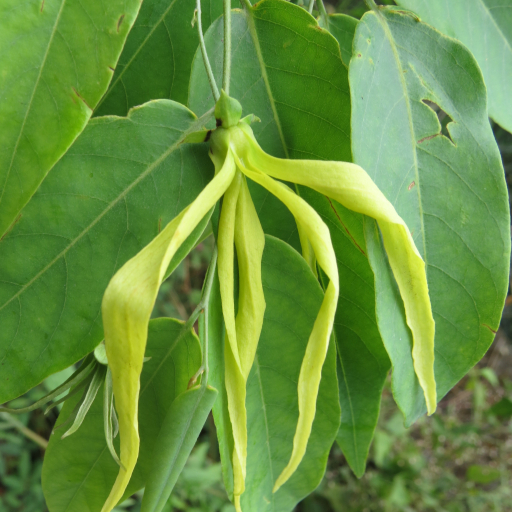
Plant Overview
The Desmos chinensis, often called the Dwarf Ylang-Ylang or Chinese Desmos, is a hidden gem of the botanical world. Famous for its intoxicating fragrance that mimics the true Ylang-Ylang tree, this scrambling shrub is a favorite in Southeast Asian gardens. In some regions, it is affectionately nicknamed the "Banana Shrub" because its ripening flowers look—and occasionally smell—like small, yellowing bananas hanging from the vine.
🔍 How to Identify
- 🌼 The Flowers: The most striking feature! They consist of six long, narrow, yellowish-green petals that hang downward, resembling curly ribbons or octopus tentacles.
- 🍃 The Foliage: The leaves are thin, oblong, and a deep glossy green with slightly wavy edges, arranged alternately along the stems.
- 🪜 Growth Habit: It is a "scrambling" plant; it starts as a shrub but will use its woody stems to climb nearby trees or trellises if given the opportunity.
🏡 In Your Garden
- 🧱 Support Systems: Because of its semi-climbing nature, this plant thrives best when given a sturdy fence or trellis to lean on. Without support, it tends to grow into a messy, sprawling mound.
- 🌬️ Fragrance Placement: Plant it near a window or a patio. The scent is most potent during the late afternoon and evening, carried easily by light summer breezes.
- 🚿 Humidity Needs: Native to tropical forests, it despises dry air. If you are growing it indoors or in a dry climate, frequent misting or a pebble tray is essential to prevent leaf-tip browning.
⚠️ Safety & Toxicity
- 🟢 Status: Generally considered non-toxic to humans, but caution is always advised.
- 🐾 Pets & Kids: While there are no major reports of severe poisoning, the essential oils in the flowers can be very strong. Ingesting large amounts of the foliage may cause mild stomach upset in curious cats or dogs.
- 🧴 Skin Sensitivity: Some individuals may experience mild skin irritation if they come into contact with the sap while pruning; wearing gloves is a good practice.
✨ Fun Fact
In traditional perfumery, the flowers are often harvested just as they turn from green to bright yellow. This is the moment their essential oils are most concentrated, producing a scent so powerful that a single blooming vine can perfume an entire courtyard!

Detailed Care Instructions
To grow Desmos chinensis plants, you can follow these steps:
- Obtain seeds or young plants: You can acquire Desmos chinensis seeds or young plants from a local nursery or online plant retailer.
- Choose a suitable location: Desmos chinensis prefers a warm and sunny location with well-draining soil. Make sure the chosen spot receives at least six hours of direct sunlight daily.
- Prepare the soil: Desmos chinensis thrives in soil that is rich in organic matter and well-draining. Prepare the soil by removing any weeds or debris and loosening it with a garden fork or tiller. Add compost or organic matter to enhance the soil quality.
- Sow the seeds or transplant seedlings: If you have seeds, sow them directly into the soil at 1/4 inch depth and cover them lightly with soil. If using young plants, dig a hole slightly larger than the root ball and place the plant in, making sure the top of the root ball is level with the soil surface. Fill the hole with soil and pat it gently around the plant.
- Water regularly: Keep the soil consistently moist but not waterlogged. Water the plants deeply whenever the top inch of soil feels dry. Avoid overwatering, as it can lead to root rot.
- Mulch around the plants: Apply a layer of organic mulch, such as wood chips or straw, around the base of the plants. Mulch helps retain moisture, suppresses weed growth, and regulates soil temperature.
- Provide support if necessary: Desmos chinensis plants may need support as they grow taller. Install stakes or trellises near the plants to help them stand upright.
- Prune when needed: Regular pruning can help maintain a compact and tidy shape for the plants. Remove any dead or diseased branches and lightly trim back excessive growth to encourage bushy and healthy foliage.
- Fertilize occasionally: Apply a balanced slow-release fertilizer once or twice a year, following the package instructions. This helps provide essential nutrients for the plant's growth.
- Monitor for pests and diseases: Keep an eye out for any signs of pests or diseases, such as aphids or fungal infections. Treat any infestations or diseases promptly using appropriate organic or chemical controls.
By following these steps and providing proper care, your Desmos chinensis plant should grow and thrive in your garden.

Place in a window with dappled sun or a spot in the middle of a room. Or directly in a window facing west or east.

To water this particular plant, you should first check the soil to make sure it is dry to the touch. Then, use a watering can or hose with a gentle flow of water to moisten the soil thoroughly. Be careful not to overwater, as this can lead to root rot. It is also important to ensure proper drainage, as this plant does not like to sit in standing water. Watering frequency may vary depending on the growing environment and season.
To fertilize the Desmos Chinensis plant, you should use a general-purpose fertilizer with an equal balance of nitrogen, phosphorus, and potassium. You should fertilize the plant every two weeks during the growing season, starting in early spring and ending in mid-fall. When fertilizing, dilute the fertilizer to half strength and apply it to the soil around the plant. Be sure to avoid getting the fertilizer on the leaves or stems of the plant, as this can burn them. Water the plant thoroughly after fertilizing to ensure the nutrients are absorbed into the soil.
When planting Desmos Chinensis, it is important to use a soil that provides good drainage while retaining moisture. The soil should be well-aerated and fertile, with a pH range between slightly acidic to neutral. It is recommended to use a mixture of organic materials such as compost or aged manure, along with sand or perlite to improve drainage. Mixing in some peat moss can also help the soil hold moisture for longer periods. Avoid using heavy, clay soil as it can lead to waterlogging and root rot. Instead, aim for a loose, well-draining soil that allows for root growth and nutrient uptake.
There are a few methods to propagate this plant, here are the steps for propagating it through stem cuttings:
- Choose a healthy stem that is about 6 inches long, with no flowers or buds.
- Take a sharp, clean pair of shears and cut the stem at a 45-degree angle, making sure to include at least one node.
- Remove any leaves from the bottom half of the stem.
- Prepare a small pot with a well-draining soil mix. Moisten the soil, but don't make it wet.
- Dip the cut end of the stem into rooting hormone powder.
- Place the stem cutting into the soil, making sure that the node is under the soil surface.
- Cover the pot with a clear plastic bag to create a mini greenhouse effect.
- Place the pot in a warm, bright location, but not in direct sunlight.
- Check the soil often and water if it feels dry to the touch.
- After a few weeks, gently tug on the stem to see if it has rooted. Once there is resistance, remove the plastic bag and continue to care for the new plant as you would a mature plant.








