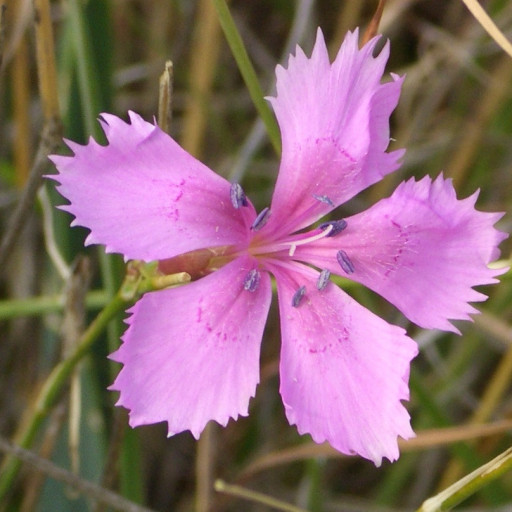
Plant Overview
Known affectionately as the "Clove Pink" or the "Flower of the Gods," the Carnation has been a centerpiece of human history for over 2,000 years. From ancient Greek garlands to modern Mother’s Day bouquets, these ruffly blooms are beloved for their incredible longevity and deep, spicy fragrance. Whether tucked into a buttonhole or brightening a flower bed, they represent a timeless link between wild nature and the curated garden.
🔍 How to Identify
- 🌸 Fringed Petals: The most iconic feature is the "pinking-sheared" edge of the petals, which look as though they were carefully trimmed with decorative scissors.
- 🍃 Blue-Grey Foliage: The leaves are narrow, grass-like, and covered in a waxy, glaucous coating that gives the plant a distinct silvery-blue or sage-green hue.
- 👃 Clove-Like Scent: Unlike the sugary sweetness of a rose, these flowers emit a warm, spicy aroma that is unmistakably reminiscent of dried cloves.
🏡 In Your Garden
- 🌱 The "Wet Feet" Warning: Carnations are particularly sensitive to overwatering; they require sharp drainage and will quickly succumb to root rot if left in heavy, soggy clay.
- ✂️ Pinching for Bloom: To prevent your plant from becoming "leggy" or thin, "pinch back" the growing tips when the plant is young. This forces the energy outward, creating a bushier plant with significantly more flower heads.
- 🧪 Soil Preference: These plants lean toward the alkaline side. If your soil is very acidic, adding a bit of garden lime can help them thrive and maintain their vibrant colors.
⚠️ Safety & Toxicity
- 🐾 Mildly Toxic to Pets: Carnations are considered mildly toxic to cats and dogs. Ingestion can lead to gastrointestinal upset, such as vomiting or diarrhea.
- 🖐️ Skin Irritation: The sap within the stems and leaves can cause mild skin irritation or dermatitis in sensitive individuals, so wearing gloves during heavy pruning is recommended.
✨ Fun Fact
In the Victorian "Language of Flowers," a solid-colored carnation meant a "Yes," while a striped one meant "I cannot be with you," and a yellow one signified "Disdain." Sending a bouquet was a risky game of hidden messages!

Detailed Care Instructions
| Color | White, Lilac, Red, All Shades Of Pink |
| Soil Ph | 6 To 7.5 |
| Humidity | Normal |
| Lighting | Full Sun |
| Soil Type | Rich, Well-Draining Soil |
| Bloom Time | Spring And Late Summer To Fall |
| Difficulty | Medium |
| Plant Type | Perennial |
| Hibernation | Cold Period |
| Mature Size | 15-18" (38-46Cm) |
| Native Area | Europe And Asia |
| Temperature | 5°C - 30°C |
| Sun Exposure | Full Sun |
| Hardiness Zones | 3 To 10 |
To grow Dianthus caryophyllus, also known as carnations or clove pinks, follow these steps:
- Choose a suitable location: Carnations prefer full sun, so pick a spot in your garden that receives at least 6-8 hours of direct sunlight daily. They also need well-draining soil.
- Soil preparation: Prepare the soil by loosening it and removing any weeds or debris. Carnations prefer slightly alkaline soil with a pH between 6.0 and 7.0. If your soil is acidic, you can add lime to raise the pH.
- Seed sowing: If you want to start from seeds, sow them indoors about 8-10 weeks before the last expected frost. Sprinkle the seeds on the surface of a seed-starting mix, gently press them into the soil, and lightly water. Keep the soil moist, and seeds should germinate in 7-21 days. Transplant seedlings outdoors when they have 2-3 sets of leaves.
- Transplantation: If you prefer to grow from transplants purchased at a nursery, plant them at the same depth they were in the container.
- Spacing: Space the plants 12-18 inches apart to provide adequate airflow and room for growth.
- Watering: Water carnations regularly, aiming to keep the soil consistently moist but not waterlogged. Avoid overwatering or letting the soil dry out completely.
- Fertilization: Use a balanced, slow-release fertilizer or a liquid fertilizer diluted according to the manufacturer's instructions. Apply fertilizer every 4-6 weeks during the growing season to promote healthy growth and abundant flowering.
- Mulching: Apply a layer of organic mulch around the plants to help retain moisture, suppress weed growth, and protect the roots during extreme temperatures.
- Pinching and deadheading: Pinch off the growing tips of young plants to encourage bushier growth. Deadhead spent flowers by cutting them off just below the flower head. This will promote further blooming and prevent the plant from wasting energy on seed production.
- Pests and diseases: Monitor your carnations regularly for signs of common pests like aphids, spider mites, or thrips. Treat infestations promptly using appropriate insecticides. Carnations can also be susceptible to fungal diseases like powdery mildew or gray mold. Avoid overhead watering, and provide good air circulation to prevent these issues.
By following these steps, you can successfully grow Dianthus caryophyllus plants and enjoy their beautiful blooms.

Place in a bright room that is sun drenched almost all day. Or directly in a south-facing window.

Watering of this plant should be done very carefully as it is sensitive to moisture levels. The soil should be kept moist, but not overly wet or waterlogged. It is important to allow the soil to dry out slightly between watering to avoid root rot. Watering from below, using a tray filled with water, is recommended as it helps to avoid wetting the foliage which can lead to disease. When watering from above, it is important to avoid getting water on the leaves and flowers. The plant should be watered more frequently during hot, dry weather. Overwatering the plant can lead to yellowing and dropping of the leaves.
To provide essential nutrients for a plant with pink, ruffled flowers, fertilize it with a balanced fertilizer, such as a 10-10-10 formulation, in early spring, mid-summer, and late fall. Apply the fertilizer according to the product's instructions, usually one tablespoon per square foot of soil. Water the plant before and after fertilizing, and avoid getting fertilizer on the foliage to prevent leaf burn.
The preferred soil for the plant in question should be well-draining and fertile. The soil should have a neutral to slightly alkaline pH level, in the range of 6.0 to 7.5. The soil should also be loamy, with a good mix of sand, silt, and clay particles. The plant requires good drainage, so heavy clay soils should be avoided. The soil should be rich in organic matter and nutrients, so adding compost and/or a slow-release fertilizer may be necessary. Soil moisture should be moderate, as the plant does not tolerate drought or overly wet soil. Finally, it is important to ensure that the soil is free of any pests or diseases that may infect the plant.
There are several methods to propagate this plant, including:
- Stem cuttings: Take a 3-4 inch stem cutting from a healthy, mature plant. Remove the lower leaves and dip the cut end in hormone rooting powder. Plant the cutting in a well-draining soil mix and keep it moist. After 2-3 weeks, roots should develop and new growth should appear.
- Division: Dig up the entire plant and separate the clumps. Replant each clump in a new location or pot, making sure to keep the soil moist until new growth appears.
- Seeds: Collect seeds from mature plants and sow in a well-draining soil mix. Cover the seeds lightly with soil and mist with water. Keep the soil moist until the seeds germinate, which may take up to 3 weeks.
Regardless of the method used, it is important to provide the plant with adequate sunlight, water, and fertilizer to promote healthy growth.
Common pests of the carnation include Spider mites, aphids, thrips. Make a habit of checking your carnation frequently for pests so that any infestations can be caught and managed early.








