Plant Overview
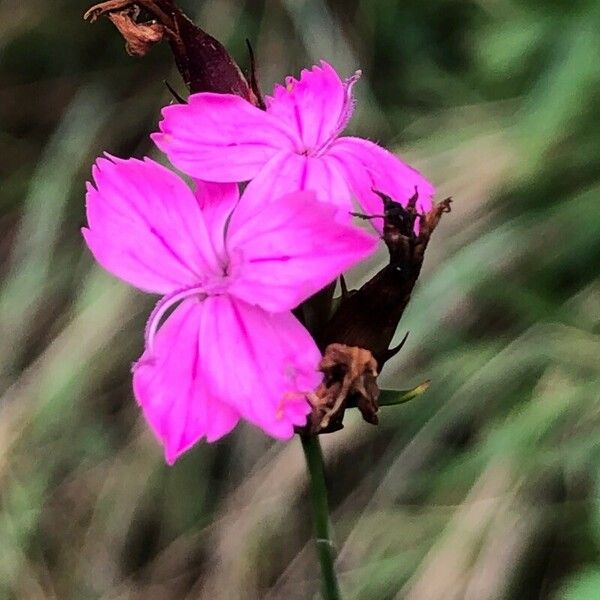
Known as the Giant Pink or Balkan Pink, this statuesque perennial is the "big brother" of the carnation family. Standing much taller than its ground-hugging relatives, it brings a wild, meadow-like elegance to sunny borders. Originally hailing from the rocky slopes of Southeast Europe, it is prized by gardeners for its ability to produce bursts of vivid color atop sturdy, wind-resistant stems.
🔍 How to Identify
- 🌸 Crowned Clusters: Unlike single-flower Dianthus, this species produces dense, rounded clusters of small blossoms at the very tip of the stem.
- ✂️ Fringed Edges: Each tiny petal features the classic "pinked" or jagged edges that look as though they were carefully trimmed with zig-zag craft scissors.
- 🌿 Silvery Foliage: The leaves are narrow, grass-like, and covered in a "glaucous" waxy coating, giving the plant a distinct blue-green or silvery hue.
🏡 In Your Garden
- ⛰️ Drainage is King: Because it evolved in rocky Balkan terrain, this plant hates "wet feet." It is best suited for rock gardens or raised beds where water can drain freely away from its crown.
- ☀️ Vertical Interest: Reaching heights of up to 24 inches, it doesn't need staking if grown in full sun. In shade, however, the stems may become "leggy" and flop over while searching for light.
⚠️ Safety & Toxicity
- 🐾 Mildly Toxic to Pets: Like most members of the Dianthus genus, this plant contains triterpenoid saponins. If ingested by dogs or cats, it can cause mild vomiting or diarrhea.
- 🧴 Skin Sensitivity: The sap or leaves can cause minor skin irritation (dermatitis) in some gardeners. It’s a good idea to wear gloves if you have sensitive skin and are doing a lot of pruning.
✨ Fun Fact
- 🏛️ The name Dianthus is derived from the Greek words dios (god) and anthos (flower), translating literally to "Flower of the Gods." Ancient Greeks used these hardy flowers in ceremonial crowns and garlands.

Detailed Care Instructions








