Plant Overview
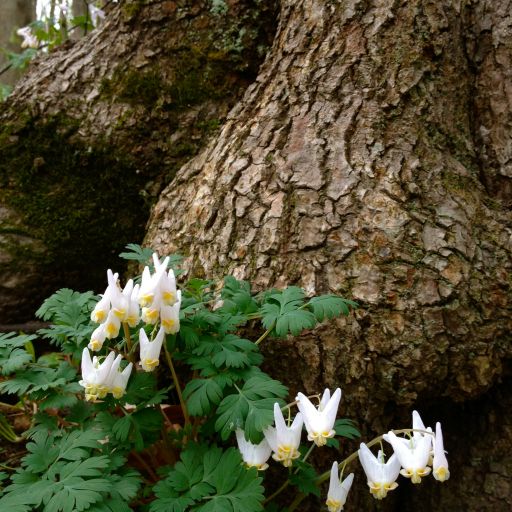
Often called Dutchman's Breeches, this whimsical woodland native looks exactly like a row of tiny white trousers hanging upside down on a clothesline. Emerging in the early spring as one of the first signs of life on the forest floor, it is a "spring ephemeral," meaning it completes its life cycle quickly before the forest canopy fills in with leaves. In the language of flowers, they represent spirits and playfulness, adding a touch of fairytale magic to any shaded corner.
🔍 How to Identify
- 👖 The Flowers: The most distinct feature is the pair of inflated, V-shaped white petals that resemble puffy pantaloons with yellow "waistbands" at the bottom.
- 🌿 The Foliage: The leaves are deeply cut, fern-like, and feathery with a soft grayish-green hue, growing in a basal rosette that stays low to the ground.
- 📉 The Stem: Look for a leafless, arching flowering stalk (scape) that rises gracefully above the delicate foliage, carrying up to 10 "breeches" per stem.
🏡 In Your Garden
- 💤 Summer Dormancy: Because this is a spring ephemeral, the plant will completely disappear by mid-summer. Don’t panic and think it has died; it is simply retreating into its underground bulbs to rest until next spring. Mark the spot so you don’t accidentally dig it up!
- 🌳 The Perfect Home: It thrives under deciduous trees where it can soak up the early spring sun before the shade becomes dense. It craves rich, "leaf-mold" style soil that mimics the damp, nutrient-dense floor of an ancient forest.
- 🐝 Bumblebee Besties: Only long-tongued insects, specifically early-emerging queen bumblebees, are strong enough to separate the petals and reach the nectar hidden deep within the "legs" of the flower.
⚠️ Safety & Toxicity
- 🚫 Toxic Status: All parts of the plant are considered toxic if ingested. It contains isoquinoline alkaloids which can affect the nervous system.
- 🐕 Pet & Livestock Warning: It is notably dangerous to cattle (earning the nickname "Little Blue Staggers") and should be kept away from curious dogs or cats who might nibble on the foliage.
- 🧤 Skin Sensitivity: Some gardeners experience "contact dermatitis" (an itchy rash) after handling the roots or leaves, so wearing gloves during planting is a smart move.
✨ Fun Fact
The seeds of Dutchman's Breeches have a "fleshy handle" called an elaiosome that is rich in fats and proteins. Ants find this irresistible; they carry the seeds back to their nests, eat the snack, and "plant" the seed in their nutrient-rich waste tunnels—a process called myrmecochory.

Detailed Care Instructions
| Color | White |
| Soil Ph | Acidic |
| Humidity | Normal |
| Lighting | Shade |
| Soil Type | Very Well-Drained, Evenly Moist, And Rich |
| Bloom Time | April |
| Difficulty | Medium |
| Plant Type | Herbaceous Plant With A Perennial Life Cycle |
| Hibernation | Cold Period |
| Mature Size | Height Of 6 To 12 Inches, With A Similar Spread |
| Native Area | Eastern North America |
| Temperature | Min 15°C |
| Sun Exposure | Partial Shade To Full Shade |
| Hardiness Zones | 3 To 7 |
To grow Dicentra Cucullaria, commonly known as Dutchman's breeches, follow these steps:
- Choose the planting location: Dicentra Cucullaria prefers partial shade to full shade, and well-draining soil. Select an area with dappled sunlight or shade under trees.
- Prepare the soil: Ensure the soil is loose and well-draining. Amend the soil with organic matter such as compost or peat moss to improve drainage and fertility.
- Sow or transplant: Dicentra Cucullaria can be grown from seeds or transplanted from nursery-bought plants. If sowing seeds, plant them in late winter or early spring, as they require a period of winter stratification. If transplanting, dig a hole slightly larger than the root ball, place the plant in the hole, and backfill with soil, gently firming it around the roots.
- Watering: Dicentra Cucullaria prefers evenly moist but not waterlogged soil. Water the plant regularly, especially during dry spells. Aim to keep the soil consistently moist, but not soggy.
- Mulching: Apply a layer of organic mulch around the base of the plant to help conserve moisture, suppress weeds, and provide insulation during winter.
- Fertilization: Dicentra Cucullaria does not require heavy fertilization. However, you can apply a slow-release balanced fertilizer in early spring to provide nutrients throughout the growing season.
- Garden maintenance: Remove any weeds around the plant to prevent competition for nutrients and water. After the plant has finished flowering in spring, you can remove the spent flowers and any yellowing foliage to maintain a tidy appearance.
- Winter care: Dutchman's breeches is a cold-hardy plant but may benefit from additional protection in colder climates. Applying a layer of mulch over the plant in late fall can help insulate the roots during winter.
Remember that Dicentra Cucullaria is a native woodland plant, and mimicking its natural habitat conditions will help ensure successful growth.

Place in a window with dappled sun or a spot in the middle of a room. Or directly in a window facing west or east.
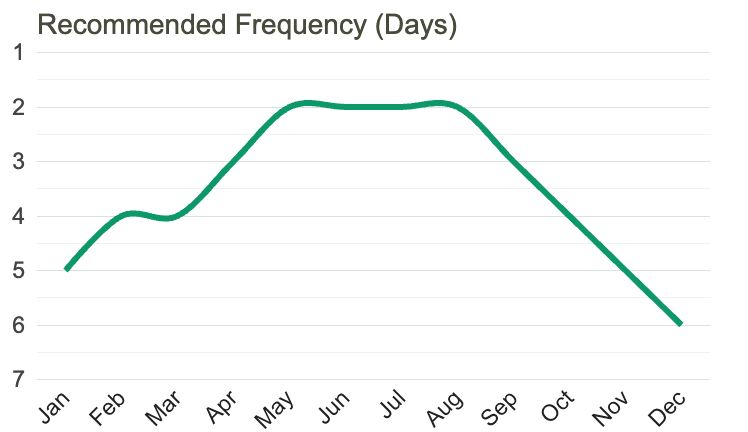
Dicentra Cucullaria is a plant that requires consistent and regular watering to thrive. To water this plant effectively, it is important to understand the plant's specific watering needs.
First, make sure to water the plant deeply, allowing the soil to thoroughly absorb the water. This will encourage the plant's roots to grow deeper and stronger. Be careful not to water too frequently, as overwatering can lead to root rot and other issues.
When watering, ensure that the water is directed towards the soil and not the leaves or flowers. This will help prevent fungal diseases and insect infestations. Water early in the morning or in the evening when the sun is not as strong, as this will help reduce evaporation and allow the plant to take up more water.
During hot, dry weather, Dicentra Cucullaria may require more frequent watering to avoid stress. Regularly checking the soil moisture level by sticking your finger 1-2 inches into the soil can help you determine when to water. If the soil feels dry, it's time to water.
Overall, providing consistent, deep watering while avoiding overwatering and watering the leaves can help your Dicentra Cucullaria plant thrive.
To provide adequate nutrients for your plant, you should fertilize it in early spring using a balanced fertilizer with an N-P-K ratio of 10-10-10 or similar. Apply the fertilizer at a rate of one tablespoon per square foot of plant area, and water it in thoroughly. Repeat this application once a month throughout the growing season to support healthy growth and flowering. Avoid heavy fertilization or applying fertilizers late in the season, as this can lead to excessive growth and weaken the plant.
The ideal soil for the plant in question is one that is well-drained, moist, and rich in organic matter. It should have a slightly acidic pH level of around 6.0 to 7.0. The soil texture should be loamy and not clay or sandy. This plant prefers to grow in partially shaded areas and will benefit from a layer of organic mulch to keep the soil moist and cool. It is important to avoid overwatering, as this can lead to root rot. When planting, ensure that the soil is loosened and free of any debris or rocks. A fertilizer with a balanced NPK ratio can be added to the soil before planting to provide the plant with additional nutrients.
To propagate this plant, you will need to collect seeds from mature plants in the fall. In the spring, scarify the seeds by rubbing them lightly with sandpaper or a file to break the outer coating. Sow the scarified seeds in a potting mix that is kept moist, but not waterlogged, in a shaded area with indirect sunlight. Keep the soil temperature at around 65°F and germination should occur within 2-3 months. Once the seedlings have grown to a few inches tall, they can be transplanted into well-draining soil in a shaded area. Care for the young plants by keeping the soil consistently moist and providing occasional fertilization with a balanced fertilizer. With proper care, the plants should mature and produce their unique flowers in their second or third year.








