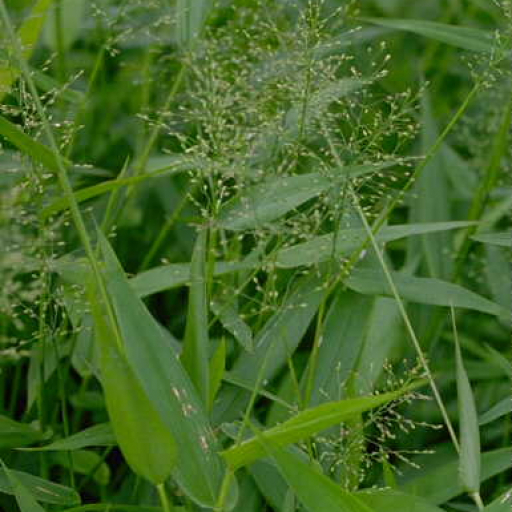
Plant Overview
Commonly known as Deertongue or Hidden Panicgrass, this native North American grass gets its name from its broad, tapering leaves that look remarkably like the tongue of a deer. It is a hardy survivor, often the first to pop up in disturbed soils or along the edges of shaded woodlands. Unlike typical slender lawn grasses, Deertongue has a bold, architectural presence that adds a touch of wild, rustic beauty to a naturalized landscape.
🔍 How to Identify
- 🌿 The Foliage: Look for broad, lance-shaped leaves that are significantly wider than most wild grasses, tapering to a sharp, distinct point.
- 🪶 Bristly Sheaths: The leaf sheaths (the part of the leaf that wraps around the stem) are covered in stiff, white, bristly hairs that feel rough to the touch.
- 🌾 Dual Blooms: In early summer, it produces an airy, open seed head at the top; later in the season, it grows a second set of "hidden" flowers tucked away inside the leaf sheaths.
🏡 In Your Garden
- 🌱 The Ultimate Stabilizer: Deertongue is a champion for "problem areas" like sandy slopes, roadside ditches, or damp meadows. Its deep, fibrous root system makes it excellent for preventing soil erosion.
- 🦋 Wildlife Magnet: It serves as a vital host plant for several species of skipper butterflies, and its seeds provide a high-energy snack for songbirds and wild turkeys during the winter.
- 🍂 Year-Round Interest: While it stays green through the summer, the foliage turns a warm tan or rustic copper color in the fall, providing structural beauty in the garden even during the dormant months.
⚠️ Safety & Toxicity
- 🐾 Non-Toxic: Dichanthelium clandestinum is generally considered safe and non-toxic for dogs, cats, and livestock.
- 🤧 Allergy Alert: Like most grasses, it releases wind-borne pollen during its primary blooming phase in the late spring, which may trigger hay fever in sensitive individuals.
- 🧤 Scratchy Texture: The stiff hairs on the stems can be mildly irritating to sensitive skin; it is best to wear gardening gloves if you are handling or thinning out large clumps.
✨ Fun Fact
The species name clandestinum comes from the Latin word for "secret" or "hidden." This refers to the plant's clever reproductive backup plan: it produces "cleistogamous" flowers that never open and self-pollinate in secret, tucked away where the leaf meets the stem!

Detailed Care Instructions
To grow Dichanthelium clandestinum, also known as deer-tongue grass or Appalachian witchgrass, you can follow these steps:
- Seeds: Obtain seeds from a reputable nursery or seed supplier. Make sure you have enough seeds to cover the desired area.
- Soil Preparation: Prepare the soil before sowing the seeds. Dichanthelium clandestinum typically prefers well-draining soil. Remove any grass, weeds, or debris from the area and loosen the topsoil using a garden rake or hoe.
- Sowing Seeds: Scatter the seeds evenly across the prepared soil. You can lightly press them into the soil using the back of a garden rake to ensure good seed-to-soil contact.
- Watering: After sowing the seeds, water the area gently and thoroughly to keep the soil consistently moist. Avoid overwatering, as excessive moisture can discourage germination.
- Sunlight: Dichanthelium clandestinum requires full sun to partial shade to thrive, so make sure you choose a location with adequate sunlight exposure.
- Maintenance: Keep the area well-maintained by regularly removing any weeds or grass that may compete with the young plants. Avoid using herbicides or pesticides that may harm the Dichanthelium clandestinum.
- Growth: Depending on the species, the grass may take several weeks to several months to establish and grow. During this time, ensure the soil remains consistently moist, but not waterlogged.
- Maturity: Once established, Dichanthelium clandestinum is a relatively low-maintenance plant. It can withstand periods of drought, but it's best to provide occasional deep watering during dry spells.
Remember that specific care and growing requirements may vary depending on your location and climate. Consulting with a local horticulturist or gardening expert can provide you with more region-specific tips and guidance.
To water this plant, one should avoid overwatering as it is prone to root rot. It is important to monitor the soil and only water when the top inch of soil is dry to the touch. When watering, it is best to water deeply and thoroughly to encourage deep root growth. It is also important to avoid getting water on the leaves to prevent fungal growth. This plant prefers well-draining soil and may require more frequent watering in hotter and drier climates.
To fertilize this plant, apply a balanced fertilizer with equal amounts of nitrogen, phosphorus, and potassium in the ratio of 10-10-10. Apply the fertilizer in the spring before new growth appears and again in midsummer. Spread the fertilizer evenly around the base of the plant, being careful not to sprinkle it on the leaves or stem. Water the plant after fertilizing to help the nutrients reach the roots. Avoid over-fertilizing as this can lead to excessive growth and weaken the plant.
The optimal soil for the plant is a well-draining soil that is rich in nutrients. It should be a loam or sandy loam soil that has a pH range of 6.0-7.0. The soil should be kept moist but not waterlogged, as the plant prefers a consistently moist soil but cannot tolerate standing water. Additionally, the soil should be free of any herbicides or other chemicals that could harm the plant. Fertilization is also recommended, with a balanced fertilizer applied once or twice a year.
One way to propagate this plant is through division. This can be done by carefully digging up the plant and dividing the root ball into smaller sections using a sharp, sterile tool. Each section should have several shoots and a healthy root system. These can then be replanted in a prepared area with well-draining soil and adequate moisture.
Another method of propagation is through seed collection and germination. The plant produces small seeds which can be collected from mature seed heads and stored in a cool, dry place until ready to plant. Seeds can be sown directly into prepared soil or started indoors in trays.
Regardless of the propagation method chosen, it is important to provide the new plants with adequate care and maintenance to ensure long-term success. This includes regular watering, fertilization, and monitoring for pests and diseases.








