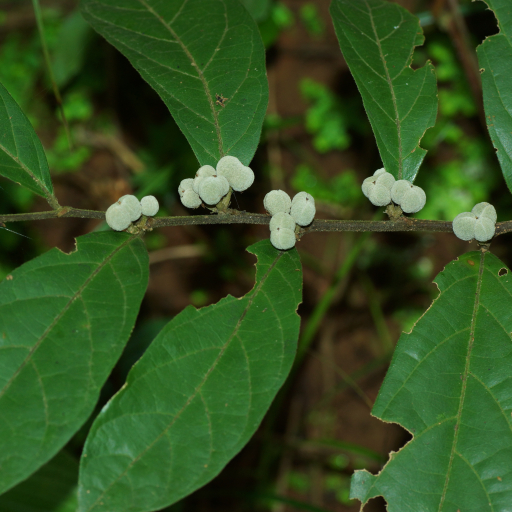
Plant Overview
Often known as a "silent resident" of the tropical understory, Dichapetalum gelonioides is a resilient shrub native to the dense evergreen forests of Southeast Asia and India. While it may not boast flashy, oversized blooms, it is a fascinating example of tropical adaptation, thriving in the deep shade where other plants might wither. In its native range, it is often found clinging to the banks of forest streams or tucked away in humid thickets.
🔍 How to Identify
- 🍃 Leaf Texture: The leaves are typically elliptical, glossy, and possess a slightly leathery feel with prominent, elegant veining that helps the plant shed heavy monsoon rains.
- 🌼 Tiny Blooms: It produces clusters of very small, pale white or greenish flowers that grow directly from the leaf axils, often appearing so subtly they are easily missed.
- 🍑 Lobed Fruit: Its most identifying feature is the fruit—a small, velvety drupe that is often split into two or three distinct lobes, turning a dull orange or yellow as it ripens.
🏡 In Your Garden
- 🌧️ Rainforest Requirements: This species is rarely found in traditional home gardens because it is a "specialist" that demands constant high humidity and dappled, low-intensity light to mimic the forest floor.
- 🏜️ Sensitivity to Dryness: Unlike hardy succulents, this plant has no mechanism to store water; even a short period of dry soil can cause the leaves to crisp and drop rapidly, as it lacks a protective thick cuticle.
⚠️ Safety & Toxicity
- 💀 Severe Hazard: This plant belongs to a family notorious for containing sodium fluoroacetate, one of the most poisonous naturally occurring compounds.
- 🐾 Danger to Animals: It is highly toxic to livestock, dogs, and cats. Ingestion can cause rapid heart failure or respiratory distress. It should never be kept in households with curious pets or children.
✨ Fun Fact
🧪 The "1080" Connection: The chemical found in some plants of this genus is the natural version of the controversial pesticide known as "1080." It is so potent that even a small amount of the leaves can be lethal to grazing animals, acting as a powerful evolutionary "keep away" sign to herbivores.

Detailed Care Instructions

Place in a window with dappled sun or a spot in the middle of a room. Or directly in a window facing west or east.

Water-loving plants flourish in wet or sloppy soil and near ponds. The extensive root system enables these plants to absorb plenty of water. The surface of the soil should be kept moist at all times. Place your pot in a container filled with water to guarantee that plants get enough water. If the ground becomes dry, it is recommended that you water it well. Plants in smaller pots will need to be watered more frequently. Water the soil in which the plant is standing thoroughly using a watering can.








