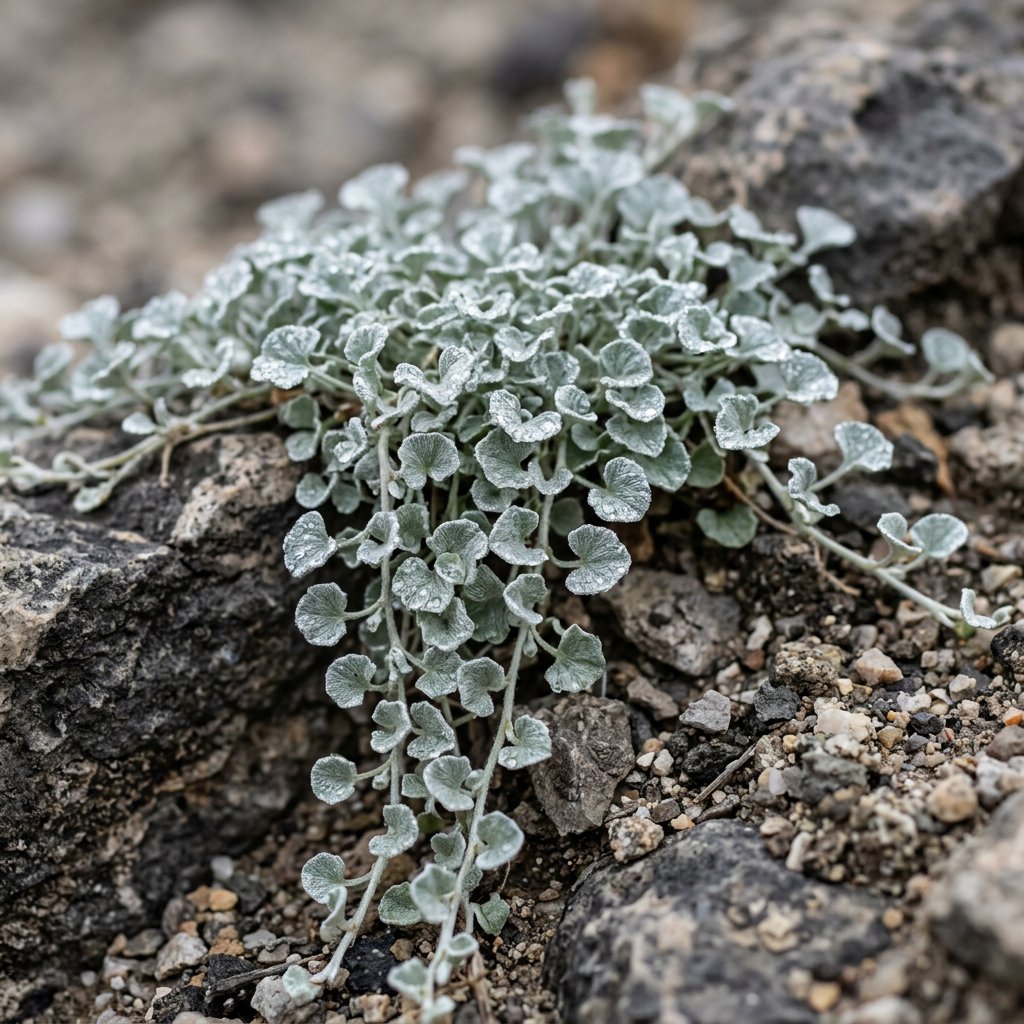
Plant Overview
Often called "Silver Falls" or "Silver Ponyfoot," this shimmering beauty looks like a cascading waterfall of molten metal spilling over the edges of a pot. Native to the harsh, dry regions of the Southwestern United States and Northern Mexico, it has evolved to be a tough, heat-loving survivor that adds a futuristic, metallic texture to any garden palette.
🔍 How to Identify
- 🍃 Leaf Shape: Features small, rounded, kidney-shaped (reniform) leaves that are about an inch wide.
- 💎 Color and Texture: The foliage is covered in fine, silvery hairs that give the plant a distinct metallic sheen and a soft, velvety feel.
- 🕸️ Growth Habit: A vigorous trailer with thin, wiry stems that can reach lengths of 3 to 6 feet in a single season, creating a dense curtain of silver.
🏡 In Your Garden
- ☀️ Light and Luster: While it survives in partial shade, full sun is required to keep the foliage bright silver; less light often results in the leaves turning a duller green.
- 🏜️ Drainage is Key: Because of its desert heritage, this plant is highly susceptible to root rot. It prefers "toes dry" and needs a gritty, well-draining soil mix to prevent the stems from turning mushy.
- ✂️ Pruning: It is an exceptionally fast grower. If it starts to look leggy or outgrows its space, it responds very well to a "haircut," which encourages even thicker, bushier growth.
⚠️ Safety & Toxicity
- ✅ Status: Generally considered non-toxic and safe for homes with curious inhabitants.
- 🐾 Details: It is safe for cats, dogs, and horses. However, as with any ornamental plant, it is best to discourage pets from munching on it to avoid minor stomach upset.
✨ Fun Fact
In its native desert habitat, Dichondra argentea acts as a living mulch; it creeps along the ground to shade the soil, keeping it cool and helping other plants retain moisture in the blistering heat.

Detailed Care Instructions
| Color | White, Insignificant |
| Soil Ph | Acidic; 5.6 To 6.5 |
| Humidity | Normal |
| Lighting | Full Sun |
| Soil Type | Sandy Loam |
| Bloom Time | Spring |
| Difficulty | Medium |
| Plant Type | Tender Perennial |
| Hibernation | Cold Period |
| Mature Size | About 3-4 Inches Tall |
| Native Area | New Zealand And Australia |
| Temperature | 5°C - 25°C |
| Sun Exposure | Full Sun |
| Hardiness Zones | 9-12 |
To grow Dichondra Argentea (Silver Falls) plants, follow these steps:
- Propagation: You can propagate Dichondra Argentea from seeds or cuttings. Seeds will take longer to establish, so it is recommended to use cuttings for faster results. Take stem cuttings from a mature plant, remove the lower leaves, and place the cuttings in a jar of water or a small pot filled with a well-draining potting mix.
- Lighting: Dichondra Argentea prefers full sun to partial shade. Place your plant in a location where it will receive at least 6-8 hours of sunlight per day. If growing indoors, place the plant near a sunny window or use grow lights to provide sufficient light.
- Soil: Dichondra Argentea thrives in well-draining soil. Use a high-quality potting mix that is rich in organic matter. You can also amend the soil in your garden with compost or well-rotted manure to improve drainage and fertility.
- Watering: Keep the soil evenly moist, but not soggy. Water the plant when the top inch of soil feels dry. Avoid overwatering as it can lead to root rot. Provide good drainage to prevent waterlogging.
- Fertilization: Feed your Dichondra Argentea plant with a balanced, water-soluble fertilizer once a month during the growing season. Follow the instructions on the fertilizer package for the correct dosage.
- Pruning: Trim back any leggy or overgrown stems to maintain a compact and bushy growth habit. Regular pruning also encourages the plant to produce more stems and foliage.
- Pests and diseases: Keep an eye out for common pests like aphids, spider mites, and whiteflies. Use insecticidal soap or neem oil to control these pests as necessary. Ensure good air circulation around the plant to prevent fungal diseases like powdery mildew.
- Transplantation: If you are growing Dichondra Argentea in a container, you may need to transplant it into a larger pot every 1-2 years as it grows. Use a pot with drainage holes and fresh potting mix.
By following these tips, you should be able to successfully grow and care for your Dichondra Argentea plant.

Place in a bright room that is sun drenched almost all day. Or directly in a south-facing window.

To water this plant, ensure that the soil is dry to the touch before watering. Use a watering can to water evenly and slowly, allowing the water to penetrate and saturate the soil. Avoid overwatering or allowing the soil to become waterlogged, as this can lead to root rot. Additionally, consider watering during the early morning or late afternoon to prevent the sun from drying out the soil too quickly.
To fertilize this plant, use a slow-release fertilizer that has a balanced amount of nitrogen, phosphorus, and potassium, applied according to the manufacturer's instructions. Fertilize at the beginning of the growing season and then every six to eight weeks thereafter. Be sure to water the plant thoroughly before and after fertilization to prevent fertilizer burn. Avoid over-fertilizing as this can cause excessive growth and make the plant more susceptible to disease and pests.
The Dichondra Argentea plant prefers well-draining soil with a pH level between 6 and 7.5. It requires a soil that is rich in nutrients and also maintains good moisture levels. The ideal soil for this plant should be a sandy loam with a good amount of organic matter included. The soil should be well-aerated and provide good drainage to prevent waterlogging and root rot. It is recommended to add perlite or vermiculite to the soil mix to help improve drainage. Additionally, a slow-release fertilizer can be added to the soil mix to provide the plant with the necessary nutrients. It is important to avoid using heavy clay soils or soils that are too dense as this can affect the plant's growth and health.
To propagate this plant, you will need to take stem cuttings. First, identify healthy stems on the plant that are at least 4 inches long and have at least two leaves attached. Then, using sharp and clean scissors or pruning shears, cut the stem at an angle just below a leaf node.
Next, remove the leaves from the bottom third of the stem, leaving only a few at the top. This will help the cutting divert more energy to producing roots instead of sustaining leaves. Dip the cut end of the stem into rooting hormone powder to encourage faster root growth.
Prepare a small pot with a well-draining potting mix, and create a hole in the center. Insert the stem cutting into the hole and gently press the potting mix around the stem to stabilize it. Water the potting mix to moisten it, but be careful not to overwater, which can lead to rotting.
Place the pot in a bright and warm spot, but avoid direct sunlight, as it can scorch the cutting. Mist the cutting regularly to keep the leaves hydrated, and check the soil moisture level frequently. Once the cutting has grown roots and started to produce new growth, it can be transplanted to a larger pot or into the ground, if desired.








