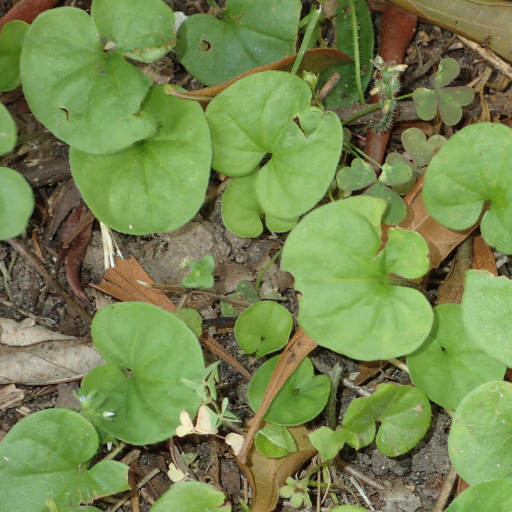
Plant Overview
Commonly known as the Carolina Ponyfoot or Carolina Kidneyweed, this native perennial is the secret weapon of the southern landscape. While some traditionalists might mistake it for a common lawn weed, it is actually a highly desirable, low-growing groundcover that forms a lush, emerald-green carpet. In the wild, it meanders through coastal plains and woodlands, telling a story of resilience and soft, natural beauty.
🔍 How to Identify
- 🍃 The Leaf Shape: True to its name, the leaves are distinctly kidney-shaped or resemble the rounded hoof of a pony. They are usually less than an inch wide.
- 🌱 Creeping Stems: The plant spreads through "stolons" (horizontal runners) that hug the ground tightly, rooting at various points to create a dense mat.
- 🌼 Hidden Blooms: It produces incredibly tiny, greenish-white flowers. They are so small and tucked away beneath the leaves that you might need a magnifying glass to spot them in the spring.
🏡 In Your Garden
- 💧 The Moisture Lover: Carolina Ponyfoot is an excellent "problem solver" for damp, low-lying areas of the yard where traditional turfgrass might struggle or succumb to root rot.
- 🦶 Lawn Alternative: Because it stays very low to the ground (rarely exceeding 2 inches in height), it requires almost no mowing. It can handle light foot traffic, making it perfect for the gaps between stepping stones.
- 🌳 Shade Tolerance: Unlike many sun-hungry groundcovers, this species is quite happy in partial shade, allowing you to bring a "green floor" to the areas beneath large canopy trees.
⚠️ Safety & Toxicity
- ✅ Status: Generally non-toxic.
- 🐾 Details: Carolina Ponyfoot is considered safe for humans and pets. It does not possess the stinging hairs or irritants found in some other ground-dwelling plants. However, as with any garden plant, it is best to discourage pets from grazing on it to avoid minor digestive upset.
✨ Fun Fact
🧬 A Surprising Family Tree: Despite its appearance as a humble creeping weed, Dichondra carolinensis belongs to the Convolvulaceae family. This means it is a direct biological cousin to the massive, climbing Morning Glory and the nutritious Sweet Potato!

Detailed Care Instructions
| Lighting | Full Sun |
| Difficulty | Easy |
| Temperature | 11°C - 21°C |
| Hardiness Zones | Max 10A |
To grow Dichondra Carolinensis, follow these steps:
- Choose a suitable location: Dichondra Carolinensis prefers full sun to part shade. Select a spot in your garden or yard with well-draining soil.
- Prepare the soil: Loosen the soil in the planting area by digging and removing any weeds or grass. Improve the soil's quality by adding compost or well-rotted manure.
- Sow the seeds: Dichondra Carolinensis can be propagated from seeds or starter plants. If using seeds, scatter them evenly over the prepared area and lightly press them into the soil. It can also be beneficial to mix the seeds with a bit of sand or vermiculite to help with even distribution.
- Water regularly: Keep the seeds or starter plants consistently moist but avoid overwatering. Ensure the soil is moist, but not saturated, and avoid allowing it to dry out completely.
- Maintain proper care: Once the plants start to establish, provide regular watering when the top inch of soil feels dry. Avoid overhead watering as it can encourage diseases. Provide a thin layer of mulch around the plants to help retain moisture and suppress weed growth.
- Fertilize: Apply a balanced, slow-release fertilizer as directed on the packaging. This will provide essential nutrients for the plant's growth and development.
- Weed control: Regularly remove any weeds that compete with the Dichondra Carolinensis for nutrients and space. Hand pulling or using a small garden tool can help with weed control.
- Pruning: Periodically trim the plants to maintain their desired size and shape. This will help promote healthy growth and prevent the plant from becoming unruly.
- Pests and diseases: Monitor for pests such as aphids, spider mites, or leafhoppers. Treat any infestations immediately with appropriate organic or chemical controls. Additionally, keep an eye out for any signs of diseases such as powdery mildew or leaf spot. If detected, treat promptly with suitable fungicides.
- Winter care (if needed): Dichondra Carolinensis is a perennial in warmer regions but may require protective measures if grown in colder climates. Apply a layer of mulch around the plants to help insulate the root system during winter months.
With proper care and maintenance, Dichondra Carolinensis can be a beautiful ground cover or trailing plant in your garden or landscape.

Place in a dark room with little light, like a dark bedroom or a spot far away from a window or directly in a north-facing window.

To provide proper watering for the plant, ensure that the soil is moist but not overly saturated. The frequency of watering may vary depending on the climate and weather conditions, but it is essential to avoid letting the soil completely dry out. Using a watering can or a gentle spray attachment on a hose can help distribute the water evenly without damaging the delicate leaves of the plant. Additionally, it is important to water at the base of the plant rather than on the leaves to prevent fungal growth.
- Apply a balanced, slow-release fertilizer in early spring before new growth starts.
- Use a fertilizer with a ratio of 10-10-10 or 12-12-12.
- Apply the fertilizer at a rate of 1 pound per 100 square feet of soil.
- Water the soil thoroughly after applying the fertilizer to help it dissolve.
- Repeat the application of fertilizer every four to six weeks during the growing season.
- Avoid applying too much fertilizer at one time, as this can burn the plant.
- Consider using an organic fertilizer, such as compost or fish emulsion, to provide a more natural source of nutrients for the plant.
- Remove any weeds or other plants that are competing for nutrients with the Dichondra Carolinensis.
The ideal soil for this plant should be a well-draining, lightweight, and porous mix. It should ideally be composed of a blend of sand, peat moss, vermiculite, and perlite. This soil mix will provide the necessary drainage and aeration required for the plant to thrive. Additionally, the soil mix should be slightly acidic with a pH range of 5.5-6.5 to promote optimal growth. It's also recommended to mix in some organic matter like compost or aged manure to provide the plants with additional nutrients.
To propagate this plant, take cuttings from mature, healthy specimens. These cuttings should be about 4-6 inches in length, with several leaves. Remove the lower leaves, leaving only a few at the top. Dip the cut end in rooting hormone powder and plant in moist potting soil. Keep the soil moist and place the cutting in indirect light. Over time, roots should begin to form and the cutting will begin to grow.








