Plant Overview
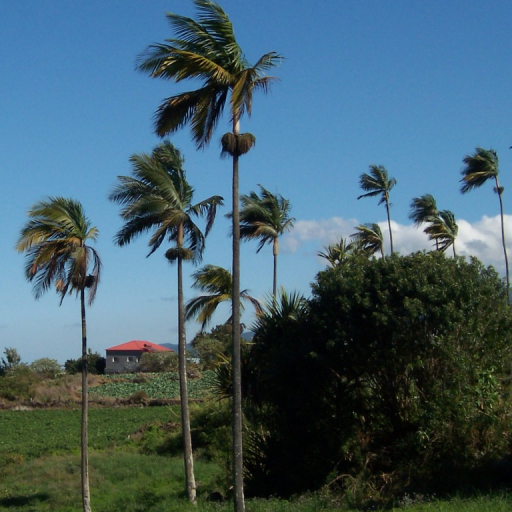
The Dictyosperma album, affectionately known as the Princess Palm, is a true island aristocrat hailing from the Mascarene Islands. While it looks delicate and royal, it earned the rugged nickname "Hurricane Palm" for its legendary ability to withstand fierce tropical storms. It is a favorite for coastal landscapes because it gracefully bends without breaking when the winds howl.
🔍 How to Identify
- 🌴 The Trunk: Features a slender, grey trunk marked with distinct rings (leaf scars). It often has a slightly swollen base that provides a sturdy anchor.
- 👑 The Crownshaft: Look for a prominent, long, smooth cylinder at the top of the trunk. This crownshaft can vary in color from a vibrant lime green to a dusty, velvet-like brownish-red.
- 🌿 The Fronds: The leaves are large and "pinnate" (feather-like), arching elegantly downward. The leaflets are closely spaced and often have a slight twist, giving the canopy a full, lush appearance.
🏡 In Your Garden
- 🌪️ Wind Resilience: This palm is one of the best choices for coastal or windy areas. Its biological "secret" is the ability to shed its large leaves quickly during a storm to reduce wind resistance and protect the main trunk from snapping.
- 💧 Drainage is Key: While it loves tropical humidity, it cannot tolerate "wet feet." It requires sandy, well-draining soil to prevent root rot. If you are growing it in a container, ensure the drainage holes are large and the soil is airy.
- ☀️ Sun & Temperature: It thrives in full sun but can handle partial shade when young. However, it is quite sensitive to frost; even a light freeze can damage the crown, so it is best suited for warm, frost-free climates.
⚠️ Safety & Toxicity
- ✅ Safe Status: The Princess Palm is generally considered non-toxic to humans, cats, and dogs. It is a "friendly" palm for family backyards.
- 🧤 Physical Caution: While not poisonous, the fallen fronds are heavy and the leaf bases can be quite tough. Use caution (and perhaps gloves) when pruning or hauling away old growth to avoid scratches.
✨ Fun Fact
📜 A Wild Survivor: Despite being a popular ornamental tree found in gardens across the globe, the Dictyosperma album is considered critically endangered in its native wild habitat on the Mascarene Islands due to historical over-harvesting for its edible "palm cabbage."

Detailed Care Instructions
To grow Dictyosperma album (Hurricane Palm), you can follow these steps:
- Obtain seeds or a young plant: You can purchase seeds or a small potted Dictyosperma album plant from a local nursery or reputable online retailer.
- Choose the right location: Dictyosperma album thrives in Tropical or Sub-tropical climates and requires ample sunlight. Choose a spot in your garden that receives full sun to partial shade.
- Prepare the soil: Dictyosperma album prefers well-draining soil with a pH of 5.5 to 7.5. If your soil is heavy or poorly draining, add organic matter such as compost or well-rotted manure to improve drainage.
- Planting the seeds: If you have seeds, soak them in warm water for 24 hours before planting. Sow the seeds about 1 inch deep in the prepared soil. Water lightly after planting.
- Watering: Dictyosperma album requires regular watering to keep the soil moist but not waterlogged. Allow the top inch of soil to dry out slightly before watering again.
- Fertilization: Apply a balanced slow-release fertilizer in spring and summer to provide necessary nutrients. Follow the instructions on the fertilizer packaging for the correct dosage.
- Pruning: Dictyosperma album generally doesn't require much pruning. However, you can remove any dead or yellowed fronds to maintain the plant's appearance.
- Protect from extreme temperatures: Dictyosperma album is sensitive to cold temperatures and frost. If you live in a colder region, consider protecting the plant during winter by covering it with a frost blanket or moving it indoors.
- Pest and disease control: Keep an eye out for common palm pests such as mealybugs, scale insects, or spider mites. Regularly inspect the plant for any signs of infestation or disease, and treat them accordingly with suitable organic or chemical controls.
- Patience and care: Dictyosperma album is a slow-growing palm, so be patient as it takes time to establish and grow. Provide consistent care, including proper watering, fertilization, and sunlight, to promote healthy growth.
Remember that growing conditions may vary, so it is important to do some research specific to your region and consult knowledgeable gardeners or local nurseries for additional guidance.

Place in a bright room that is sun drenched almost all day. Or directly in a south-facing window.

To water this particular plant, it is important to ensure that the soil surrounding it is completely soaked with water. However, it is also important to avoid over-watering the plant as this can lead to root rot and other problems. A good practice is to water the plant deeply but infrequently, allowing the soil to dry out slightly between watering. It is also important to ensure that the pot or container in which the plant is growing has good drainage to prevent the soil from becoming too waterlogged. Additionally, this plant prefers slightly acidic soil with good organic matter, which can improve its ability to retain moisture.
To fertilize this plant, it is recommended to use a balanced, slow-release fertilizer with an NPK ratio of 10-10-10 or similar. Apply the fertilizer evenly around the base of the plant, taking care not to get any on the leaves.
Fertilization should be done every three to four months during the growing season (spring and summer). Avoid fertilizing during the dormant season (fall and winter).
Before fertilizing, make sure the soil is moist. Water the plant thoroughly before applying the fertilizer. After fertilizing, water the plant again to help the nutrients to penetrate the soil.
Monitor the plant for any signs of overfertilization, such as burnt or yellowing leaves. If this occurs, reduce the amount of fertilizer used or increase the frequency of watering to dilute excess nutrients in the soil.
Dictyosperma album is a type of palm tree that requires well-draining soil with a neutral to slightly acidic pH level. The soil should be rich in organic matter and have good water retention capacity. A recommended soil mix for planting Dictyosperma album would be a mixture of peat moss, sand, and perlite or vermiculite to improve drainage. It is important to ensure the soil is kept consistently moist, but not waterlogged, and to avoid allowing the soil to dry out completely between waterings. A well-balanced fertilizer can also be added to the soil during the growing season to promote healthy growth.
- Obtain a mature plant: Find a healthy mature plant of Dictyosperma Album and select a stem that has several fronds to take cuttings from.
- Prepare the soil: Prepare soil using peat moss, perlite, and sand in a ratio of 1:1:1. Mix the soil thoroughly and fill it in a well-draining pot.
- Take cuttings: Take a stem cutting that has at least three to four fronds. Cut the stem at an angle of 45 degrees using a clean and sharp pair of scissors or pruning shears.
- Remove leaves: Carefully remove the bottom two leaves of the cutting. Make sure to avoid damaging the stem while doing this.
- Dip cuttings in rooting hormone: Dip the cut end of the stem into rooting hormone powder. This helps to promote root growth.
- Plant cuttings in soil: Place the cutting in the soil, ensuring that the cut end is about one inch deep. Firmly press the soil around the cutting.
- Water the cuttings: Water the soil around the cutting using a watering can or a spray bottle. Ensure that the soil remains slightly damp, but not waterlogged.
- Cover with plastic: Cover the pot with a clear plastic bag or wrap to create a humid environment around the cutting.
- Place in a warm and bright location: Position the pot in a warm location that receives bright but indirect sunlight.
- Monitor and care for the cutting: Monitor the cutting regularly for the next few weeks, ensuring that the soil remains moist. After a few weeks, you should begin to see new growth from the cutting. Gradually remove the plastic covering and increase the amount of light the plant receives over time.








