Plant Overview
Known as the Northern Bush Honeysuckle, this understated North American native is a champion of the woodland edge. While it shares a name with the famous climbing vines, it is actually a hardy, mounding shrub that behaves much better in a garden setting. It is often celebrated by landscapers as a "problem solver" for its ability to thrive in dry shade and poor soils where other plants might falter.
🔍 How to Identify
- 🍃 Foliage: The leaves are lance-shaped with distinct finely-toothed (serrated) edges. They emerge with a bronze tint in spring and transform into a deep, glowing red or purple in the autumn.
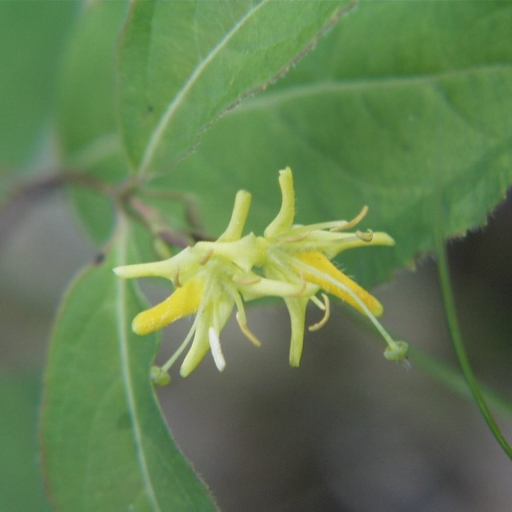
- 🌼 Trumpet Blooms: It features clusters of small, sulfur-yellow flowers that look like tiny trumpets. Interestingly, these flowers often deepen to orange or reddish-bronze as they age.
- Seed Pods:* Unlike true honeysuckles (Lonicera*) which produce fleshy berries, this plant develops dry, woody capsules that look like tiny pointed beaks.
🏡 In Your Garden
- 🌱 Erosion Control: Because this shrub spreads via underground runners (suckers), it is an elite choice for stabilizing steep banks or hillsides. It creates a thick network of roots that holds soil firmly in place.
- 🐝 Pollinator Buffet: It is a high-value plant for native bees and the striking Clearwing Hummingbird Moth. Because it blooms in mid-summer, it provides a vital nectar source when many spring flowers have already faded.
- ☁️ Shade Tolerance: While it grows densest in full sun, it is remarkably shade-tolerant. It is a perfect choice for the "dry shade" found under large deciduous trees—a notoriously difficult spot for most gardeners.
⚠️ Safety & Toxicity
- ✅ Low Risk: Diervilla lonicera is generally considered non-toxic to humans, dogs, and cats.
- 🚫 Berry Confusion: While safe, always ensure you haven't misidentified it for "Invasive Honeysuckle" (Lonicera maackii), which produces bright red berries that can cause stomach upset if ingested by children or pets. The dry pods of the Northern Bush Honeysuckle are far less "tempting" to curious eaters.
✨ Fun Fact
The flowers of the Northern Bush Honeysuckle are clever communicators. They change color from yellow to red once they have been pollinated. This signals to bees that the "restaurant is closed," directing the pollinators to the yellow flowers that still have a fresh supply of nectar!

Detailed Care Instructions
| Lighting | Full Sun |
| Hardiness Zones | Max 7B |
To grow Diervilla Lonicera, also known as Bush Honeysuckle, follow these steps:
- Choose the right location: Diervilla Lonicera thrives in full sun to partial shade. Select a spot in your garden or landscape that receives at least six hours of direct sunlight per day. Ensure the soil is well-draining.
- Prepare the soil: Diervilla Lonicera is adaptable to various soil types but prefers moist, loamy soil. Add organic matter like compost or well-rotted manure to improve soil fertility and drainage. Perform a soil test and adjust the pH to the plant's preferred range of 5.5 to 7.0 if necessary.
- Planting: Dig a hole that is twice as wide and as deep as the root ball of the plant. Place the plant in the hole, ensuring it is at the same depth as it was in the nursery pot. Gently backfill the hole with soil, firming it around the plant. Water thoroughly.
- Watering: Water the plant deeply and regularly, especially during the summer months when rainfall may not be sufficient. Aim to keep the soil consistently moist but not waterlogged. Mulching around the base of the plant can help retain moisture.
- Pruning: Diervilla Lonicera may require occasional pruning to maintain shape and remove any dead or diseased branches. It is best to prune in late winter or early spring before new growth begins.
- Fertilization: Apply a balanced, slow-release fertilizer in early spring to provide nutrients for the plant's growth. Follow the manufacturer's instructions for the appropriate amount to use.
- Pests and diseases: Diervilla Lonicera is generally resistant to pests and diseases. However, occasional aphids or spider mites may appear. If needed, apply a horticultural oil or insecticidal soap according to the product instructions.
- Propagation: Diervilla Lonicera can be propagated through stem cuttings or by dividing mature plants. Take cuttings in early summer, dip them in rooting hormone, and plant them in a well-draining potting mix. Keep the cuttings consistently moist until they root. When dividing, carefully separate the root ball into smaller sections, ensuring each section has several healthy stems and roots.
With proper care, Diervilla Lonicera should grow well and bring beauty to your garden with its abundant clusters of yellow flowers and attractive foliage.

Place in a bright room that is sun drenched almost all day. Or directly in a south-facing window.

Watering the plant requires you to moisten the soil thoroughly. It is important to note that the plant needs moist but well-drained soil. Overwatering can lead to root rot and can damage the plant, so it is recommended to wait until the top inch of soil is dry before watering. The frequency of watering may vary depending on the weather and the environment the plant is growing in, but typically once a week is sufficient. When watering, it is best to avoid getting the leaves wet as this can lead to fungal diseases.
First, it is important to understand the nutritional needs of this plant. Diervilla Lonicera requires a balanced fertilizer that contains equal parts of nitrogen, phosphorus, and potassium. The ideal NPK ratio is 10-10-10.
When fertilizing, make sure to apply the fertilizer around the drip line of the plant, which is where the foliage ends. This ensures that the nutrients are taken up by the roots and distributed throughout the plant.
It is best to fertilize in early spring before new growth emerges and again in late summer or early fall after flowering has finished. Be careful not to over-fertilize, as this can lead to excessive foliage growth at the expense of blooms.
Finally, always follow the instructions on the fertilizer label carefully and water the plant thoroughly after fertilizing to help nutrients penetrate the soil and reach the roots.
When choosing soil for the Diervilla Lonicera plant, it is important to consider the plant's natural environment. This plant grows well in well-draining soils that are rich in organic matter. The ideal soil pH for this plant ranges from 5.5 to 7.5.
To create a suitable soil mix for this plant, start with a high-quality potting mix and then add in organic matter such as compost or peat moss to improve moisture retention. Vermiculite or perlite can also be added to improve drainage. It is important to avoid using heavy, clay soils that retain water for too long, as this can cause root rot and other problems.
If planting in the ground, it is important to amend the soil in the planting hole with a mixture of compost and other organic materials before planting the Diervilla Lonicera. Regular fertilization with a balanced fertilizer can also help to maintain growth and health of the plant.
To propagate this plant, you will need to take stem cuttings in the late spring or early summer, when the plant is actively growing. Choose healthy, vigorous shoots that are at least 4 inches long and have several pairs of leaves.
Using a sharp, sterilized pair of scissors or pruners, cut the stem just below a node (where a leaf attaches to the stem). Remove the leaves from the bottom half of the cutting, leaving a few pairs at the top.
Dip the cut end of the stem in rooting hormone powder, which will encourage the cutting to form roots. Place the cutting in a pot filled with a well-draining potting mix, and water it thoroughly.
Cover the pot and cutting with a plastic bag to create a humid environment, which will help the cutting to root. Place the pot in a bright but not direct sunlight location, and keep the soil evenly moist.
Check the cutting regularly for roots by gently tugging on it. Once the cutting has roots growing out of the bottom of the pot, it is ready to be transplanted into a larger pot or into the garden. Be sure to acclimate the plant to its new environment gradually.
Common pests of the bush honeysuckle include Scale insect, mealybugs, spider mites, aphids, larvae. Make a habit of checking your bush honeysuckle frequently for pests so that any infestations can be caught and managed early.








