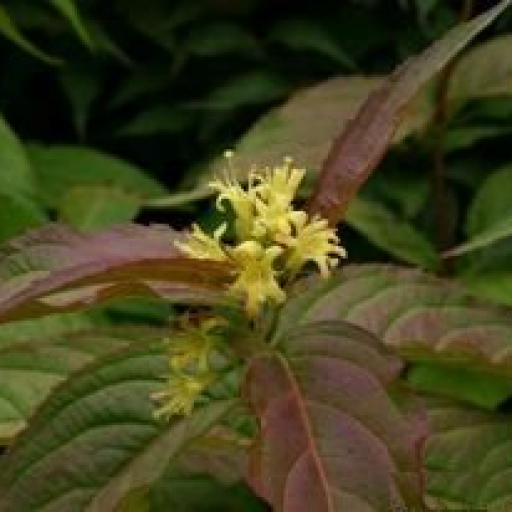
Plant Overview
Known as the Southern Bush Honeysuckle, Diervilla sessilifolia is the rugged, reliable hidden gem of the Appalachian Mountains. While it shares a name with the common honeysuckle vine, this plant is a well-behaved, mounding shrub that provides a multi-season color show. It is prized by gardeners for its "iron-clad" constitution, thriving in difficult spots where other plants might wither.
🔍 How to Identify
- 🍃 The "Sessile" Leaves: True to its name, the lance-shaped leaves are "sessile," meaning they lack a stalk (petiole) and attach directly to the stem.
- 🌼 Sulfur Blooms: In early summer, it produces clusters of small, trumpet-shaped yellow flowers at the ends of the branches, which slowly fade to a subtle reddish-orange.
- 🎨 Bronze New Growth: The young foliage emerges with a striking bronze or reddish tint before maturing into a deep, glossy green.
🏡 In Your Garden
- 🧱 Erosion Expert: Because it spreads via underground rhizomes to form thickets, it is the perfect candidate for stabilizing steep, rocky slopes or "problem" banks.
- 🌤️ Light Versatility: While it flowers most prolifically in full sun, it is one of the few flowering shrubs that remains dense and attractive even in significant shade.
- 🐝 Pollinator Magnet: It is a vital nectar source for bumblebees and butterflies, making it a cornerstone for any North American native habitat garden.
⚠️ Safety & Toxicity
- ✅ Pet & Human Safe: Unlike many ornamental shrubs, Diervilla sessilifolia is generally considered non-toxic to dogs, cats, and humans.
- 🌿 Skin Sensitivity: While not poisonous, the pointed leaves can be slightly abrasive; wearing gloves during heavy pruning is always a good practice to avoid minor scratches.
✨ Fun Fact
🍂 Triple Threat Color: This plant provides a "color loop"—starting with bronze leaves in spring, transitioning to yellow flowers in summer, and ending with a brilliant explosion of orange, red, and purple foliage in the autumn.

Detailed Care Instructions
To grow Diervilla sessilifolia, also known as southern bush honeysuckle or southern bush honeysuckle, follow these steps:
- Select an appropriate location: Choose a spot in your garden that receives full to partial sun. Diervilla sessilifolia can tolerate various soil types but prefers well-draining soil.
- Prepare the soil: Loosen the soil in the designated area and remove any weeds or rocks. Amend the soil with organic matter, such as compost, to improve fertility and drainage.
- Planting: Dig a hole that is slightly larger than the root ball of the plant. Place the plant in the hole, making sure it is planted at the same depth it was in the nursery container. Backfill the hole with soil and gently firm it around the base of the plant.
- Watering: Water the newly planted Diervilla sessilifolia thoroughly after planting. Keep the soil consistently moist but not waterlogged. During hot and dry periods, water the plant regularly to prevent drought stress.
- Mulching: Apply a layer of organic mulch, such as wood chips or bark, around the base of the plant. Mulch helps to retain moisture, suppress weed growth, and regulate soil temperature.
- Pruning: Diervilla sessilifolia is a low-maintenance plant but benefits from occasional pruning. Prune in early spring before new growth starts or in late fall after the leaves have dropped. Remove any dead, damaged, or overgrown branches to maintain a compact and tidy appearance.
- Fertilizing: Diervilla sessilifolia doesn't typically require regular fertilization. However, you can apply a balanced slow-release fertilizer in early spring to promote healthy growth.
- Propagation: You can propagate Diervilla sessilifolia through stem cuttings taken in early summer or through division of established plants in fall or spring. Dip the cuttings in rooting hormone and plant them in moist potting soil. Keep them in a warm and humid environment until roots develop.
- Pest and disease management: Diervilla sessilifolia is relatively resistant to pests and diseases. However, keep an eye out for aphids, mites, and leaf spots. If any issues arise, treat them accordingly using organic or chemical control methods.
- Enjoying the flowers: Diervilla sessilifolia produces clusters of yellow, tubular flowers in late spring to early summer. Enjoy the wildlife-attracting blooms, which are pollinated by bees, butterflies, and other beneficial insects.
By following these guidelines, you should be able to successfully grow Diervilla sessilifolia in your garden.

To water this plant, you should first check the soil to determine if it is dry. If it is dry, then you should water it slowly and deeply to ensure that the water reaches the roots. It is important to avoid overwatering as this can lead to root rot and other diseases. Additionally, you should ensure that the plant has good drainage to prevent standing water around the roots. If the plant is in a container, make sure there are drainage holes in the bottom. Finally, water the plant in the early morning or late afternoon to avoid evaporation and to allow the plant time to absorb the water before the hotter parts of the day.
To fertilize this plant, use a balanced fertilizer with equal parts nitrogen, phosphorus, and potassium. Feed the plant every two weeks during the growing season, starting in early spring and continuing until late summer. Dilute the fertilizer to half the recommended strength, and apply it evenly around the base of the plant. Be careful not to over-fertilize, as this can damage the plant and contribute to disease. Water the plant well after fertilizing to ensure that the nutrients are absorbed into the soil.
Diervilla Sessilifolia plant prefers a well-draining soil that is slightly acidic. It can also grow in alkaline soil but prefers acidic soil. The soil should be rich in organic matter and have good aeration. A mix of garden soil, perlite, peat moss, and compost can make an ideal growing medium for the plant. It is essential to maintain good soil moisture levels for Diervilla Sessilifolia plant by watering it regularly, but not over-watering. Over-watering can lead to root rot and other plant diseases. Adding fertilizer to the soil can also help the plant grow, but it should be done in moderation as excessive fertilizer can cause harm to the plant.
To propagate this plant, locate a healthy stem that is around 4-6 inches long and has several leaf nodes. Carefully cut the stem at a 45-degree angle using a clean, sharp pair of pruning shears. Remove any leaves from the bottom few inches of the stem, leaving only a few near the top.
Prepare a pot with moist potting soil and make a hole in the center with your finger or a dowel. Dip the cut end of the stem in rooting hormone powder to promote root growth and insert it into the hole in the potting soil. Firmly tamp the soil around the stem to eliminate any air pockets.
Place the potted stem in a bright, warm spot but out of direct sunlight. Keep the soil consistently moist and mist the plant with water daily to maintain humidity.
After several weeks, the stem should begin to develop roots and new growth. Once the plant has fully rooted and is growing strongly, it can be transplanted into a larger pot or into the ground outside.








