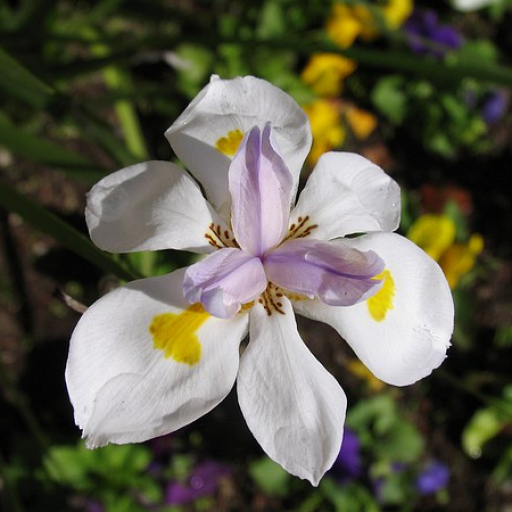
Plant Overview
Often called the "Fortnight Lily," this resilient South African native is a staple in modern landscaping for its "bulletproof" nature and rhythmic blooming cycle. It earns its nickname because it tends to produce a burst of flowers roughly every two weeks during the growing season. Whether swaying in a coastal breeze or standing tall in a dry urban garden, its elegant, iris-like blooms provide a delicate contrast to its tough, sword-shaped foliage.
🔍 How to Identify
- 🌿 Sword-like Leaves: The foliage is evergreen, stiff, and narrow, growing in a distinctive fan-shaped arrangement that looks like ornamental grass from a distance.
- 🌸 The "Eye" Pattern: The flowers usually feature three large outer petals decorated with yellow or orange "nectar guides" (spots) that act as a landing strip for bees.
- 🌱 Clumping Habit: It grows in dense, upright tufts that slowly spread via underground rhizomes, making it excellent for filling large gaps in a garden bed.
🏡 In Your Garden
- ☀️ The Sunshine Lover: While it can survive in partial shade, the Dietes needs plenty of sunlight to fuel its "fortnightly" flowering display; less light usually means more grass and fewer blossoms.
- 🧱 Urban Resilience: This plant is incredibly salt-tolerant and drought-resistant once established, making it a go-to choice for coastal gardens or "hellstrips" between sidewalks and roads.
- ✂️ Pruning Tip: Avoid the "haircut" style of pruning; instead, pull out individual dead leaves from the base to keep the fan shape looking clean and architectural.
⚠️ Safety & Toxicity
- 🐱 Toxic to Pets: Like most members of the Iris family, Dietes contains irisins (specifically in the rhizomes), which can cause vomiting, drooling, and lethargy in cats and dogs if chewed.
- 🧤 Sharp Edges: The long, thin leaves are quite fibrous and can have slightly sharp edges that may cause minor skin irritation or "grass cuts" during heavy weeding.
✨ Fun Fact
In some regions, the Dietes is known as the "Rain Lily" because many gardeners swear that the plant only bursts into full bloom immediately following a heavy rainstorm or a sudden change in barometric pressure!

Detailed Care Instructions
To grow Dietes plants, follow these steps:
- Location: Choose a location that receives full sun to partial shade. Ideally, this plant should receive at least 6 hours of direct sunlight daily.
- Soil: Dietes plants prefer well-draining, fertile soil. It can grow in various types of soil but prefers slightly acidic to neutral soil. Amend heavy clay soils with organic matter like compost or peat moss to improve drainage.
- Watering: Initially, water the plant regularly to help establish its root system. Once established, Dietes plants are drought-tolerant but still benefit from occasional watering during dry periods. Water deeply and allow the soil to dry out between watering sessions.
- Mulching: Apply a layer of organic mulch around the plant to help retain soil moisture and prevent weed growth. Mulching also adds nutrients to the soil as it breaks down.
- Fertilization: Feed the Dietes plant with a balanced, slow-release fertilizer in early spring and again in early summer. Follow the manufacturer's instructions for proper dosage. Alternatively, you can use a diluted liquid fertilizer monthly during the growing season.
- Pruning: Trim off any dead or yellowing leaves to maintain the plant's appearance. Cut back spent flower stalks to encourage new blooms.
- Propagation: Dietes plants can be propagated through division. Carefully dig up the plant's clump and separate it into smaller sections, ensuring each division has some roots attached. Replant the divisions in separate holes or in other suitable areas.
- Pests and Diseases: Dietes plants are generally pest and disease resistant. However, they can occasionally be affected by snails, slugs, or aphids. Monitor the plants regularly and take appropriate measures if necessary, such as using organic pest control methods.
Remember to check the specific care requirements of your chosen Dietes species, as there are different cultivars available. Overall, these plants are relatively low-maintenance and can thrive in a variety of growing conditions.

Place in a bright room that is sun drenched almost all day. Or directly in a south-facing window.

Watering this particular plant can be done by ensuring that the soil is moist but not waterlogged. One way to check if it needs watering is to stick your finger about an inch into the soil. If it feels dry, then it's time to water. When watering, it's best to do so at the base of the plant to avoid getting water on the leaves. Water thoroughly, allowing excess water to drain out of the bottom of the container or soil. It's important not to let the plant sit in standing water, as this can cause root rot. In the summer months, this plant may require more frequent watering, especially if it's in direct sunlight. In contrast, during the winter, it may require less frequent watering due to the cold temperatures and decreased sunlight.
To fertilize this plant, mix a slow-release fertilizer with the soil before planting or lay down a layer of compost near the roots. Apply a balanced fertilizer during the growing season, taking care not to over-fertilize. Water the plant thoroughly before and after applying fertilizer to prevent root burn. Avoid fertilizing during the winter, as the plant is in its dormant stage.
The ideal soil for this plant should be well-draining and rich in organic matter. A mixture of loamy soil, sand, and compost is suitable for its growth. The pH level of the soil should be slightly acidic to neutral, with a range of 6-7.5. It is recommended to avoid clay-rich soils or heavy soils that can retain too much water, leading to root rot. Additionally, a well-draining soil with occasional watering is necessary for healthy growth.
Propagation of this plant can be done through division of the rhizomes. Firstly, the plant should be dug up and the rhizomes should be separated. Each division should contain at least two or three shoots and a set of healthy roots. The cut parts of rhizomes should be carefully trimmed and any damaged or dead roots should be removed. The divisions should then be planted in a suitable potting medium and kept in a warm, well-lit area. Adequate watering should be ensured to promote new growth and the plant should be kept out of direct sunlight until it has established.







