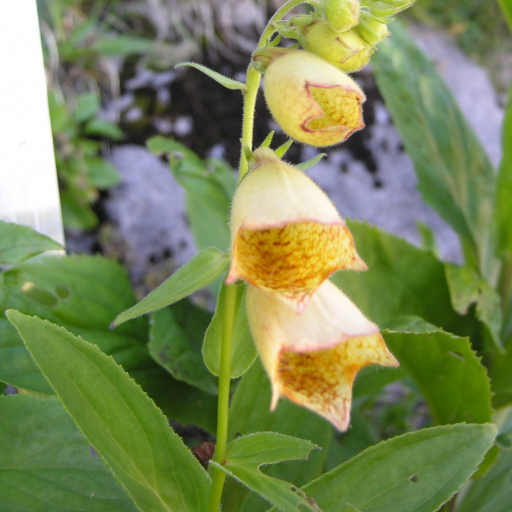
Plant Overview
Known as the Large Yellow Foxglove, this elegant European native brings a touch of woodland magic to the home garden. Unlike its common pink cousin, Digitalis grandiflora is a true perennial, meaning it returns year after year to grace your borders with its buttery, bell-shaped blooms. It is often called the "Yellow Temple Bells" because of its serene, architectural presence in shaded spots.
🔍 How to Identify
- 🔔 The Flowers: Large, drooping bells that are a soft primrose-yellow. If you look closely inside the "throat" of the flower, you’ll find a delicate map of brown or cinnamon-colored netting.
- 🍃 The Foliage: Dark green, lance-shaped leaves that are slightly hairy or "toothy" along the edges. They form a lush basal rosette before the tall flower spikes emerge.
- 📏 The Stature: While some foxgloves tower over fences, this species is more compact and sturdy, usually reaching about 2 to 3 feet in height, making it less likely to flop over in a summer breeze.
🏡 In Your Garden
- 🧚 The Perfect Spot: This plant thrives in "dappled light," mimicking its natural home at the edge of a forest. It loves cool, moist soil but won't tolerate "wet feet" during the winter, which can rot its crown.
- ⏳ A Long-Distance Runner: While many foxgloves are biennials (living only two years), this variety is a reliable perennial. It is also much more heat-tolerant than other foxgloves, making it a favorite for gardeners in slightly warmer climates.
- 🦋 Pollinator Magnet: The tubular flowers are specifically designed for bumblebees. You can often see them crawling entirely inside the bells to reach the nectar at the base.
⚠️ Safety & Toxicity
- 🚫 Status: HIGHLY TOXIC. All parts of the plant (leaves, flowers, seeds, and stems) are extremely poisonous if ingested.
- 🐾 Pets & Kids: Keep this plant away from curious pets and children. It contains cardiac glycosides (like digitoxin) which can affect heart rate and cause severe illness or death if consumed.
- 🧤 Garden Safety: It is highly recommended to wear gloves when handling or pruning this plant, as the toxins can sometimes cause skin irritation or be absorbed through small cuts.
✨ Fun Fact
The genus name Digitalis comes from the Latin digitus, meaning "finger." This refers to the ease with which a human finger can be fitted into the flower's bell—much like a thimble. In folklore, it was believed that foxes wore the flowers on their paws to muffle their footsteps while hunting!

Detailed Care Instructions
To successfully grow Digitalis Grandiflora (yellow foxglove) plant, follow these steps:
- Choose the right location: Select a spot in your garden that receives partial shade to full sun. The soil should be well-draining and slightly acidic to neutral.
- Prepare the soil: Prior to planting, work the soil well by removing any weeds, rocks, or large clumps. Add organic matter such as compost or peat moss to improve soil fertility and drainage.
- Planting: Sow the Digitalis Grandiflora seeds in early spring or late summer for a biennial bloom. Scatter the seeds thinly on the prepared soil surface. Lightly rake the seeds to cover them with a layer of soil, about 1/8 inch deep. Water gently after sowing.
- Watering: Keep the soil slightly moist but avoid overwatering, as Digitalis Grandiflora is susceptible to root rot. Water once or twice a week, making sure the soil remains evenly moist.
- Mulching: Apply a layer of organic mulch, such as wood chips or straw, around the base of the plants. This helps retain moisture, suppresses weeds, and keeps the soil temperature stable.
- Fertilization: Digitalis Grandiflora plants don't require heavy fertilization. However, you can apply a slow-release balanced fertilizer in the spring to promote healthy growth.
- Pruning: As the plants grow, remove any dead or yellowing leaves to improve air circulation and prevent diseases. After the initial bloom period, remove spent flower stalks to encourage new growth.
- Support: If the plants become top-heavy or are prone to bending, provide some support with stakes or cages to prevent them from falling over.
- Pest and disease control: Monitor your plants regularly for any signs of pests like aphids or diseases like powdery mildew. Treat them using organic insecticides or fungicides, if necessary.
- Propagation: Digitalis Grandiflora plants self-seed easily, leading to new plants the following year. To control spreading, deadhead the spent flowers before they produce seeds.
Remember to check the specific growing requirements of Digitalis Grandiflora in your region, as conditions may vary.

Place in a bright room that is sun drenched almost all day. Or directly in a south-facing window.

To water this plant, you should first check the moisture level of the soil by sticking your finger about an inch or two deep into the soil. If it feels dry, it is time to water the plant. Use a watering can or hose to slowly and gently water the soil around the base of the plant, being careful not to splash water on the leaves or flowers. Allow the water to soak into the soil until it reaches the roots. Avoid overwatering, as this can cause the plant to rot. Water the plant regularly, but less frequently during periods of cooler weather or when the plant is dormant.
To fertilize this plant, use a balanced fertilizer with equal amounts of nitrogen, phosphorus, and potassium. Apply the fertilizer at a rate of one tablespoon per gallon of water, and water the plant thoroughly after fertilizing. Fertilize the plant every four to six weeks during the growing season, and reduce the frequency to once every two months during the winter. Avoid overfertilizing, as this can result in burned or damaged leaves.
The ideal soil for the Digitalis Grandiflora plant should be well-draining and fertile, with a pH level between 6.0 and 7.5. It should be rich in organic matter and contain adequate amounts of nutrients like nitrogen, phosphorus, and potassium. Avoid using heavy clay soils or those that are prone to waterlogging, as these can lead to root rot and other issues. Adding compost or aged manure to the soil can help improve its fertility and texture. Additionally, it's recommended to mulch around the base of the plant to help retain moisture and suppress weeds.
To propagate this plant, select healthy and robust stems or cuttings from the mother plant. These cuttings should be around 5-6 inches long and contain at least one or two nodes. Remove the bottom leaves from the cutting and dip the cut end in rooting hormone powder. Then, plant the cutting in a well-draining soil mix that is moist but not waterlogged. Cover the planted cutting with a plastic bag or a propagator to maintain humidity and prevent moisture loss. Place the cutting in a bright but indirect light until it establishes roots, which usually takes around 4-6 weeks. Once the cutting develops roots and begins to grow, gradually acclimate it to the outdoor environment by increasing the exposure to sunlight and reducing the covering.
Common pests of the yellow foxglove include Aphids. Make a habit of checking your yellow foxglove frequently for pests so that any infestations can be caught and managed early.








