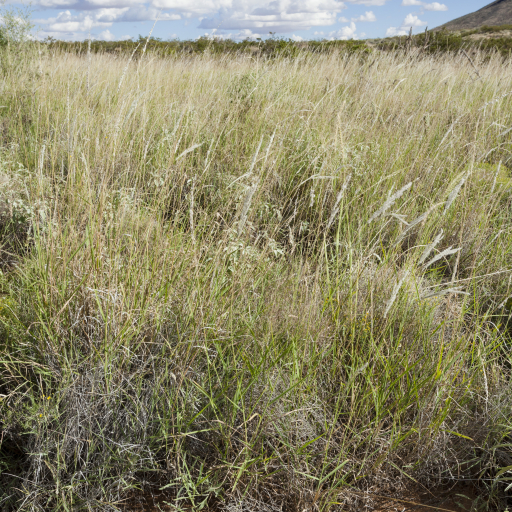
Plant Overview
Often called the "California Cottontop," this resilient perennial grass is a jewel of the American Southwest and Northern Mexico. It transforms dry, rocky landscapes into shimmering fields when its silky, silver-white seed heads catch the desert sunlight. While it looks delicate, it is a tough survivor that provides essential forage for wildlife in harsh environments.
🔍 How to Identify
- 🌾 The Seed Head: Dense, narrow clusters of spikelets covered in long, silky white or silvery-purple hairs that look like tufts of cotton.
- 🍃 Foliage: Narrow, blue-green leaf blades that grow in upright, tidy bunches, often appearing slightly folded or rolled.
- 📏 Growth Habit: A classic "bunchgrass" shape that typically reaches 1 to 3 feet in height, standing tall even in the wind.
🏡 In Your Garden
- ☀️ Drought Warrior: This grass has evolved to survive long dry spells by going dormant; it thrives on "tough love" and can actually die if planted in heavy, water-logged soil.
- 🐦 Habitat Hero: In a home landscape, it serves as an excellent nectar-source-adjacent plant, providing nesting material and seeds for songbirds and cover for beneficial insects.
- 🪨 Natural Mulcher: Because it grows in clumps, it is perfect for rock gardens or xeriscaping where you want to prevent soil erosion without using heavy irrigation.
⚠️ Safety & Toxicity
- ✅ Safe Status: California Cottontop is non-toxic to humans, dogs, cats, and horses.
- 🐕 Mechanical Irritation: While not poisonous, the fuzzy seed heads can occasionally become "hitchhikers" in a pet's fur or ears. It’s wise to brush your dog after they run through tall, dried patches.
✨ Fun Fact
✨ The Silver Lining: Unlike many other grasses that drop their seeds quickly, the "cotton" on this plant often persists well into the winter, giving the desert a frosted look even in the heat of a dry autumn.

Detailed Care Instructions
To grow Digitaria Californica plant, also known as California cottontop, follow these steps:
- Choose a suitable location: California cottontop prefers full sun to partial shade. It can tolerate a variety of soil types but prefers well-draining soil.
- Prepare the soil: Loosen the soil and remove any weeds or rocks. Mix in organic matter, such as compost, to improve fertility and drainage.
- Planting: Sow the seeds directly in the prepared soil, scattering them evenly. Lightly press the seeds into the soil, but do not cover them completely as they require light to germinate. You can also start seeds indoors in pots and transplant them later.
- Watering: Keep the soil consistently moist until the seeds germinate, which usually takes about 2-3 weeks. After germination, reduce the frequency of watering. California cottontop is drought-tolerant and does not require excessive watering.
- Maintenance: Once established, Digitaria Californica requires minimal care. Remove any weeds that may compete with the plants for nutrients and water. If the plants become overcrowded, thin them out to ensure better air circulation and growth.
- Fertilization: California cottontop plant generally does not require additional fertilization. However, you can apply a slow-release, balanced fertilizer in early spring if you notice poor growth or nutrient deficiencies.
- Harvesting: If you wish to harvest the seeds from the plants, allow the flowers to bloom and set seed. Once the seedheads turn brown and dry, cut them off and store them in a cool, dry place for future use.
- Propagation: California cottontop readily self-seeds in suitable conditions. You can collect the seeds and sow them in the desired area or allow the plants to self-seed naturally.
Keep in mind that California cottontop is native to California and may not be suitable for all locations. Check with your local native plant nursery or extension office to ensure it is appropriate for your region.

Place in a bright room that is sun drenched almost all day. Or directly in a south-facing window.

To properly water Digitaria Californica plants, you should follow these guidelines:
1. Observe the soil moisture: Before watering the plant, check the moisture level in the soil. Insert your finger or a moisture meter into the soil near the plant's roots to determine if it is dry.
2. Water deeply: When watering, make sure to provide a good amount of water that reaches the plant's root zone. The water should penetrate the soil deeply to encourage the roots to grow downwards.
3. Water at the right time: Water the Digitaria Californica plant early in the morning or late in the evening. This helps to minimize evaporation and allows the plant to absorb the water more effectively.
4. Water sparingly: While the plant requires regular watering, it is important not to overwater it. Check the soil frequently and ensure it is moist, but not waterlogged. Overwatering can lead to root rot and other issues.
5. Use a watering can or drip irrigation: To avoid water waste and ensure targeted watering, use a watering can or a drip irrigation system. This allows you to direct the water exactly where it is needed, reducing runoff and evaporation.
6. Consider the weather conditions: Adjust the watering frequency based on the weather conditions. During hot and dry periods, you may need to water more frequently to prevent the plant from becoming stressed.
7. Monitor the plant's response: Pay attention to how the Digitaria Californica plant responds to watering. If it wilts or shows signs of stress, it may need more water. On the other hand, if the leaves turn yellow or the plant appears overly saturated, reduce the watering frequency.
Remember, these guidelines may vary depending on the specific growing conditions and the maturity of the plant. Regular observation and adjustment of the watering routine will help ensure the plant thrives.
To properly fertilize Digitaria Californica plants, follow these instructions:
- Start by choosing a balanced, slow-release granular fertilizer with a ratio of 10-10-10 or similar. This ratio represents the percentages of nitrogen (N), phosphorus (P), and potassium (K) in the fertilizer.
- In early spring, when new growth begins, apply the fertilizer according to the package instructions. Generally, you'll sprinkle the granules evenly around the base of the plant, keeping them about 6 inches away from the stems to avoid direct contact.
- Use a garden fork or rake to lightly scratch the fertilizer into the top inch of soil. Be careful not to damage the plant's roots during this process.
- After fertilizing, thoroughly water the plant to help dissolve and distribute the nutrients into the soil.
- During the growing season, fertilize Digitaria Californica plants once every four to six weeks.
- Adjust the amount of fertilizer based on the size and vigor of the plant. Follow the package instructions for the recommended dosage or use half of the recommended amount for smaller or younger plants.
- Monitor the plant's response to the fertilizer, looking for healthy, vibrant foliage and vigorous growth. If you notice excessive foliage growth without sufficient flowering or fruiting, reduce the fertilizer frequency or strength.
- Avoid over-fertilizing, as this can lead to excessive leafy growth, weak stems, and reduced overall plant health.
Remember, each plant has specific needs, and observing the plant's response to the fertilizer will help you determine the ideal fertilizing routine for your Digitaria Californica plant.
When selecting soil for the Digitaria Californica plant, it is important to consider its native habitat, growth requirements, and specific soil needs. This plant typically thrives in well-draining soil that is rich in organic matter. It prefers a slightly acidic to neutral pH range, ideally between 6.0 and 7.0.
To create an optimal soil mix, you can combine various components. Start with a base of loamy or sandy soil, which provides good drainage and allows the roots to breathe. Avoid heavy clay soils, as they can retain excessive moisture and lead to root rot.
Adding organic matter such as compost or well-rotted manure to the soil mix enhances its fertility, improves moisture retention, and boosts overall soil structure. This helps create an environment where the plant's roots can easily penetrate and access essential nutrients.
Another important factor is ensuring proper water drainage. As Digitaria Californica prefers well-draining soil, incorporating materials such as perlite or coarse sand into the soil mix can help improve drainage and prevent waterlogging.
While amending the soil, it's beneficial to assess the plant's nutritional requirements. Consider incorporating a slow-release, balanced fertilizer into the soil mix to provide the necessary nutrients to support healthy growth.
Regularly monitoring soil moisture levels is crucial to prevent overwatering or allowing the soil to become excessively dry. Adjust your watering schedule accordingly to maintain proper soil moisture for the Digitaria Californica plant.
Remember that even with the right soil conditions, each plant's requirements may vary slightly, so keep an eye on its overall health, growth, and appearance to make any necessary adjustments to the soil.
To propagate Digitaria Californica, also known by various common names, you can follow these steps:
- Acquire a mature specimen of the plant from a reliable source.
- Choose a suitable propagation method, such as dividing the plant or collecting seeds.
- Dividing the plant:
a. Prepare a planting site with well-draining soil and sufficient sunlight.
b. Carefully dig up the plant, ensuring that the roots remain intact.
c. Gently divide the plant by separating the root ball into smaller sections, making sure each section has enough roots and shoots.
d. Transplant the divided sections into individual pots or directly into the intended growing area.
e. Water the newly divided plants thoroughly and regularly until they establish themselves.
- Collecting and sowing seeds:
a. Observe the mature plant to identify when the seeds are ripe for harvest. This is usually indicated by a change in color from green to brown.
b. Carefully collect the seed heads or stalks by clipping or cutting them from the plant.
c. Place the seed heads or stalks in a paper bag or envelope to dry for a few weeks until they become brittle.
d. Gently crush the dried seed heads to release the seeds.
e. Prepare a container with a suitable planting mix, ensuring good drainage.
f. Sow the seeds on the surface of the planting mix, lightly pressing them into the soil.
g. Moisten the planting mix gently, either by misting with water or using a fine spray nozzle.
h. Place the container in a warm, well-lit area, preferably under a grow light or in a greenhouse.
i. Ensure the soil remains consistently moist but not waterlogged.
j. Germination may take a few weeks to several months, depending on the conditions and the plant's natural dormancy period.
k. Once the seedlings have developed a few sets of true leaves, transplant them into individual pots or into the desired planting location.
Remember to provide adequate care for the propagated plants, including regular watering, adequate sunlight, and protection from extreme weather conditions or pests.








