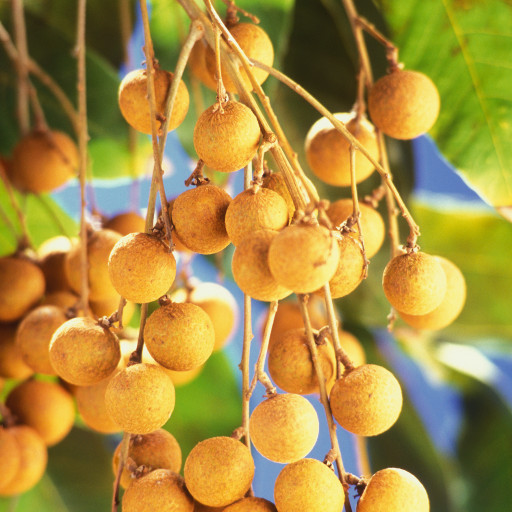
Plant Overview
Known as the "Dragon Eye" due to the way its dark seed peeps through translucent flesh, the Longan is a tropical gem native to Southern Asia. A close relative of the Lychee and Rambutan, this evergreen tree is prized for its luscious, musky-sweet fruit and its handsome, spreading canopy. In many cultures, the Longan is more than just food; it is a symbol of luck and vitality, often used in traditional celebrations and herbal teas.
🔍 How to Identify
- 🍃 Foliage: Dense, leathery leaves that are deep glossy green on top and a duller, paler green underneath. The leaflets usually grow in pairs along a central stem.
- 🌸 Blooms: Small, inconspicuous yellowish-white flowers that grow in large, branched clusters (panicles) at the tips of the branches, emitting a mild, sweet fragrance.
- 🌰 The Fruit: Round, marble-sized fruits with a thin, brittle, sandy-brown skin. When peeled, they reveal a translucent, jelly-like white pulp surrounding a single, shiny black seed.
🏡 In Your Garden
- ☀️ Sun & Space: The Longan is a sun-worshiper that requires plenty of light to produce sugar-rich fruit. It grows quite large and wide, so it needs a spacious spot away from power lines or structures where its "weeping" branch habit can flourish.
- 🪵 Drainage is Key: While it loves a humid environment, it is highly sensitive to waterlogged soil. If your garden has heavy clay, planting the tree on a slight mound can help prevent the dreaded root rot.
- 🌬️ Wind & Frost: Because the wood is somewhat brittle, it should be planted in a spot protected from heavy winds. Additionally, young trees are very tender; a single hard frost can be fatal, so frost blankets are a must for gardeners in subtropical fringes.
⚠️ Safety & Toxicity
- ✅ Fruit Safety: The translucent flesh is delicious and safe for humans to eat raw, dried, or cooked.
- 🚫 Inedible Parts: The brittle outer shell and the hard black seed should never be eaten. The seed is a significant choking hazard, especially for small children.
- 🐾 Pet Caution: While the fruit flesh is generally non-toxic, the seeds contain saponins which can cause digestive upset in dogs and cats if chewed or swallowed.
✨ Fun Fact
The name "Longan" comes from the Cantonese lùhng-ngáahn, which literally translates to "Dragon Eye." The resemblance is so striking that ancient legends suggested eating the fruit would grant a person the wisdom and sharp vision of a dragon!

Detailed Care Instructions
| Lighting | Full Sun |
| Hardiness Zones | 10A - 11 |
To grow a Dimocarpus Longan plant, also known as the longan fruit tree, follow these steps:
- Select a suitable location: Longan trees thrive in warm and tropical climates with well-draining soil. Choose a spot that receives full sun for at least 6-8 hours per day.
- Obtain the plant: Purchase a healthy Dimocarpus Longan sapling from a reputable nursery or garden center. Ensure it has a strong root system and is free from pests or diseases.
- Prepare the soil: Before planting, prepare the soil by loosening it with a garden fork or tiller. Incorporate organic matter, such as compost or aged manure, to improve drainage and fertility.
- Dig a hole: Dig a hole that is twice as wide and slightly deeper than the root ball of the tree. Gently loosen the roots to encourage outward growth.
- Plant the tree: Place the longan sapling in the hole, ensuring that the top of the root ball is level with or slightly above the soil surface. Backfill the hole with soil, gently firming it around the roots to eliminate air pockets.
- Water thoroughly: After planting, water the tree thoroughly to settle the soil and promote root establishment. Keep the soil evenly moist but not waterlogged, especially during the tree's first year.
- Mulch: Apply a layer of organic mulch, such as wood chips or straw, around the base of the tree. This helps retain moisture, suppress weeds, and regulate soil temperature.
- Pruning and training: As the longan tree grows, shape it by pruning away any dead, diseased, or crossing branches. Maintain an open canopy by regularly thinning out excessive growth.
- Fertilization: Longan trees benefit from regular fertilization. Apply a balanced fertilizer, such as a 10-10-10 NPK formula, in early spring and mid-summer. Follow the manufacturer's instructions for proper application rates.
- Pest and disease control: Monitor the tree for common pests like aphids, mealybugs, or fruit flies, and take appropriate measures to control them. Preventative measures, such as regular pruning, good airflow, and removing fallen leaves or fruit, can help minimize diseases.
- Harvesting: Longan trees usually start producing fruit within 2-3 years. Harvest the fruits when they are fully ripe, which is indicated by a change in color from green to reddish-brown. Gently twist or cut the fruit from the branch, being careful not to damage the fruit or the tree.
Remember, growing a Dimocarpus Longan plant requires patience and dedicated care. Regular watering, proper fertilization, and protection from pests and diseases will help ensure a healthy and fruitful tree.

Place in a window with dappled sun or a spot in the middle of a room. Or directly in a window facing west or east.

To properly water this plant, first make sure the soil is well-draining and not waterlogged. Then, water it deeply and regularly, making sure to keep the soil moist but not overly saturated. Avoid getting water on the leaves or flowers, as this can cause damage or disease. Use room temperature water and allow any excess water to drain out of the pot or container. Adjust watering frequency based on the plant's needs and local weather conditions.
To fertilize the Dimocarpus Longan plant, use a balanced fertilizer with equal ratios of nitrogen, phosphorus, and potassium. Apply the fertilizer in early spring before the growing season begins and again in late summer or early fall. Be sure to follow the manufacturer's instructions for the amount and frequency of application. Additionally, it is recommended to apply compost or organic matter around the base of the plant to improve soil structure and provide additional nutrients. Finally, water the plant thoroughly after fertilizing to help distribute the nutrients evenly in the soil.
The best type of soil to use for Dimocarpus Longan plant is a well-draining, loamy soil mixture that has a neutral to slightly acidic pH level. The soil should be able to retain moisture, but not become waterlogged, as excess moisture can lead to root rot. To enhance soil aeration, it is recommended to add organic matter such as compost or aged manure to the soil mixture. The plant should also be placed in a location with full sun exposure, protected from strong winds, and given regular waterings as the soil begins to dry out.
Dimocarpus Longan is a perennial plant that belongs to the Sapindaceae family. It is commonly grown for its fruit, which is similar to a lychee. Propagation of this plant can be done through both seed and vegetative methods.
Propagation through Seed:
- Collect ripe fruits from a healthy and mature Dimocarpus Longan plant.
- Wash the fruit in clean water and remove the outer shell to reveal the seed.
- Soak the seed in water for about 24 hours to soften the hard coat.
- Fill a pot with a good quality potting mix and plant the seed about 2 cm deep.
- Water the pot lightly and cover it with a plastic bag or a clear lid to create a humid environment.
- Keep the pot in a warm, sunny area and water it regularly.
- After about 2-4 weeks, the seed will germinate and you can remove the plastic cover.
Propagation through Vegetative Methods: - Choose a healthy and mature Dimocarpus Longan plant and find a suitable branch that is at least 15-20 cm long, with a diameter of about 1 cm.
- Make a 45-degree cut on the stem using a sharp knife.
- Remove 3-4 leaves from the bottom of the stem and dip the end in rooting hormone powder.
- Fill a pot with a good quality potting mix and make a small hole in the center.
- Insert the stem into the hole and gently press the soil around it.
- Water the pot lightly and cover it with a plastic bag or a clear lid to create a humid environment.
- Keep the pot in a warm, sunny area and water it regularly.
- After about 6-8 weeks, the stem will start developing roots and you can remove the plastic cover.
Both methods require patience and care, but with proper techniques, you can successfully propagate Dimocarpus Longan and enjoy its delicious fruit.








