Plant Overview
Often called the "Air Potato" or "Bitter Yam," Dioscorea bulbifera is a vigorous vine that seems to defy gravity by growing its "potatoes" high up in the air rather than underground. Native to Africa and Asia, this plant is a master of disguise, often looking like a lush, decorative screen before it reveals its heavy, hanging tubers. In many parts of the world, particularly Florida, it is known as a "green monster" due to its incredible ability to climb and smother entire forests.
🔍 How to Identify
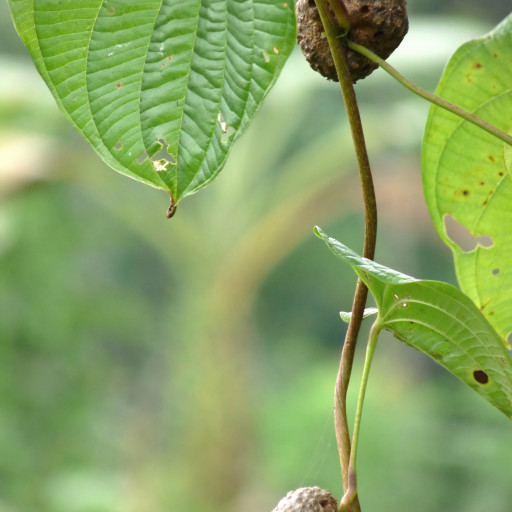
- 🍃 Heart-Shaped Leaves: The leaves are large, broad, and perfectly heart-shaped (chordate) with veins that elegantly radiate from the base where the stem attaches.
- 🥔 Aerial Bulbils: Its most distinct feature is the gray-brown, potato-like growths (bulbils) that hang from the leaf axils along the vine.
- 🌀 Twining Vines: Unlike vines with tendrils, this plant climbs by twisting its round, hairless stems tightly around trees, fences, or power lines.
🏡 In Your Garden
- 🧗 Growth Habit: This is a high-speed climber that can grow up to 8 inches in a single day. While it provides a dense tropical look, it can quickly overwhelm other plants if not strictly contained.
- 🌱 Propagation Warning: Every single "air potato" that falls to the ground has the potential to sprout a new vine. If you are growing this, be prepared to harvest the bulbils before they drop to prevent a garden takeover.
- ☀️ Sun & Soil: It thrives in moist, well-drained soil and loves partial to full sun, which fuels its rapid ascent into the canopy.
⚠️ Safety & Toxicity
- 🚫 Status: Toxic to Humans and Pets.
- 🤢 Details: While some specific cultivated varieties are eaten in certain cultures after extensive processing, the wild "Air Potato" found in most landscapes contains unpalatable and toxic alkaloids. Ingesting the tubers can lead to severe gastrointestinal distress, including vomiting and abdominal pain. Keep away from curious dogs and children.
✨ Fun Fact
In Florida, the plant became such an invasive nuisance that scientists released a "secret weapon": the Air Potato Leaf Beetle (Lilioceris cheni). These bright red beetles eat nothing but this specific vine, helping to keep the "green monster" in check without the use of chemicals!

Detailed Care Instructions
| Humidity | Normal |
| Lighting | Full Sun |
| Difficulty | Medium |
| Hibernation | Cold Period |
| Temperature | 18°C - 25°C |
| Hardiness Zones | 9A - 11 |
To grow Dioscorea Bulbifera plants, also known as Air Potatoes or Yam Shoots, follow these steps:
- Obtain the plants: You can order Dioscorea Bulbifera plants from nurseries or purchase the bulbs from specialized online retailers.
- Choose the planting location: Dioscorea Bulbifera plants prefer warm climates and thrive in areas with full sun or partial shade. The soil should be well-draining and fertile.
- Prepare the soil: Loosen the soil and remove any weeds or debris. Adding organic matter like compost or aged manure can improve soil fertility and drainage.
- Plant the bulbs: Plant the Dioscorea Bulbifera bulbs about 2 inches deep in the soil. Space multiple bulbs at least 12-18 inches apart.
- Water the plants: Water the bulbs thoroughly after planting to promote root development. Keep the soil consistently moist but not overly saturated. Avoid overwatering, which can cause rotting.
- Mulch the area: Apply a layer of organic mulch, such as wood chips or straw, around the plants. Mulching helps conserve moisture, regulate soil temperature, and prevent weed growth.
- Provide support: As the plants grow, they may require support structures like trellises, cages, or stakes to climb on. Secure the vines gently to prevent damage.
- Fertilize the plants: Applying a balanced fertilizer during the growing season can provide additional nutrients to enhance plant growth and yield. Follow the package instructions for the appropriate dosage.
- Control pests and diseases: Monitor the plants for common pests like aphids, beetles, or mites. Treat infestations promptly using organic insecticides or natural methods such as neem oil or insecticidal soap. Regularly inspect the plants for signs of diseases like powdery mildew or rot, and take appropriate measures to address them.
- Harvest the bulbs: Dioscorea Bulbifera plants produce tubers and bulbils, which are small edible bulbs that form in the leaf axils. Harvest the bulbils when they are mature and have formed at least an inch in size. The tubers can be harvested when the plant has died back, similar to sweet potatoes or yams.
Remember that Dioscorea Bulbifera plants can be invasive in some regions, so it is essential to check with local authorities or agricultural agencies regarding any regulations or guidelines for growing them in your area.

Place in a window with dappled sun or a spot in the middle of a room. Or directly in a window facing west or east.

To water this plant, it is important to keep the soil slightly moist, but not waterlogged. It is best to allow the top layer of soil to dry out slightly before watering again. When watering, it is recommended to do so slowly and thoroughly, ensuring that the water reaches the roots. Overwatering can lead to root rot, so it is important to monitor soil moisture levels and adjust watering frequency accordingly. Additionally, this plant benefits from occasional misting or a humid growing environment, as it prefers higher humidity levels.
- Begin by preparing a well-draining soil mix rich in organic matter and providing a good source of nutrients.
- As the plant grows, apply a balanced fertilizer with a ratio of 10-10-10 or 20-20-20 every four to six weeks during the growing season.
- Alternatively, you may use a slow-release fertilizer that gradually feeds the plant over several months.
- Avoid overfertilizing, as this can result in excessive vegetative growth at the expense of bulbil production.
- Water the plant thoroughly after fertilizing to help distribute the nutrients evenly and prevent salt buildup in the soil.
- Monitor the plant for signs of nutrient deficiencies, such as yellowing leaves or stunted growth, and adjust the fertilization regimen accordingly.
Dioscorea Bulbifera is a climbing plant that requires fertile, well-draining soil. The ideal soil should be loamy with a pH range of 5.5 to 6.5. Sandy and clay soils are not suitable for this plant, as they tend to be too dry and heavy respectively. To improve drainage, you can add organic matter, such as compost or decomposed leaves, to the soil. This will also provide nutrients that the plant needs to grow well. The soil should be kept moist but not overly wet, as too much water can cause root rot. It is best to allow the top inch of soil to dry out before watering again. Additionally, the plant prefers indirect sunlight and moderate temperatures, so it should be kept in a location that receives partial shade.
There are several ways to propagate this plant. One method is to remove small tubers or bulbils, which often grow at the base of the stem or in the leaf axils. These bulbils can be separated from the parent plant and planted directly in soil. Another method is to propagate from stem or root cuttings. Cut a section of stem or root and plant it in soil or water until roots and new growth appear. Propagation can also be done by planting mature seed, although this method is less common and requires some patience as it can take several years for the plant to reach maturity. Regardless of the method chosen, it is important to provide the plant with moist, well-draining soil and bright, indirect light to promote healthy growth and development.
Common pests of the air potato include Mealybugs, spider mites, aphids. Make a habit of checking your air potato frequently for pests so that any infestations can be caught and managed early.








