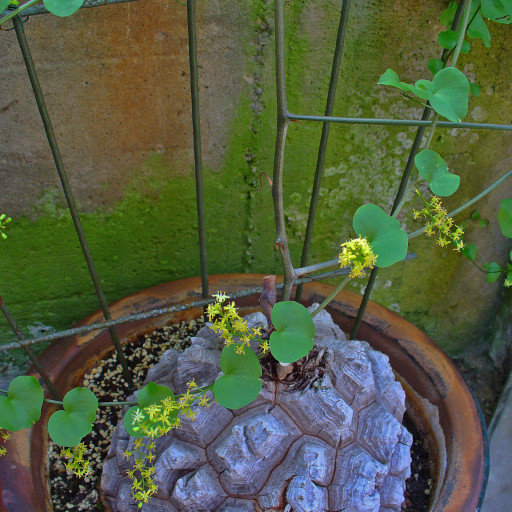
Plant Overview
Often called the Elephant's Foot or Tortoise Plant, this South African native looks like a relic from a prehistoric era. Its thick, corky base resembles a carved piece of ancient wood or the weathered shell of a giant tortoise. It is a slow-growing marvel that can live for over 70 years, becoming a living sculptural centerpiece for any dedicated plant collector.
🔍 How to Identify
- 🐘 The Caudex: A massive, woody, grey-brown base covered in deep fissures and raised polygonal "plates" that grow more dramatic as the plant ages.
- 💚 The Foliage: Delicate, bright green, heart-shaped leaves that sprout from thin, twining vines emerging from the top of the base.
- 🌼 The Blooms: Small, inconspicuous greenish-yellow flowers that appear along the vines, usually during the cooler growing season.
🏡 In Your Garden
- 💤 The "Napping" Cycle: This plant is unique because it is winter-active and often goes dormant during the hot summer months. When the leaves turn yellow and the vine withers, it isn't dying—it’s just entering its rest period.
- 🏺 Drainage is Vital: Because the "foot" stores incredible amounts of water, the plant is highly susceptible to rot. It thrives in gritty, cactus-style soil and prefers a shallow pot that allows the roots to breathe.
- ☀️ Strategic Placement: While the vines love to reach for the sun, the woody caudex actually prefers to stay somewhat shaded and cool to prevent it from drying out too quickly in intense heat.
⚠️ Safety & Toxicity
- 🚫 Toxicity Status: Toxic if ingested.
- 🐾 Risk to Pets & Kids: The plant contains steroid-like compounds called saponins. While it was historically used as a food source by the Khoisan people, it requires very specific, intensive processing to be safe. Raw consumption can cause severe stomach upset and distress in humans and pets.
✨ Fun Fact
🐢 Nature's Heat Shield: The thick, corky plates on the caudex aren't just for decoration; in the wild, they act as a natural fireproof armor, protecting the plant's moisture-rich interior from intense sun and occasional bushfires.

Detailed Care Instructions
| Color | Green With Pale, Greenish-Yellow Flowers |
| Soil Ph | 6.5-7.5 |
| Humidity | Dry |
| Lighting | Full Sun |
| Toxicity | Toxic |
| Soil Type | Porous, Well-Draining Potting Soil |
| Bloom Time | Late Fall Or Early Winter |
| Difficulty | Easy |
| Plant Type | Slow-Growing, Long-Living Succulent |
| Mature Size | Up To 6 Feet |
| Native Area | South Africa |
| Temperature | 22°C - 25°C |
| Sun Exposure | Full Sun, Partial Shade, And Light Shade |
| Hardiness Zones | 9-11 |
To grow Dioscorea elephantipes plant, also known as the Elephant's Foot Yam, follow these steps:
- Purchase a mature tuber or seeds from a reputable source. The tuber typically has a knobby appearance and is about the size of a coconut.
- Choose a well-draining pot that is at least 12 inches deep and wide. Ensure it has drainage holes at the bottom.
- Prepare a mix of well-draining soil with a combination of potting soil, sand, and perlite or vermiculite. The soil should be loose and well-aerated.
- Plant the tuber or seeds about 4-6 inches deep in the soil, with the pointy end facing upwards.
- Place the pot in a warm location, such as a sunny windowsill or a greenhouse. The plant requires temperatures between 65-85°F (18-29°C).
- Water the plant regularly, keeping the soil slightly moist but not waterlogged. Allow the top inch of soil to dry before watering again.
- Provide support for the plant as it grows. The vine can climb on a trellis or a sturdy support structure.
- Occasionally feed the plant with a balanced liquid fertilizer during the growing season, following the manufacturer's instructions.
- Prune back any dead or damaged foliage to promote healthy growth.
- During winter, when the temperature drops below 55°F (13°C), reduce watering and allow the plant to go dormant. Place it in a cool and dry location until spring.
- In the following spring, resume regular watering and provide warmth for the plant to stimulate new growth.
- Harvest the yams when they are mature, usually after about 3-4 years. The tops of the tubers can be exposed above the soil. Carefully dig out the yams, taking care not to damage them.
By following these steps, you can successfully grow Dioscorea elephantipes plant at home.

Place in a bright room that is sun drenched almost all day. Or directly in a south-facing window.

To water this particular species of plant, you should monitor the soil moisture level closely. Ideally, the soil should remain consistently moist but not waterlogged. It is recommended to water the plant thoroughly, allowing the water to saturate the soil, but then allowing excess water to drain away from the pot or soil. It is best to water when the top inch or so of soil feels dry to the touch. Overwatering can lead to root rot and other issues, so it's important to be careful not to overdo it. Additionally, it's important to ensure the plant has adequate drainage and proper air circulation to prevent moisture buildup and fungal growth.
To fertilize this plant, apply a balanced fertilizer, such as 10-10-10, during the growing season. Use a slow-release fertilizer or a liquid fertilizer diluted to half strength, and apply it evenly to the soil around the base of the plant. Water the plant thoroughly after fertilizing. Do not over-fertilize, as this can lead to excessive growth.
For the cultivation of the plant, it is necessary to use a soil that is well-draining and has good aeration. The soil should also have a neutral to slightly acidic pH ranging from 6 to 7.5. The soil should have a good texture and structure that facilitates root development and water uptake. It is recommended to mix the soil with organic matter such as compost or peat moss to improve soil fertility and moisture retention. In addition, it is important to avoid using soils that are heavy and have a high clay content as they may cause waterlogging and inhibit root growth. Overall, a well-draining and nutrient-rich soil with a neutral to slightly acidic pH is ideal for the successful growth of the Dioscorea Elephantipes plant.
To propagate this plant, one can take a stem cutting from a mature plant. The stem should be at least 4 inches long, with several leaves attached. Remove the bottom few leaves, and place the cutting in a pot filled with moist soil. Keep the soil moist, but not saturated, and place the pot in a warm, well-lit area without direct sunlight. With proper care, the cutting should develop roots and new growth within a few weeks.
Common pests of the elephant's foot include Mealybugs, spider mites, aphids. Make a habit of checking your elephant's foot frequently for pests so that any infestations can be caught and managed early.








